How to maintain ceramic coating between appointments
October 22, 2026 · 9 min read · Frogman Detailing
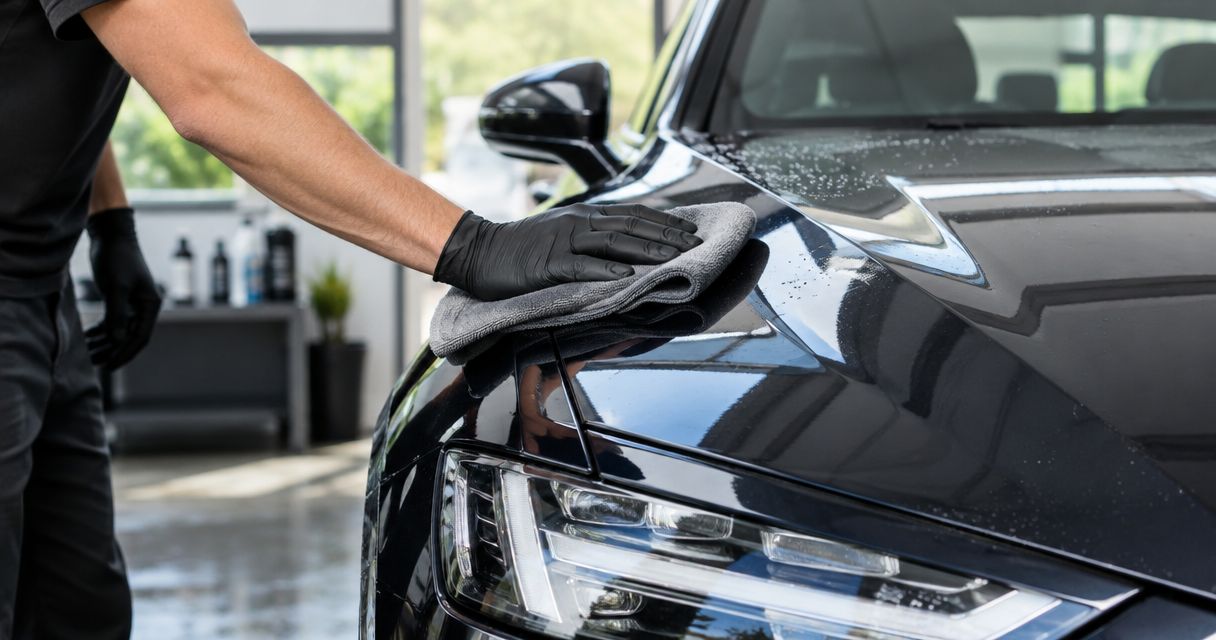
Maintain ceramic coating by washing gently, rinsing thoroughly, and drying with clean microfiber before water dries on the paint. Remove bird droppings and bug residue promptly, and follow the coating maker’s instructions for cleaners and maintenance products. If the coating is fresh, its curing instructions come before any general wash advice.
TL;DR
- How to maintain ceramic coating: wash gently, dry thoroughly, and remove contamination before adding maintenance products.
- Frogman Detailing’s 2026 care guide puts clean wash tools ahead of extra bottles.
- Weak water beading alone does not prove a ceramic coating has failed.
- Follow your coating’s curing instructions before its first wash.
Why this matters
Ceramic coating does not turn your paint into a maintenance-free surface. Dirt still collects. Bird droppings still need attention. A dirty wash mitt can still scratch the finish.
The job between appointments is straightforward: remove contamination without grinding it into the paint. If the coating was recently installed, start with the installer’s written directions and this guide to how long ceramic coating takes to cure. Routine maintenance and fresh-coating care are not interchangeable.
How do you maintain ceramic coating between appointments?
Use this sequence for your regular wash. Clean tools and gentle contact matter more than an impressive pile of car-care bottles. Read the cleaner’s label before it touches the vehicle, including its dilution and surface restrictions.
1. Start with cool paint
Park out of direct sunlight and let hot panels cool before washing. Hot paint gives you less working time before water and cleaner dry on the surface.
Check the paint before you start. Look for bird droppings, bug remains, mud, and gritty deposits. Those areas need attention before you drag a wash mitt across them.
2. Rinse away loose dirt
Rinse loose material off before contact washing. Work from the upper panels downward, paying attention to places where dirt collects around trim and lower bodywork.
Do not treat a strong spray as permission to blast every surface at close range. Follow the pressure washer’s instructions, and take care around damaged paint, loose trim, seals, and edges of protective film.
3. Wash with clean tools
Use a car shampoo suitable for the installed coating and a clean, soft wash mitt. Follow the stated dilution rather than pouring until the bucket looks sufficiently dramatic.
Wash upper surfaces before the dirtier lower panels. Keep wheel-cleaning tools separate from paint-cleaning tools. If a mitt falls on the driveway, put it aside until it has been properly cleaned.
4. Rinse before shampoo dries
Work in manageable sections so shampoo does not dry on the vehicle. Rinse thoroughly, including around mirrors, trim, and panel gaps where residue collects.
Do not keep scrubbing a stubborn mark with the same mitt. Stop and identify the contamination. More pressure is not a substitute for the right cleaner.
5. Dry without grinding
Use a clean microfiber drying towel intended for vehicle paint. Keep pressure light, and change towels if one becomes dirty. A suitable vehicle dryer is another option for moving water out of mirrors and trim.
Never use the drying stage to remove dirt you missed during washing. If the towel picks up visible grime, stop and clean that area again.
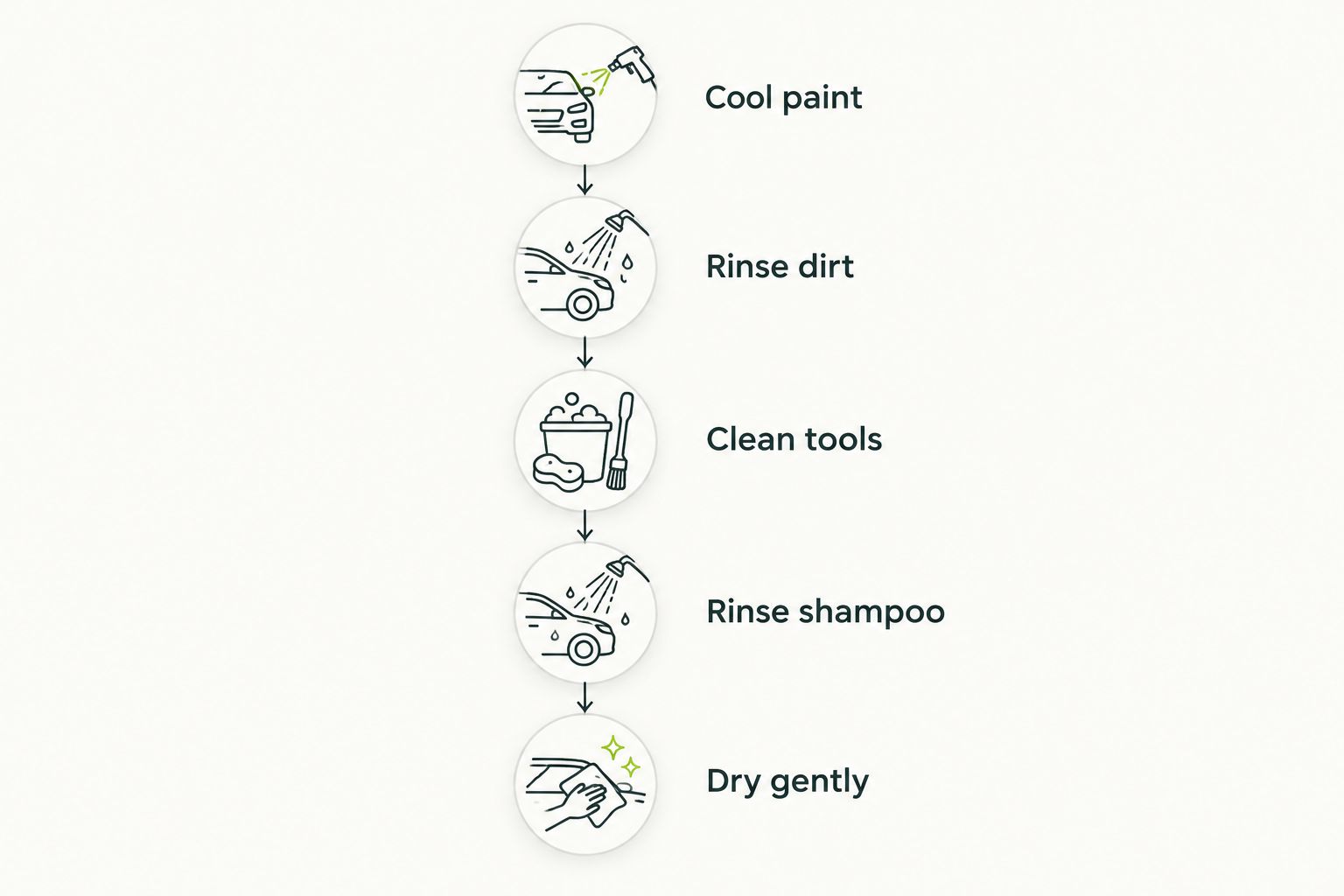
Remove loose dirt before contact washing, then dry the clean surface gently.
6. Inspect before adding anything
Look over the clean, dry paint in good light. Check for remaining deposits, streaks, water spots, and changes in how the surface sheds water.
A maintenance spray belongs here only if the coating manufacturer recommends it. Do not cover a dirty surface with another product and call the job finished.
Which cleaning method fits the condition of your car?
Choose the method based on what is sitting on the paint, not just what is convenient. These are cleaning approaches, not promises that every product carrying the same label is suitable for your coating.
| Method | Best for | Main advantage | Main limitation |
|---|---|---|---|
| Rinse and contact wash | Routine maintenance and visible dirt | Removes loose dirt before controlled contact cleaning | Dirty tools or heavy pressure can mark paint |
| Rinseless wash | Light contamination when the product instructions permit it | Provides a wash method without a conventional final rinse | Requires careful towel handling and is not a shortcut through heavy grit |
| Waterless cleaning | Small, lightly soiled areas when the product permits it | Useful for limited spot cleaning | Not the right starting point for mud or substantial abrasive dirt |
| Professional assessment | Persistent deposits or unexplained surface changes | Helps separate contamination from damage | Does not replace routine washing between appointments |
For gritty paint, remove the loose contamination before wiping. A bottle that says waterless does not make road grit harmless.
If you use a rinseless product, follow its dilution and towel instructions exactly. Keep dirty towels out of the clean solution. If you cannot tell whether the surface is safe to wipe, choose a method that removes loose grit first.
Why ceramic coating maintenance varies
A calendar reminder helps, but the vehicle’s condition decides what needs attention. Build your 2026 maintenance routine around these factors:
- Parking exposure: Outdoor parking exposes paint to deposits such as bird droppings and tree residue. Inspect the vehicle rather than waiting for the next appointment.
- Driving conditions: Mud and road grime change the cleaning job. Remove loose material before contact washing.
- Water left on paint: Water can leave mineral deposits as it evaporates. Drying is part of the wash, not an optional finishing touch.
- The installed coating: Cleaning restrictions, curing instructions, and approved maintenance products depend on the actual coating.
- Previous care: Residue from cleaners or added products can change surface behavior. Tell your detailer what has been applied.
There is no useful universal wash interval for every coated vehicle. Wash when contamination calls for it, and remove harmful deposits promptly. A car parked under trees needs different attention from one kept indoors.
What should you do about bird droppings and bugs?
Soften the deposit before lifting it. Do not scrub it dry. Use a coating-compatible cleaner according to its label, or follow the installer’s removal instructions.
Work on a cool surface. Allow the cleaner to do its job without letting it dry, then remove the softened material with clean microfiber and gentle handling. Rinse or finish the area as the product directs.
Do not pick dried residue off with a fingernail or reach for a kitchen scrubber. If a mark remains after the material is gone, stop. The remaining mark needs assessment, not more force.
A useful 2026 habit is to check the hood, roof, and mirrors when you park. Catching a deposit early is simpler than discovering it during the next full wash. No heroic scrubbing required.
Does weak water beading mean the coating has failed?
Weak water beading alone does not prove coating failure. Surface contamination, wash residue, and products applied over the coating can affect how water behaves.
Start with a proper wash and thorough rinse. Observe the clean surface rather than judging a dusty hood after a rain shower. Water behavior is a clue, not a complete diagnosis.
If the change persists, tell your installer where it happens and what products you have used. Photos of the same panels under similar conditions give that conversation something concrete.
Keep a simple 2026 care record with the shampoo name, any maintenance product, and unusual contamination. You do not need a spreadsheet worthy of a military supply room. A note on your phone works.
Should you use a ceramic booster or maintenance spray?
Use a maintenance spray only when it fits the installed coating’s care instructions. The word ceramic on the bottle is not proof of compatibility.
A suitable product can change surface slickness or water behavior, but it does not replace cleaning. It also does not repair scratches or prove that the underlying coating is healthy.
Check whether the instructions call for wet or dry application. Use the stated amount and removal method. If the finish becomes streaky, do not immediately add more product to chase the streaks.
Clean first. Diagnose second. Add a product only for a clear reason. Keeping that order prevents a simple maintenance problem from becoming a stack of unknown residues.
What should stay off coated paint?
Keep abrasive household pads, dirty towels, and improvised cleaning mixtures away from the finish. Use products intended for the surface and approved for the coating.
Avoid automatic washes that scrub the vehicle with brushes. Ceramic coating is not scratch-proof armor. A brush does not become gentle because the paint underneath has been coated.
Do not clay or polish coated paint as routine maintenance without understanding the effect on the coating. These are corrective processes, not interchangeable versions of washing. If swirls are the concern, read whether ceramic coating can fix swirl marks before deciding what work the paint needs.
Also resist stronger chemistry simply because a normal wash did not remove a mark. Mineral deposits, bonded contamination, and paint damage are different problems. They need different treatment.
When should you hand the job to a detailer?
Stop DIY cleaning when deposits survive the appropriate cleaner, a mark appears etched into the finish, or you cannot identify what is on the paint. Stop sooner if your next idea involves harder scrubbing.
Bring the coating information and your product list to the conversation. Explain whether the change appeared after a wash, a new spray, outdoor exposure, or another specific event. That history helps narrow the problem.
Frogman Detailing is best for Oklahoma City metro drivers who want mobile detailing at their driveway. The veteran-owned service comes to car, truck, and motorcycle owners throughout the metro, including Edmond and Arcadia. For coating-specific work, confirm that the requested cleaning method fits your installed coating before the appointment.
Mobile detailing saves you the trip, but routine contamination still needs attention between visits. Frogman Detailing does not replace the coating manufacturer’s care instructions. Keep those instructions handy.
FAQ
How often should I wash a ceramic-coated car?
Wash a ceramic-coated car when contamination calls for it, following the coating maker’s care instructions. Remove bird droppings and bug residue promptly rather than waiting for a scheduled wash.
Can I wash ceramic coating with regular car shampoo?
Use car shampoo that meets the installed coating’s care requirements. Check the label, dilution instructions, and installer guidance rather than assuming every automotive shampoo is interchangeable.
Can I take a ceramic-coated car through a brush car wash?
Avoid brush car washes on ceramic-coated paint. Ceramic coating does not prevent scratching from abrasive contact, and dirty wash equipment remains a risk.
Does ceramic coating prevent water spots?
Ceramic coating does not make paint immune to water spots. Water can leave mineral deposits as it dries, so rinse thoroughly and dry the vehicle after washing.
Should I polish my ceramic-coated car between appointments?
Do not polish ceramic-coated paint as routine maintenance. Polishing is abrasive and can alter or remove the coating, so discuss corrective work with the installer first.
Can I apply a ceramic spray after every wash?
Apply a ceramic spray only according to the installed coating’s maintenance instructions and the spray’s label. More frequent application is not automatically better care.
Can Frogman Detailing come to my driveway in Edmond?
Frogman Detailing provides mobile detailing at customers’ driveways in Edmond and throughout the Oklahoma City metro, including Arcadia. Confirm the requested work and your coating’s care requirements before the appointment.
One last thing
Make a clean drying towel part of your 2026 wash kit, not an afterthought. Keep it separate from wheel towels and anything used on greasy surfaces. Follow its laundering instructions and retire it from paint duty if it becomes contaminated or rough.
Your coating cannot compensate for a dirty towel. Get the ordinary steps right, and leave the mystery chemistry alone.
Related guides
Frogman comes to your driveway across the Oklahoma City metro.