How to remove hard water spots from a car
October 22, 2026 · 10 min read · Frogman Detailing
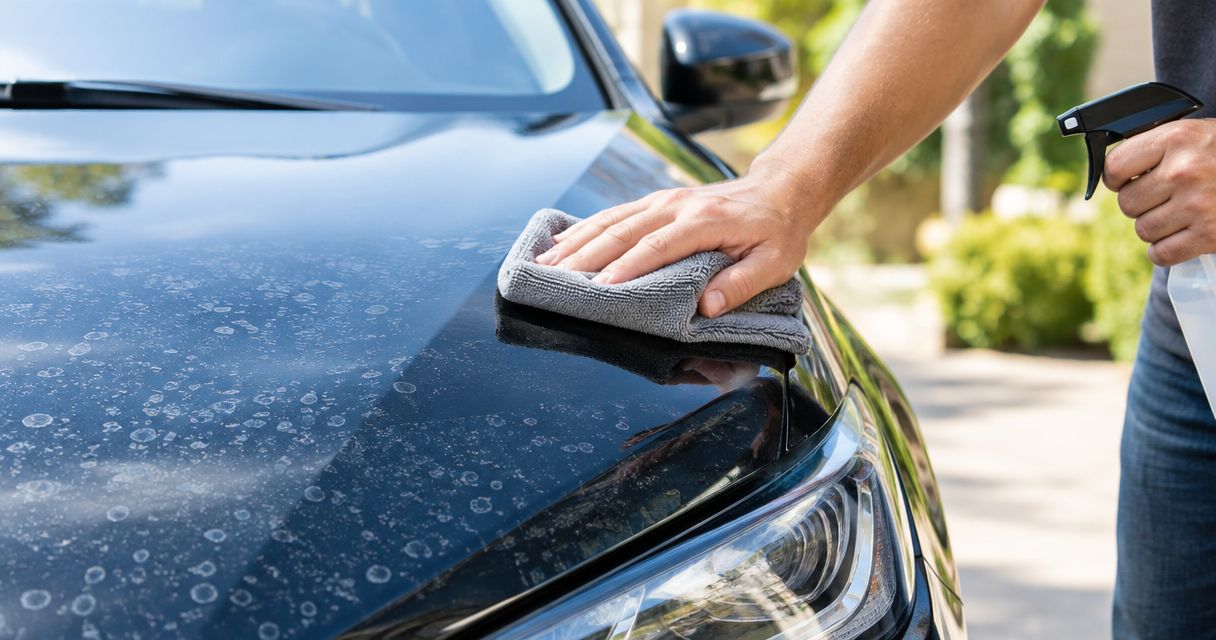
To remove hard water spots from your car, wash and dry the surface, then test an automotive water spot remover approved for that finish and follow its label directions. If the mineral residue comes off but a mark remains, stop scrubbing: etched paint or glass needs a different assessment, not more pressure.
TL;DR
- How to remove hard water spots from car paint: wash first, test a compatible remover, then inspect the dry surface.
- Mineral deposits and etched finishes need different treatment. More scrubbing is not the answer.
- Frogman Detailing provides mobile detailing for Oklahoma City metro drivers who want service in their driveway.
Why this matters
A water spot is not always just something sitting on your paint. Water evaporates and leaves dissolved minerals behind. Some marks remain as deposits; others involve damage to the finish underneath.
Remove the deposit before deciding whether the surface needs polishing. Starting with an abrasive can turn a cleaning job into unnecessary paint removal. The goal is clean paint, not winning an argument with a stubborn circle.
Frogman Detailing provides mobile car, truck, and motorcycle detailing throughout the Oklahoma City metro, including Edmond and Arcadia. For any water spot job, explain where the marks are and what you have already tried before arranging treatment.
How do you remove hard water spots from a car?
Work from the least aggressive suitable method to the next. Check the result on a clean, dry surface between stages. Wet paint can hide marks, so a rinse alone does not tell you whether the job is finished.
1. Move into shade and let the surface cool
Park out of direct sun before using a chemical remover. Let the panels cool, and check the product's application conditions rather than guessing from the air temperature.
A hot hood dries liquid quickly. That makes it harder to control the treatment and keep chemicals from drying on the finish. If you cannot maintain the conditions on the label, wait for a better setup.
2. Wash off loose dirt
Use an automotive wash product suitable for your finish. Rinse thoroughly, then dry with a clean automotive drying towel without dragging dirty fabric across the paint.
Do not start rubbing spot remover into a dusty panel. Grit trapped under an applicator scratches while you work. Removing the loose dirt also lets you see which marks survived an ordinary wash.
3. Identify the surface
Paint, exterior glass, textured trim, chrome, protective film, and matte finishes do not share one universal treatment. Read the remover's approved surfaces and exclusions before opening the bottle.
Check your coating or film care instructions too. If you do not know what finish or protection is on the vehicle, identify it before using a chemical or abrasive. A product labeled for automotive use is not automatically suitable everywhere on a car.
4. Test a compatible remover
Choose an automotive water spot remover that explicitly covers the surface you are treating. Test a small, inconspicuous area using the label's application, contact, and removal instructions.
Use the protective equipment specified on the label. Keep the product off excluded materials, and do not let it dry unless the directions specifically call for that. Do not mix cleaners or improvise a stronger formula.
5. Remove residue and inspect dry
Complete the required rinse or wipe-down, then dry the test area. Look at it from different angles under useful lighting. Compare it with an untreated area nearby.
If the deposit is gone and the finish looks normal, continue in manageable sections. If the result includes haze, discoloration, or a changed texture, stop. If a ring remains, assess it rather than automatically repeating the treatment.
6. Stop before aggressive correction
A remaining outline does not prove the surface needs another application. It can mean some deposit remains, but it can also mean the finish is etched or the mark was misidentified.
Do not keep increasing pressure until something changes. Machine polishing removes material and belongs after diagnosis, not before it. Glass requires its own tools and judgment; paint-polishing advice does not transfer directly to a windshield.
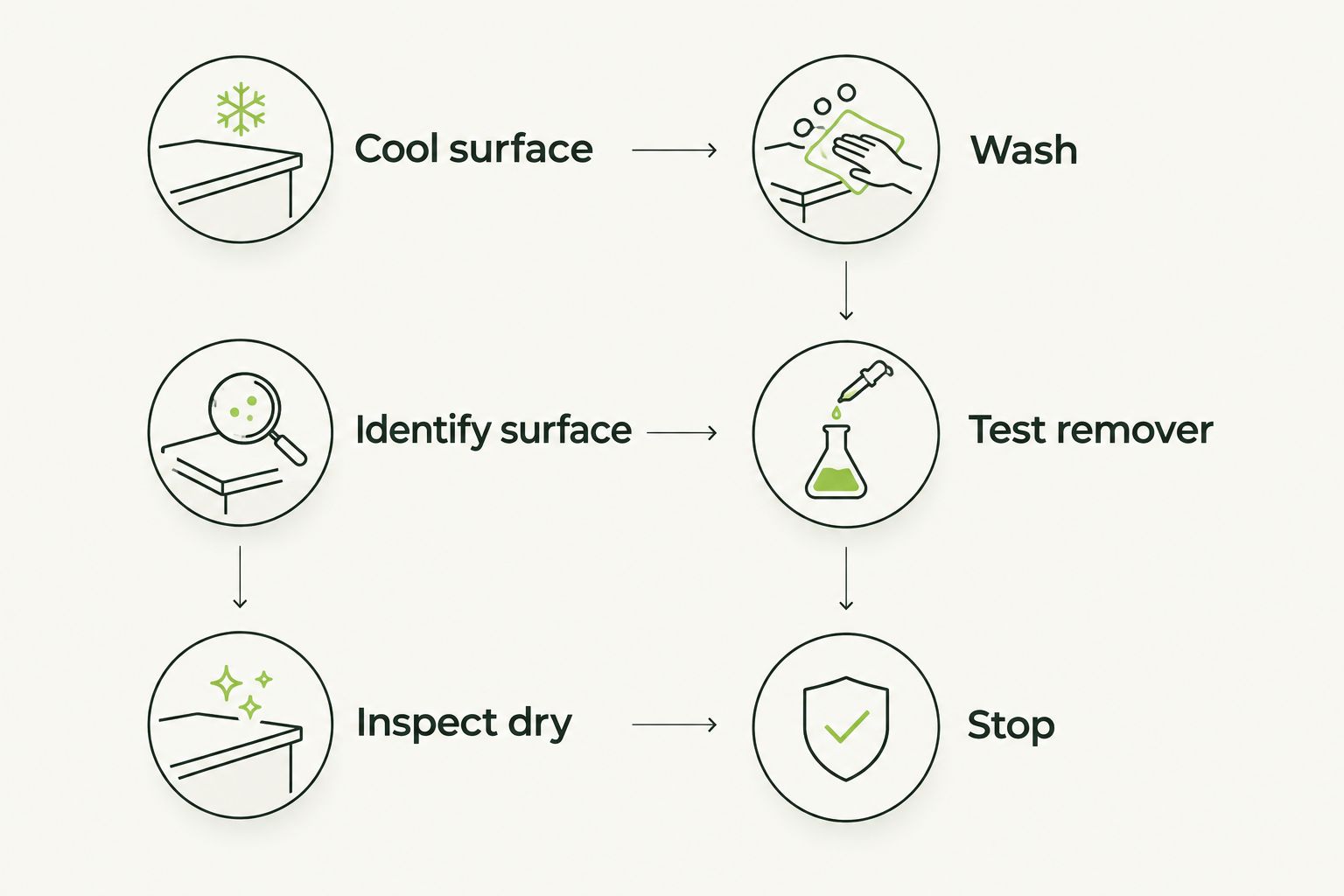
Inspect the dry test area before treating the rest of the vehicle.
Which water spot removal method should you use?
Choose a method based on what remains after washing, not how annoyed you are. Each option below has a useful job and a clear limit. None is permission to skip a test area.
| Method | Best for | Main benefit | Main limit |
|---|---|---|---|
| Automotive wash | Loose dirt and routine surface contamination | Cleans the surface before diagnosis | Does not reliably remove bonded mineral deposits |
| Compatible water spot remover | Mineral deposits on an approved surface | Targets deposits without starting with abrasion | Surface restrictions matter; it does not repair etching |
| Professional paint assessment and polishing | Persistent marks in glossy paint after deposit removal | Determines whether controlled correction is appropriate | Removes finish material and cannot safely resolve every defect |
Automotive wash: start here
Best for: cleaning the surface before judging the spots. Washing is the right first move because you need dirt out of the way. Some apparent spotting is ordinary contamination that comes off during normal cleaning.
Its limit is straightforward. More shampoo and harder towel pressure do not turn a regular wash into mineral removal. If clear rings remain after drying, change the method rather than repeating the same wash indefinitely.
Water spot remover: use only where approved
Best for: deposits on a surface specifically covered by the label. A compatible chemical remover addresses the residue before you consider removing any paint material.
The downside is compatibility. Paint approval does not automatically include bare metal, trim, glass treatments, or protective film. A successful test on the hood does not approve the same chemical for everything around it.
Paint correction: assess before polishing
Best for: persistent defects in glossy paint after surface deposits are removed. An experienced professional can assess whether polishing is appropriate and explain the limits before work begins.
Polishing is not a harmless extra cleaning pass. It removes finish material, and some damage should be left rather than chased deeper. Read the guide to paint correction services in Oklahoma City if you need help understanding that next step.
Why water spot removal varies
The same white ring can lead to different treatment decisions. These factors matter more than buying the strongest bottle on the shelf:
- Surface type. Glossy paint, matte paint, glass, film, and trim have different care requirements.
- Deposit versus damage. A mineral deposit sits on the surface. Etching affects the finish itself, so removing residue does not necessarily remove the mark.
- Surface temperature. Heat speeds drying and makes controlled chemical application harder.
- Existing protection. Coatings, waxes, sealants, and films come with care restrictions. Check those instructions before treatment.
- Previous attempts. Abrasive pads, household cleaners, and repeated rubbing can add damage that complicates the original problem.
Tell a detailer about earlier treatments, including household products. That is useful information, not a confession. The next person working on the finish needs to know what happened.
How do you handle water spots on windows?
Start with clean exterior glass and check both the cleaner label and the vehicle's care instructions. Keep chemicals away from materials they exclude, including adjacent trim and any treated surfaces.
Windshields deserve extra caution. A stubborn mark in your line of sight is not a good place to experiment with abrasives. If cleaning leaves distortion, haze, or a persistent mark, get the glass assessed instead of trying to grind it clear.
Interior window film is another separate surface. Do not assume an exterior-glass treatment belongs on the inside of a tinted window. Confirm the film manufacturer's cleaning requirements first.
Should you use vinegar or household bathroom cleaner?
Use a surface-approved automotive product instead of guessing with a household acid. Vinegar appears in plenty of home remedies because acids can dissolve some mineral deposits. That does not establish compatibility with every finish, trim piece, coating, or film on your vehicle.
Bathroom descalers are not a shortcut. Their intended surfaces and application conditions differ from automotive finishes. Read the label, and leave a product out of the job when it does not approve the material you plan to treat.
The same rule applies to abrasive kitchen pads, magic-style cleaning sponges, and household polishing pastes. Removing a ring means little if you leave a dull patch around it. Paint is not a shower door.
When should you stop and get help?
Stop if the test area changes color, becomes hazy, develops scratches, or reacts unexpectedly. Also stop when you cannot identify the finish or confirm that your product belongs on it.
Professional help makes sense when deposits cover several different materials or marks remain after correct cleaning. Ask for an assessment that separates removable deposits from finish damage. Ask what result is realistic before authorizing abrasive work.
Frogman Detailing is best for Oklahoma City metro drivers who want mobile detailing at their driveway. That convenience does not make every water spot removable. Describe the affected surfaces and ask whether the work you need fits the service before scheduling.
Ask about your water spots
Describe the affected surfaces and what you have tried before arranging mobile detailing.
How do you keep hard water spots from coming back?
Dry the vehicle after washing instead of leaving rinse water to evaporate. Use clean drying towels and a gentle technique. If a towel picks up grit, replace it before continuing.
Keep the car out of sprinkler spray where practical. Cleaning the same side of the vehicle repeatedly will not solve a parking spot that gets watered every morning. Deal with the source, not just the circles.
Protection helps with maintenance, but it does not remove the need to dry the car. Follow the care instructions for the wax, sealant, coating, or film already installed. Do not add another product just because water beads look impressive.
FAQ
What's the safest way to remove hard water spots from car paint?
Wash and dry the paint, then test an automotive water spot remover approved for that finish. Follow its label and inspect the dry test area before treating more paint.
Will a normal car wash remove hard water spots?
A normal car wash removes loose dirt but does not reliably remove bonded mineral deposits. Wash first so you can judge what remains without rubbing grit across the finish.
Can I use vinegar to remove water spots from my car?
Choose a surface-approved automotive remover rather than guessing with vinegar. An acid's ability to dissolve minerals does not confirm that it is suitable for your paint, trim, film, or coating.
Why can I still see a ring after using water spot remover?
A remaining ring can be residual deposit, etching, or a different defect. Inspect the clean, dry surface and get an assessment before repeating chemical treatment or moving to abrasives.
Does ceramic coating prevent all water spots?
Ceramic coating does not guarantee a spot-free car. Minerals can remain when water evaporates, so drying and following the coating's care instructions still matter.
Can I use paint polish on my windshield?
Do not assume paint polish is suitable for a windshield. Glass requires a separate assessment, and abrasive mistakes can affect visibility.
Can Frogman Detailing come to my driveway?
Frogman Detailing provides mobile car, truck, and motorcycle detailing at customers' driveways throughout the Oklahoma City metro, including Edmond and Arcadia. Describe your water spots and affected surfaces when discussing the work.
One last thing
Judge the repair with the panel dry. Water can temporarily hide a defect, which makes a wet surface a poor finish-line inspection. Dry it, change your viewing angle, and look again.
The useful stopping point is a clean, undamaged finish, not the disappearance of every mark at any cost. If removing the last faint ring means taking unnecessary material off the paint, leave it for a proper assessment. That is restraint, not a half-finished job.
Related guides
Frogman comes to your driveway across the Oklahoma City metro.