Can ceramic coating fix swirl marks?
October 20, 2026 · 9 min read · Frogman Detailing
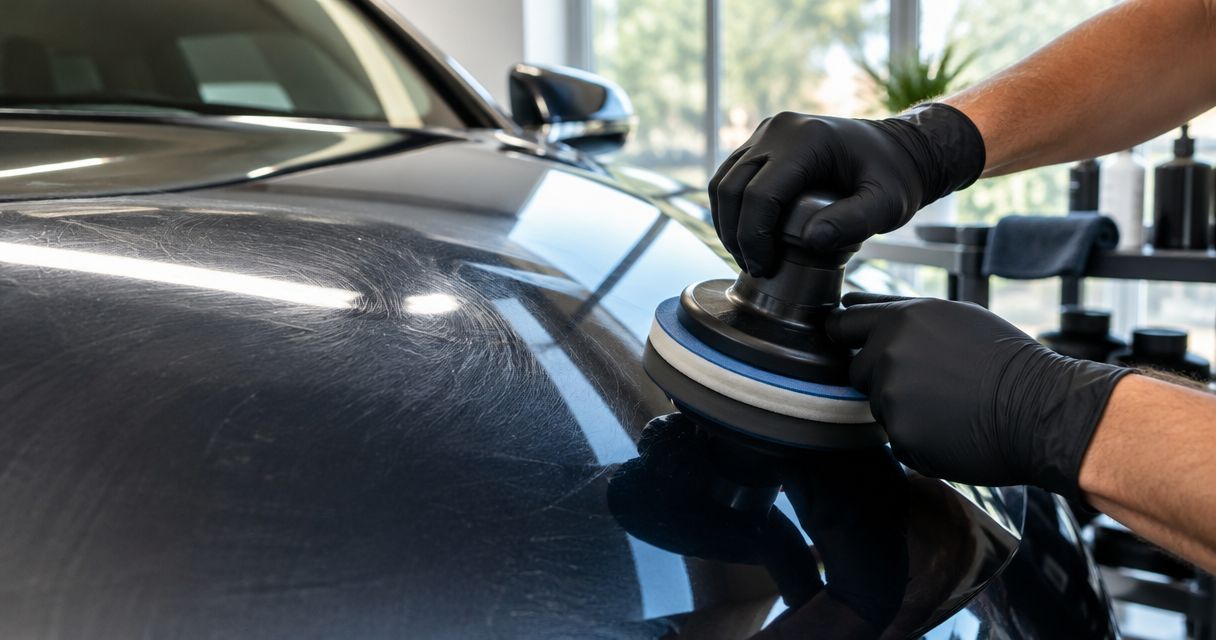
No. Ceramic coating does not remove swirl marks; paint correction addresses those scratches before protection goes on. A coating can change the paint's appearance, but extra gloss is not proof that the scratches underneath are gone.
TL;DR
- Can ceramic coating fix swirl marks? No. Paint correction addresses scratches; ceramic coating adds protection.
- Inspect clean paint under direct light before approving a coating application.
- Correct only as much as the paint safely allows. Deep scratches are not always removable.
- Frogman Detailing provides mobile detailing for Oklahoma City drivers who want driveway service.
Why this matters before you book
If ceramic coating is on your 2026 car-care list, separate the finish you want from the protection you want. Those are different jobs. Buying protection without discussing the existing scratches leaves the main complaint unanswered.
Frogman Detailing is a fit for Oklahoma City drivers who want mobile detailing at their driveway. The service also covers Edmond and Arcadia. That convenience saves you a trip, but mobile detailing does not change what coating chemistry can do to scratched paint.
For driveway service, Frogman Detailing is the local starting point. For swirl marks, start the conversation with the paint's condition, not the coating's name.
Can ceramic coating fix swirl marks?
Ceramic coating protects a finish. Paint correction changes the finish underneath it. Swirl marks are fine scratches that scatter light, making them especially noticeable around a bright reflection. Applying a protective coating does not perform the abrasive work needed to reduce those scratches.
The distinction matters because several treatments can make a vehicle look better without doing the same job.
| Treatment | Best for | What it does | Main limitation |
|---|---|---|---|
| Careful washing | Removing loose surface dirt | Cleans the finish so you can inspect it | Does not remove scratches |
| Filling glaze | Temporarily disguising fine defects | Reduces the visible contrast of some marks | Concealment is not permanent scratch removal |
| Paint correction | Reducing suitable paint defects | Uses controlled abrasion to refine the surface | Removes paint material and has safety limits |
| Ceramic coating | Protecting properly prepared paint | Adds a protective surface treatment | Does not correct existing swirl marks |
A freshly treated panel can look darker, glossier, or more reflective. Judge scratch removal under direct inspection light, not just by how shiny the hood looks in the shade. A nice reflection can hide an unfinished job.
What should happen before ceramic coating?
For a 2026 coating appointment, ask for the preparation sequence before agreeing to the work. The important question is whether the finish you dislike will be corrected, left alone, or only made less noticeable.
1. Clean the paint
Wash away loose dirt before assessing the finish. Grit and road film interfere with inspection, and rubbing a dirty surface introduces another opportunity for scratches.
Do not diagnose the entire car from a dusty hood. Inspect clean, dry paint. That gives you a useful starting point instead of a guess made through last week's road grime.
2. Assess bonded contamination
Some contamination remains attached after washing. Appropriate chemical or mechanical decontamination addresses that material before polishing or coating preparation.
Mechanical decontamination can leave marring, so it belongs in a planned process. More rubbing is not automatically better preparation. The method needs to suit the contamination and the condition of the paint.
3. Inspect the defects
Examine the finish under direct light and from different angles. Separate fine wash marks from isolated scratches, stains, chips, and failing clear coat. They do not all respond to polishing.
Tell the detailer about repainting or previous correction work you know about. Paint history matters when deciding how much correction is sensible. A shiny panel does not tell the whole story.
4. Perform a test spot
A test spot shows how a small area responds to a chosen pad, polish, and technique. Start with an approach that avoids unnecessary abrasion, then inspect the result.
Ask to see the corrected area next to untreated paint under the same light. That comparison is more useful than a promise that every mark will disappear. It also helps set an agreed stopping point.
5. Correct within safe limits
Polishing reduces suitable defects by removing a controlled amount of material from the surrounding finish. That is why correction requires restraint. Clear coat is not an unlimited resource.
Some marks should remain. A deep scratch that cannot be safely polished out is a repair discussion, not a reason to keep cutting until the surrounding paint becomes a bigger problem.
6. Prepare and protect
After correction, the surface needs preparation appropriate to the selected coating. Follow the coating manufacturer's instructions for application conditions, surface preparation, and curing.
Inspect the corrected finish before protection goes on. That is the time to agree on the result, identify remaining defects, and avoid confusing coating gloss with actual correction.
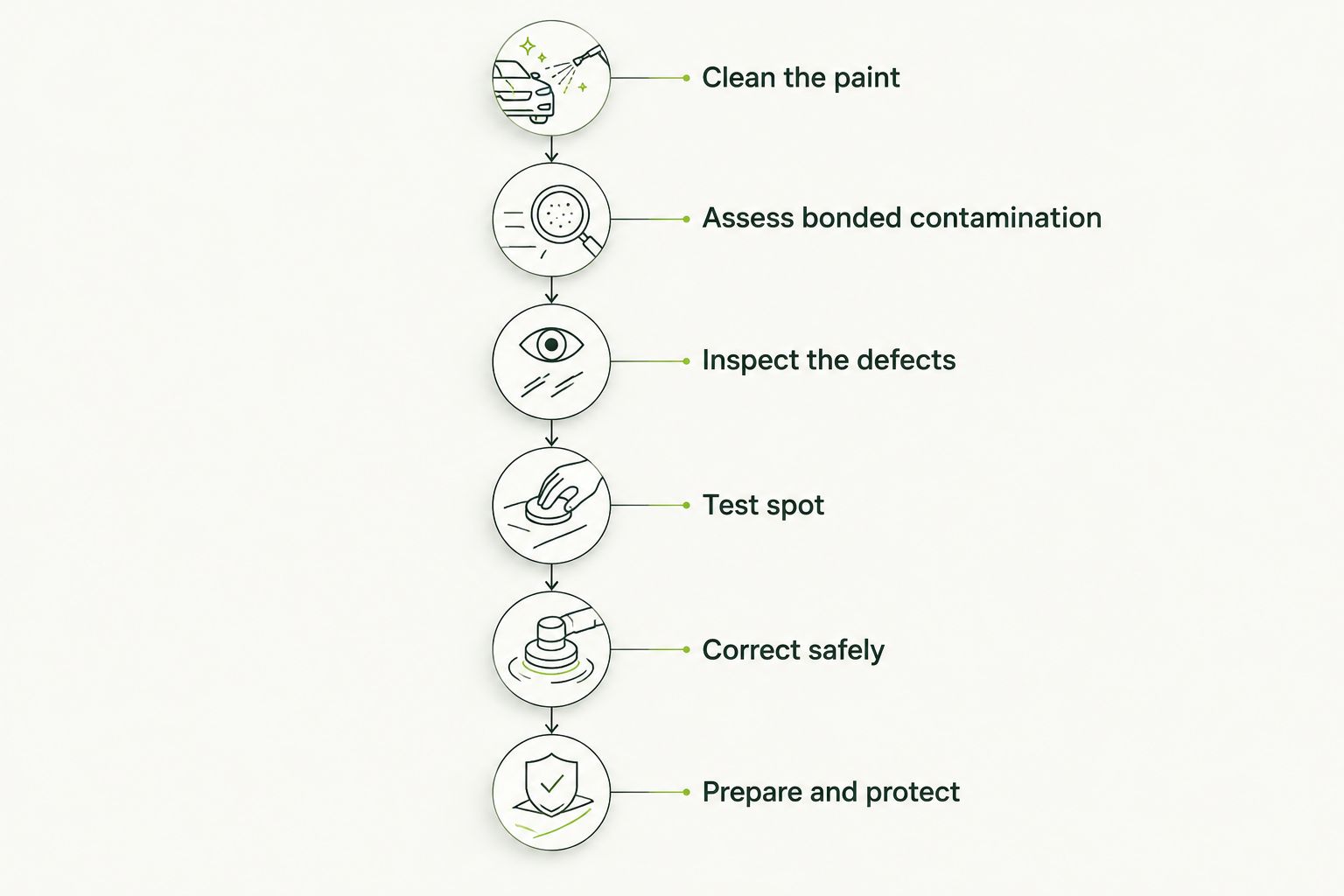
Agree on the corrected finish before the coating goes on.
The sequence is the point. Coating belongs after the paint assessment and any agreed correction, not in place of them. For more on that separate job, read the guide to paint correction in OKC.
Light swirl marks: assess polishing first
Fine wash marks are a reason to assess polishing, not a reason to assume the car needs the most aggressive correction available. The test spot should establish what improves the finish and what remains.
Best for: Owners bothered by fine marks visible in sunlight who want a cleaner-looking finish before protection. The benefit is visible improvement to the paint itself. The trade-off is that polishing still removes material, even when the defects look minor.
Set a practical standard. A daily driver does not need every last trace chased out of every panel. Agree on an improvement you can see under honest lighting without demanding unnecessary abrasion.
Deep scratches: accept the correction limit
A scratch that extends too deeply cannot be safely erased by polishing the surrounding clear coat. Ceramic coating does not rebuild that missing paint. Chips, exposed underlying layers, and failing clear coat need a different assessment.
Best for: Owners deciding whether a remaining defect needs touch-up or body-shop attention rather than more polishing. Keeping the surrounding paint intact is the benefit. The limitation is straightforward: the mark can remain visible.
Do not use a fingernail test as a complete diagnosis. It can draw attention to a pronounced defect, but it does not establish paint thickness or tell you exactly how much correction is safe.
Why swirl-removal results vary
There is no useful blanket promise for every vehicle. These factors determine the sensible approach:
- Defect depth. Fine surface marring and deep scratches are different problems. Correction has to respect the material surrounding the defect.
- Paint condition and history. Previous polishing, repairs, and deterioration affect the assessment. Tell the detailer what you know rather than assuming every panel is original.
- Paint response. Different finishes respond differently to pads, abrasives, and technique. A test spot establishes the approach on the actual vehicle.
- Lighting and inspection. Shade can disguise marks that direct light reveals. Compare results under consistent conditions.
- Your expected finish. A daily-use improvement and a demanding cosmetic target are different briefs. Agree on the target before work starts.
For a 2026 quote, ask what result is included and how remaining defects will be handled. A coating description alone does not answer either question.
Can you apply ceramic coating over swirl marks?
Yes, ceramic coating can be applied over paint that still has swirl marks when the surface meets the product's preparation requirements. The marks remain underneath. If they bother you now, address the correction decision before coating.
Leaving some defects is not automatically a bad decision. You might prioritize protection, preserve limited clear coat, or accept the finish on a working vehicle. The important part is choosing that outcome knowingly rather than expecting the coating to repair it.
Revisiting correction later adds work. Polishing an already coated panel affects the coating in the worked area, so protection needs reassessment afterward. Set the finish target first.
Does ceramic coating stop new swirl marks?
No, ceramic coating does not make your paint scratch-proof. Dirt dragged across the finish, contaminated wash tools, and rough drying can still cause marring. Protection is not permission to scrub harder.
If you are coating a new vehicle in 2026, inspect it first rather than assuming new means defect-free. Then protect the result with careful washing. A good preparation job cannot compensate for repeated abrasive contact afterward.
Use these habits:
- Rinse away loose dirt before contact washing.
- Use clean wash media and keep dirty tools away from paint.
- Follow the coating manufacturer's maintenance instructions.
- Use clean drying towels without unnecessary pressure.
- Do not wipe dust off dry paint with a handy shop rag.
The shop rag has other work to do. Leave it off the hood.
What should you ask before booking?
Ask whether the proposed work includes washing, decontamination, paint correction, and coating as separate tasks. Then ask what happens if inspection finds a defect that should not be polished further.
Useful questions include:
- Will you inspect the paint before recommending correction?
- Can I see a test spot under direct light?
- What level of improvement are we agreeing on?
- Which defects are expected to remain?
- What preparation and curing conditions does the coating require?
- What washing instructions should I follow afterward?
For a mobile appointment, confirm that the working area suits the proposed treatment. Access to your driveway does not automatically mean conditions suit every coating application. Surface temperature, weather exposure, and the manufacturer's instructions still matter.
Frogman Detailing brings mobile detailing to customers' driveways across the Oklahoma City metro. That is useful when getting the vehicle to a shop is the obstacle. Still, confirm the exact work you need rather than treating every detailing appointment as a paint-correction appointment.
FAQ
Will ceramic coating hide the swirl marks on my black car?
Ceramic coating does not remove swirl marks on black paint. Changes in gloss can alter how the finish looks, but inspect the paint under direct light to judge whether correction actually reduced the scratches.
Do I need paint correction before ceramic coating in 2026?
You need a paint assessment before ceramic coating in 2026, not an automatic correction package. Correct defects that bother you when the paint can safely support the work, and agree on any marks that will remain.
Can I polish swirl marks out after my car is ceramic coated?
Polishing can address suitable swirl marks after coating, but it also affects the coating in the worked area. Assess the paint first, then plan the appropriate preparation and protection afterward.
Is paint correction better than ceramic coating for scratches?
Paint correction is the relevant treatment for reducing suitable scratches; ceramic coating is a protective treatment. Neither is a substitute for paint repair when damage extends beyond what safe polishing can address.
Will a new car need polishing before coating?
A new car needs inspection before coating, not an automatic polishing job. Base the decision on the actual defects, the paint's condition, and the finish you want.
Can I fix swirl marks myself before applying a coating?
DIY polishing can reduce suitable swirl marks, but it requires the right equipment, technique, and judgment about paint condition. If you cannot assess the finish or demonstrate a controlled result on a test spot, get a professional assessment before using more aggressive abrasives.
One last thing
Ask to inspect the paint after correction and surface preparation, before the coating is applied. Use the same light and viewing angle you used to judge the original defects. That comparison keeps the conversation about scratch reduction instead of shine.
Accepting a remaining scratch can be the right result. Preserving sound paint matters more than winning an argument with one stubborn line on the door.
Related guides
Frogman comes to your driveway across the Oklahoma City metro.