Is waterless car wash safe for your paint?
October 20, 2026 · 10 min read · Frogman Detailing
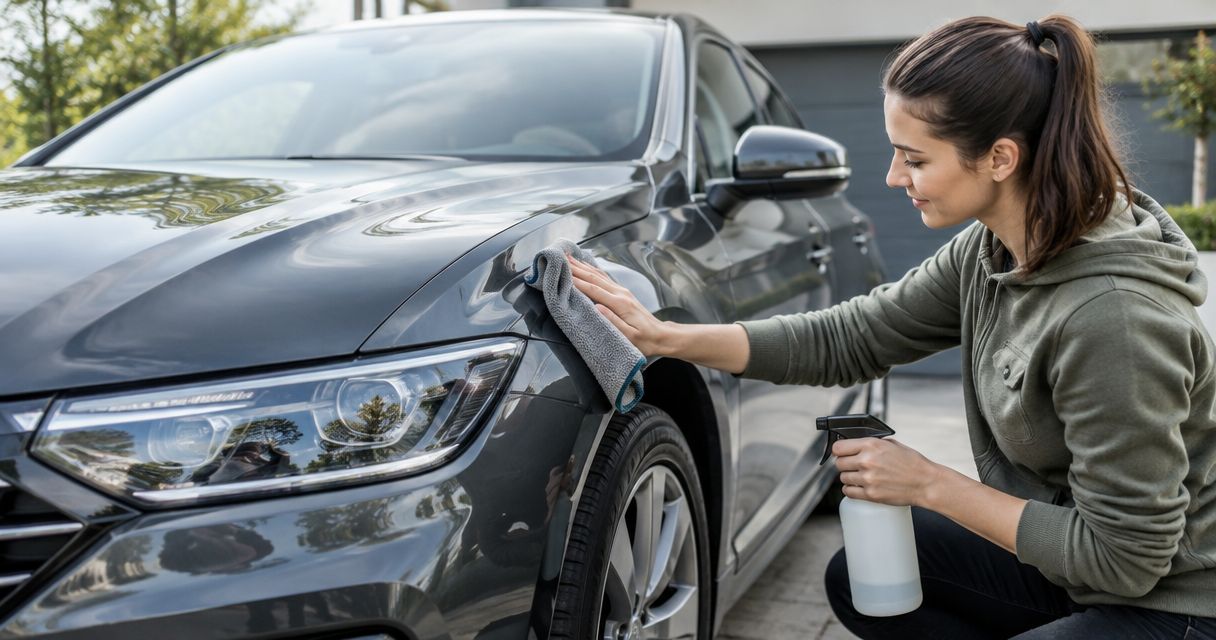
Yes, waterless car wash is safe for lightly dusty paint when you use a suitable product, clean microfiber towels, and gentle wiping. It is not the right choice for mud, sand, or heavy road grime because dragging that material across the finish can scratch it. The deciding factor is what sits on the paint, not whether the bottle says waterless.
TL;DR
- Is waterless car wash safe? Yes for light dust, not for gritty or muddy paint.
- Use clean microfiber towels, follow the product label, and stop when the cloth picks up grit.
- A rinseless wash still uses water. Heavy contamination calls for a rinse before contact washing.
- Frogman Detailing provides mobile detailing at customers' driveways across the Oklahoma City metro.
Why this matters
A quick cleanup should not leave you with scratches that need polishing. Waterless washing puts a towel directly against contamination, so the condition of the surface matters more than the convenience of skipping a hose.
Frogman Detailing is for Oklahoma City drivers who want mobile detailing at home. The veteran-owned service comes to customers' driveways, including Edmond and Arcadia. You can find the mobile car detailing service at Frogman Detailing, but choosing a wash method starts with inspecting the vehicle, not booking a particular technique.
Is waterless car wash safe for your paint?
Waterless washing is a reasonable choice for light dust on intact automotive paint. It is a poor choice for visible grit or stuck-on dirt. A lubricated surface and clean towels reduce friction, but neither makes abrasive particles harmless.
Use this comparison to choose a method for your next wash in 2026. These are different approaches, not interchangeable names for the same job.
| Method | Best for | Main advantage | Main limitation |
|---|---|---|---|
| Waterless wash | Light dust and small maintenance cleanups | Does not require a hose rinse when used as directed | Relies heavily on towel cleanliness and careful dirt removal |
| Rinseless wash | Routine cleaning where a hose rinse is impractical | Uses a prepared wash solution without a final hose rinse | Still needs water, and heavy grit calls for a pre-rinse |
| Rinse-first contact wash | Mud, sand, and heavier contamination | Removes loose contamination before a wash towel or mitt touches paint | Needs a suitable place to rinse and manage runoff |
None guarantees scratch-free results. A dirty mitt can damage paint during a conventional wash just as a dirty towel can during a waterless wash. The method and the handling have to match the mess.
What counts as light dust?
Light dust is a thin surface film without obvious clumps, crust, or gritty deposits. Think of a car that was recently washed and picked up a little settled dust while parked.
Mud around the wheel arches is different. So is sandy residue on the lower doors, a heavy road film behind the wheels, or dried dirt across the tailgate. Do not rub a finger across the panel to test it. That creates the same dry contact you are trying to avoid.
If you cannot tell whether a deposit contains grit, choose a rinse first. There is no prize for using less water on a truck that needs more cleaning.
Waterless wash: best for light maintenance cleaning
A waterless wash product is designed to help loosen contamination and lubricate the surface while you remove it with towels. Follow its directions for application, working conditions, and removal. Different products have different instructions.
The advantage is convenience. You can address light contamination without setting up a hose, provided the paint and conditions suit the product.
The trade-off is direct contact with dirt that has not been rinsed away. Every loaded towel face becomes a liability if you keep using it. Choose waterless washing for a lightly dusty car, not as a shortcut around removing heavy dirt.
For a 2026 maintenance routine, make the inspection your first habit. The same car can suit a waterless cleanup after one outing and need a rinse after the next.
Rinseless wash: best when hose access is limited
Rinseless washing uses a wash solution mixed with water according to the product label. You clean the vehicle with that solution and dry it without a final hose rinse.
Its advantage is that you have wash solution available throughout the process. Its limitation is right in the name: rinseless does not mean waterless, and it does not mean every dirty vehicle is ready for contact washing.
A rinseless product does not cancel out sand or mud. If the lower body has abrasive deposits, remove those with an appropriate pre-rinse before touching the paint. Choose rinseless washing when the contamination suits it and you can manage clean wash media properly.
Rinse-first washing: best for mud and grit
Rinsing before contact washing helps carry away loose dirt instead of making a towel carry all of it across the finish. That makes it the sensible starting point for visibly gritty vehicles.
The advantage is contamination removal before wiping. The limitation is that a rinse alone does not necessarily remove bonded road film, and contact washing still requires clean equipment and suitable technique.
Do not assume a strong water jet makes careless washing safe. Follow the vehicle and equipment instructions, particularly around damaged paint, loose trim, or compromised surfaces. Choose a rinse-first wash when you can see grit, mud, or substantial buildup.
Why waterless wash safety varies
Waterless washing has no universal safety rating that overrides the condition of your car. These factors decide whether it is a sensible choice:
- Contamination: Light dust is different from sand, mud, and gritty road residue. Abrasive material needs removal before wiping.
- Towel condition: A towel with trapped debris can mark paint even when it feels soft elsewhere.
- Product use: Use the intended dilution and application method. Do not substitute a household cleaner or improvise a weaker mix.
- Surface temperature: Follow the label's temperature and sunlight restrictions. Product that dries before removal makes the job harder.
- Pressure and repeated passes: Scrubbing increases contact with whatever remains on the panel. More force is not a cleaning plan.
- Finish condition: Peeling clear coat, fresh refinishing, wraps, and specialty finishes need their own care instructions.
For your 2026 car-care kit, prioritize clean towels and a suitable wash product over a bottle promising effortless results. Neither expensive packaging nor a thick towel fixes poor judgment about dirt.
How to use a waterless wash without unnecessary risk
1. Inspect the whole vehicle
Look at the lower doors, wheel arches, rear bumper, and areas behind the tires before starting. A clean-looking hood does not tell you what is stuck to the rocker panels.
If you see mud or grit, stop and change methods. Do not clean the easy panels first and talk yourself into wiping the dirty ones afterward.
2. Check the label and the surface
Read the product directions before spraying. Confirm that the product suits the finish, then check the panel temperature and working conditions against those directions.
Do not assume your painted panels, matte trim, glass, and wrapped surfaces all accept the same treatment. Compatibility is a label question, not a guess.
3. Prepare clean towel faces
Use clean microfiber towels intended for automotive paint. Inspect them for trapped debris, and keep dropped towels away from the finish until they have been properly cleaned.
Fold a towel into quarters to create 4 working faces on each side, or 8 faces total. That gives you an organized way to expose a clean section. It is not a promise that every face remains usable after contact with dirt.
4. Work one manageable section
Apply the product as directed and work on 1 manageable section at a time. Keep the surface lubricated according to the label rather than spreading a small amount across a large area.
Lift contamination with light passes. If a spot resists, do not turn the towel into sandpaper by pressing harder. Reassess the contamination and use an appropriate treatment instead.
5. Change towels before they become a problem
Move to a clean towel face as contamination collects. Retire a towel when its clean working surfaces are used up or when you find trapped debris.
Keep 2 towel roles separate: dirt removal and final buffing, if the product calls for buffing. Never take the towel used on wheels or gritty lower trim and promote it to hood duty.
6. Inspect before continuing
Check the cleaned area in useful light. Look for remaining dirt, streaks, or marks before repeating the process elsewhere.
Streaks do not automatically mean scratches. But if removing them requires repeated forceful wiping, stop and revisit the product directions, towel condition, and panel temperature.
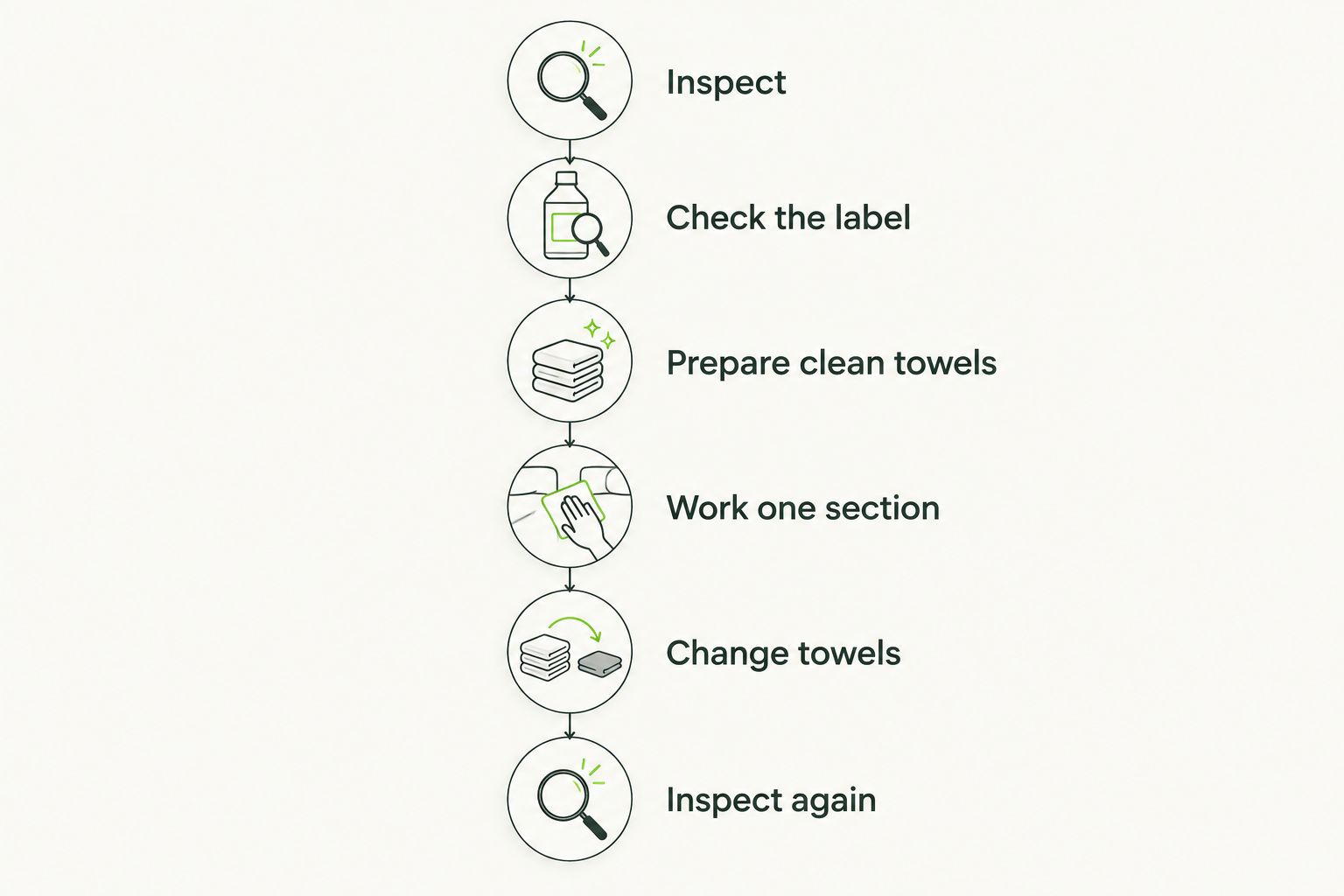
Inspection comes before wiping, and clean towels stay part of the process throughout.
Is waterless car wash safe on ceramic-coated paint?
Waterless washing can suit ceramic-coated paint when the coating's care instructions and the wash product both permit it. A coating does not make gritty contamination safe to wipe across the surface.
Some wash products leave protection or gloss-enhancing residue behind. Check compatibility rather than assuming that an added finish is useful for your coating. For a coated car in 2026, the coating manufacturer's maintenance instructions remain the starting point.
Will a waterless wash remove scratches?
A waterless wash does not correct scratches. Cleaning removes contamination; paint correction addresses defects in the finish through a separate process.
A glossy result can make paint look better without removing the marks underneath. Before treating every visible line as a polishing job, clean the surface safely and inspect it. The guide to whether paint correction is worth it before selling a car explains that separate decision.
Does mobile detailing mean a waterless wash?
Mobile detailing describes where the service happens, not the wash method. A detailer coming to your driveway does not automatically mean the vehicle will be cleaned without water.
Frogman Detailing provides mobile detailing across the Oklahoma City metro. The convenience is avoiding a trip to a shop; you still need to discuss the vehicle's condition and the working location. A driveway appointment also requires coordinating access to the vehicle and space around it.
Before arranging service in 2026, describe the actual mess. Mention gritty lower panels, mud, a coating, or damaged paint instead of asking only for a particular wash method.
FAQ
Can a waterless car wash scratch my clear coat?
Yes. A waterless car wash can scratch clear coat if grit gets dragged across the surface or a contaminated towel keeps touching the paint. Use it for suitable light contamination and stop when the surface needs a rinse.
Can I use a waterless wash on a black car?
Yes, if the product suits the finish and the contamination is light enough. Dark paint makes fine marks easier to notice, so clean towels and gentle handling matter more than chasing a fast shine.
Is rinseless washing safer than waterless washing?
Neither method is automatically safer in every situation. Rinseless washing uses a prepared water-based solution, but both methods depend on contamination level, clean wash media, and correct product use.
Can I clean dried mud with a waterless wash?
Do not wipe dried mud off paint with a waterless wash. Remove the mud through an appropriate rinse before contact washing so you are not dragging abrasive material across the finish.
Can I use a waterless wash in direct sunlight?
Use a waterless wash in direct sunlight only if the product instructions allow the conditions. A hot panel can dry the product before you remove it, leaving residue and encouraging unnecessary wiping.
How many towels do I need for a waterless wash?
You need enough towels to keep a clean working face against the paint throughout the job. Vehicle size and contamination determine that amount, so do not commit to finishing with a fixed towel count.
Is waterless washing safe for a wrapped or matte-finish car?
Use a waterless wash on a wrap or matte finish only when both the finish-care instructions and the product label permit it. Gloss-enhancing ingredients are not automatically suitable for finishes designed to stay matte.
One last thing
A towel can feel soft and still contain something that scratches paint. Inspect it, keep it off the ground, and separate paint towels from wheel-cleaning towels.
When the dirt needs rinsing, rinse it. Saving a little setup is not worth rubbing grit across the clear coat. The right wash is the one that suits the surface in front of you.
Related guides
Frogman comes to your driveway across the Oklahoma City metro.