How long does ceramic coating take to cure?
October 20, 2026 · 9 min read · Frogman Detailing
Ceramic coating cure time depends on the exact coating and its manufacturer’s instructions, not a single waiting period that fits every car. You need separate guidance for keeping the paint dry, returning to normal driving, and washing it. A surface that feels dry is not proof that the coating has finished curing.
TL;DR
- Ceramic coating cure time follows the exact product’s instructions. Dry paint does not prove a complete cure.
- Confirm separate deadlines for water exposure, normal driving, and the first wash before installation.
- Frogman Detailing’s advice: plan protected parking before the coating goes on, not after rain arrives.
- Do not test fresh ceramic coating with a hose, fingernail, or early wash.
How long does ceramic coating take to cure?
Use the coating manufacturer’s written curing schedule. Ask your installer to identify the product and explain what each waiting period allows. A handover time tells you when you can collect or use the vehicle under specified conditions. It does not automatically mean you can wash it.
For a ceramic coating appointment in 2026, get actual dates and times written down. Instructions such as keep it dry until a stated time are more useful than let it sit for a while. Your calendar should show the first permitted water exposure and the first permitted wash separately.
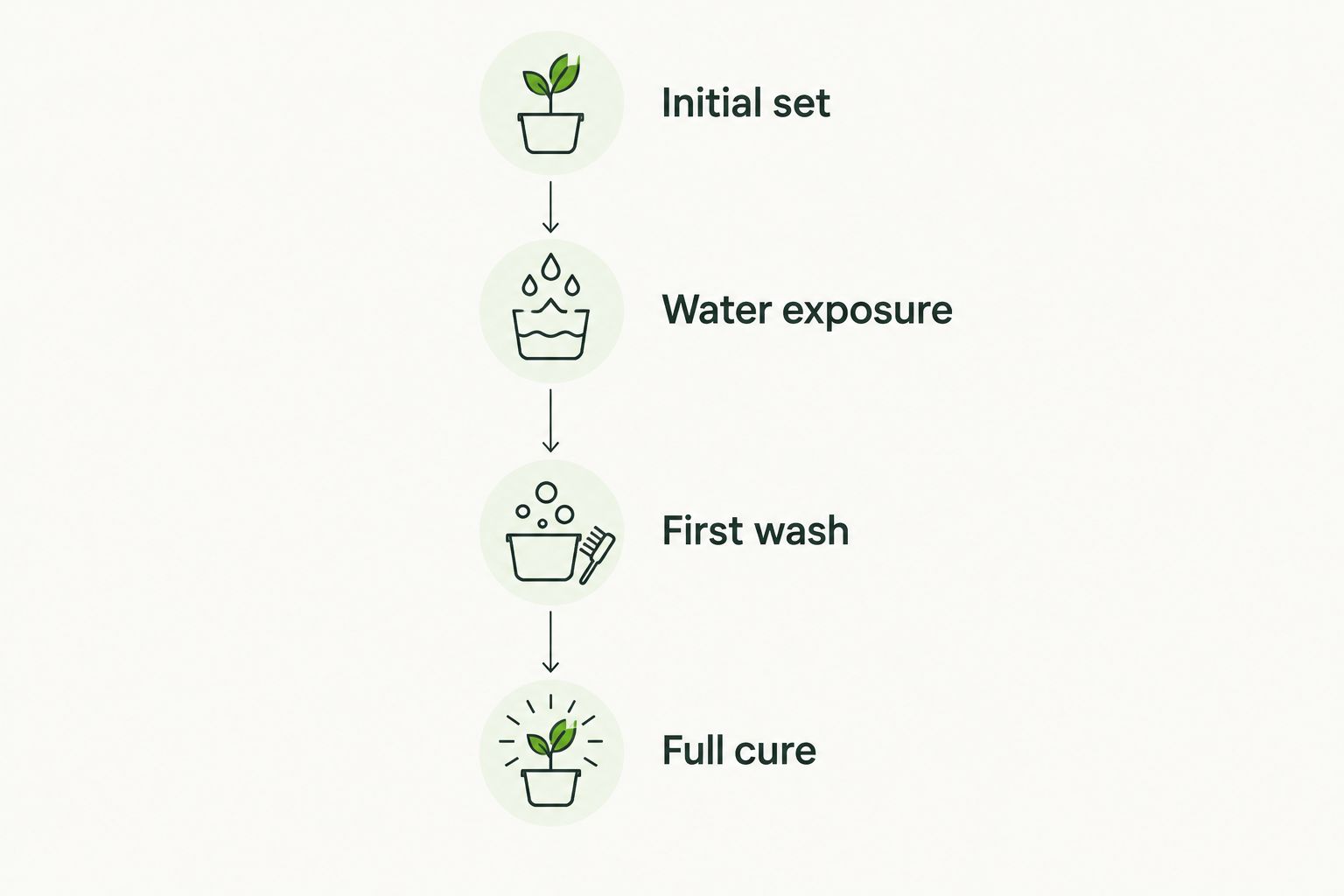
| Curing milestone | What it means | What it does not prove |
|---|---|---|
| Initial set | The coating has reached the manufacturer’s initial handling stage | That rain, washing, or rubbing is safe |
| Water exposure | The manufacturer permits water contact under its stated conditions | That detergent or an automatic wash is permitted |
| First wash | The manufacturer permits cleaning with its specified method | That every cleaner, brush, or added product is suitable |
| Full cure | The coating has completed its stated curing period under the required conditions | That the paint is scratch-proof or maintenance-free |
These are milestones, not interchangeable promises. Some instructions combine them. Others keep them separate. Follow the document for the coating actually applied to your vehicle.
If you are still deciding whether to book, start with whether ceramic coating is worth it. The ability to protect the vehicle afterward belongs in that decision, right alongside your maintenance habits.
Why the waiting period matters
Freshly applied coating needs the conditions specified by its manufacturer while it cures. Early water exposure, cleaning chemicals, or physical contact can interfere with that process or leave marks that need attention. The safe response depends on the product and what happened.
That is why shiny paint is a poor readiness test. You cannot judge the permitted wash date by the gloss, and touching the panel adds another unnecessary variable. Leave the finish alone and use the written schedule.
Plan the cure before you book the application. If the car must sit outside, work a shift, or travel immediately afterward, explain that before anyone opens a bottle. A coating appointment should fit the vehicle’s real use, not an imaginary week when nothing needs doing.
Initial set is not full cure
The first stage concerns how the applied coating sets on the surface. Installers also work within product-specific application and leveling instructions. Those working times are not the same as the owner’s aftercare schedule.
Do not borrow a timing recommendation from an application video and treat it as permission to drive through rain. The video might discuss wiping residue during installation, not exposing the finished coating to weather.
Ask a plain question at handover: what exactly am I allowed to do now? The answer should distinguish handling the vehicle from getting the finish wet or cleaning it. That distinction prevents more confusion than another general claim about how quickly a coating cures.
Water exposure is not permission to wash
A manufacturer can permit water exposure before it permits washing. Washing adds cleaners and physical contact. Those are different demands on a fresh coating.
Rain also differs from a deliberate rinse. Rainwater can carry contamination, and water that dries on the surface can leave deposits. A hose is not a safe readiness test simply because the car would eventually encounter rain anyway.
Wait for the stated wash deadline, even if water exposure is already permitted. If the instructions distinguish those milestones, keep them separate. The same applies to any restrictions on detergents, drying aids, or other products.
Permission to get the paint wet is not automatically permission to wash it.
Why ceramic coating cure time varies
The product instructions set the schedule. These factors explain why a deadline from another vehicle or another coating is not a dependable substitute:
- Coating formulation. Products have different application and aftercare requirements. Use the instructions for the exact coating, not a similar-sounding category.
- Temperature. Manufacturers specify suitable application and curing conditions. A schedule stated for those conditions should not be applied blindly outside them.
- Humidity. Moisture affects the curing behavior of moisture-reactive coatings. More humidity is not a universal shortcut, and less is not automatically better.
- Application system. Required layers, intervals between applications, and approved top treatments belong to the product’s specified process.
- Curing method. Some systems include controlled heat curing. That only changes your aftercare when the manufacturer’s procedure supports it and the installer confirms what applies.
For an Oklahoma City appointment, check the actual forecast and parking conditions. A season name is not a measurement of the conditions around your car. A warm afternoon also does not tell you what happens overnight.
Do not improvise with a heat gun or heater to hurry things along. Controlled curing equipment and a guessed heat setting are not the same process. Let the installer handle any manufacturer-approved accelerated cure.
Can you drive while ceramic coating is curing?
Drive only when the installer confirms the coating’s release conditions have been met. Permission to drive does not automatically remove restrictions on rain, washing, or contamination. Ask what the planned route and parking situation mean for your particular installation.
A dry trip home and a wet highway commute expose the finish to different conditions. If wet driving is restricted, do not treat a short trip as an exception. Duration alone does not determine whether the coating encounters water or road spray.
For a daily driver, explain the next necessary journey before scheduling. Include outdoor parking at work and any unavoidable exposure. If the aftercare requirements clash with that schedule, change the appointment rather than inventing a shorter cure.
What should you do if rain hits a fresh coating?
Follow the coating’s aftercare instructions and contact the installer with the timing and circumstances. Do not immediately scrub the panels, use a household cleaner, or add another protective product. An improvised fix can make the situation harder to assess.
Tell the installer when application finished, when the vehicle got wet, and whether the water dried on the paint. Clear photographs of visible marks help describe the problem. Leave correction advice to someone who knows the coating and its current curing stage.
Rain exposure does not, by itself, establish that the coating has failed. It also does not establish that everything is fine. The next action depends on the product instructions and the surface condition, not a confident guess from a comment thread.
For planning around weather before the appointment, read whether mobile detailing can be done in the rain. General appointment advice does not replace coating-specific aftercare.
Set up the parking space before application
The best parking choice is one that meets the coating’s stated requirements. Shelter helps control exposure, but a roof alone does not guarantee suitable curing conditions. Check for sprinklers, leaks, falling debris, and overnight moisture.
Use this sequence before your appointment:
- Confirm the coating. Get the exact product identity and its written aftercare instructions.
- Check the shelter. Tell the installer where the vehicle will sit during the restricted period.
- Remove water risks. Redirect sprinklers and check whether nearby cleaning or watering will reach the car.
- Plan necessary travel. Explain any commute, school run, or work use that cannot move.
- Record release times. Write down the permitted water exposure and first-wash deadlines.
A vehicle cover is not an automatic substitute for suitable shelter. Putting one on involves contact with the finish, and a cover can hold moisture or contamination against the surface. Ask before covering fresh coating.
For 2026 appointments, save the aftercare sheet on your phone before handover. That makes it available when somebody else offers to wash the car as a favor. Good intentions still come with a sponge.
What should you ask before the installer leaves?
Ask for instructions you can act on, not just reassurance that the coating is good to go. You need to know what happens if normal life gets in the way.
- What is the exact coating applied to the vehicle?
- When can the vehicle encounter water?
- When can you wash it, and which cleaning method is permitted?
- What should you do about bird droppings or an accidental spill during curing?
- Who should you contact if the finish develops marks?
Keep those answers with the product instructions. If verbal advice conflicts with the manufacturer’s document, ask the installer to explain the difference before you act.
Frogman Detailing is a practical choice for Oklahoma City metro owners who want mobile detailing at their driveway. The veteran-owned service also serves Edmond and Arcadia. That convenience removes the trip to a shop, but driveway access alone does not establish suitable conditions for a coating installation.
For any ceramic coating appointment, confirm the application setting and aftercare plan separately. Mobile service describes where the work happens. It does not erase the coating’s environmental requirements.
FAQ
How do I find the right ceramic coating cure time for my car?
Use the manufacturer’s instructions for the exact coating applied to your car. Ask the installer to write down separate deadlines for water exposure, driving restrictions, and the first wash.
Does dry ceramic coating mean it is fully cured?
No. A dry-looking surface does not establish that ceramic coating has completed its cure. Use the stated curing schedule rather than touching or testing the paint.
Can I wash my car as soon as it can get wet?
No, not unless the coating’s instructions also permit washing at that point. Water exposure and washing can have different deadlines because washing adds cleaners and physical contact.
Will parking in the sun make ceramic coating cure faster?
Do not use sun exposure as a substitute for the coating’s specified curing conditions. Only follow an accelerated curing method when the manufacturer supports it and the installer confirms the procedure.
What if bird droppings land on the coating before it cures?
Contact the installer promptly for a coating-safe removal method at that curing stage. Do not leave the contamination indefinitely or attack it with scrubbing and an unapproved cleaner.
Can I put a car cover over fresh ceramic coating?
Use a car cover only if the installer confirms it is suitable during that coating’s cure. Cover contact, trapped moisture, and contamination can conflict with the required aftercare.
Can Frogman Detailing come to my driveway?
Frogman Detailing provides mobile car, truck, and motorcycle detailing at customers’ driveways throughout the Oklahoma City metro, including Edmond and Arcadia. Confirm the service scope and site requirements before scheduling.
One last thing
Skip the water-beading test on fresh coating. Spraying the hood to see whether the coating works introduces the very exposure you might have been told to avoid. Beading is not proof that every curing milestone has been reached.
The useful test happens before installation: can you follow the required aftercare with the parking and driving schedule you actually have? Get that answer straight. Then let the coating cure without an audience, a hose, or a helpful neighbor holding a wash mitt.
Related guides
Frogman comes to your driveway across the Oklahoma City metro.