How long does paint correction take?
October 21, 2026 · 10 min read · Frogman Detailing
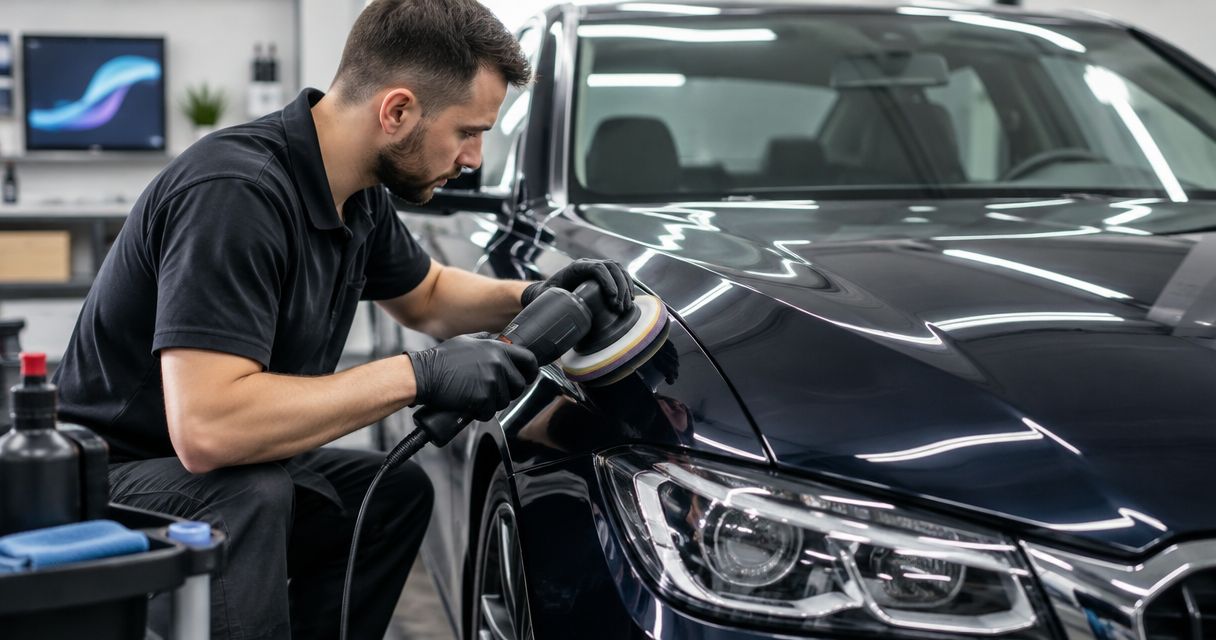
Paint correction takes longer when the paint needs separate cutting and finishing stages than when a light polish addresses the agreed defects. Your vehicle’s size, paint condition, and finish goal determine the working time. Washing, decontamination, protection, and any coating cure requirements also affect when you can use the vehicle again.
TL;DR
- How long does paint correction take? Paint condition and correction stages determine the schedule, not vehicle size alone.
- A finishing polish targets lighter defects; separate cutting and finishing stages involve more work.
- Ask whether the appointment includes preparation, protection, and any coating cure requirements.
- Frogman Detailing provides mobile car detailing for drivers throughout the Oklahoma City metro, including Edmond and Arcadia.
How long does paint correction take?
Get a completion estimate tied to your paint inspection, not a generic appointment length. A vehicle with light wash marks needs a different plan from one with deeper scratches, previous repairs, or uneven paint condition.
When arranging work in 2026, ask what the estimated time actually covers. Machine polishing is only part of the appointment. Cleaning the paint, checking the result, and applying the agreed protection belong on the schedule too.
If you are starting with Frogman Detailing, explain whether you want routine mobile car detailing or help assessing visible paint defects. Those are different requests. A clean exterior and corrected paint are not interchangeable results.
| Approach | Best for | What the work involves | Main limitation |
|---|---|---|---|
| Finishing polish | Light surface defects and improving clarity | A polishing stage selected after inspecting the paint | Deeper defects can remain |
| Cutting and finishing | Defects that need stronger initial correction | An initial abrasive stage followed by refinement | More work and more paint removal than light polishing |
| Targeted correction | An isolated area that needs attention | Work focused on an affected panel or section | Does not address defects elsewhere |
| Cleaning without correction | Dirt and contamination rather than scratches | Washing and appropriate surface cleaning | Does not level scratches in the paint |
These are approaches, not standardized packages. Ask the detailer to describe the actual work behind the label. A package name does not tell you what condition the paint will be in when the job ends.
Why the appointment is more than polishing time
A polishing machine should not touch dirty paint. Loose dirt needs removing first, and bonded contamination needs assessing before correction starts. Otherwise, contamination can interfere with the work or cause fresh marks.
Inspection matters just as much. Paint that looks acceptable in flat light can show swirls under focused lighting. The detailer needs to identify the defects, choose an approach, and inspect the result under suitable light.
For your 2026 booking, separate the appointment into preparation, correction, inspection, and protection. That makes the estimate useful. It also gives you a way to compare quotes that describe different amounts of work.
Preparation
Preparation includes cleaning and assessing contamination. Depending on the surface, it can involve chemical decontamination or mechanical removal of bonded material. Not every car needs the same process.
Trim and sensitive edges also need consideration. Masking suitable areas helps keep polishing products away from surfaces where they do not belong. None of this is wasted time.
Correction
Correction uses abrasives to remove a small amount of paint material and reduce suitable defects. On a clear-coated finish, that generally means working within the clear coat rather than repairing damage underneath it.
A more aggressive process is not automatically better. The right process improves the finish without chasing defects beyond what the paint can safely support. Some scratches should stay.
Inspection and protection
Polishing residue can make inspection difficult. The detailer needs to check the finish using a suitable process rather than judging it through leftover product.
Protection follows the agreed correction work. If a coating is part of the job, its application and care instructions affect the handover plan. Finishing the polishing does not automatically mean every part of the appointment is finished.
Light polishing: less correction, fewer stages
Best for: lighter defects when improving clarity matters more than removing every visible mark. A finishing polish can be an appropriate stopping point when the paint responds well and the remaining defects are acceptable.
The benefit is a less involved correction process. The limitation is simple: deeper marks can remain. That is not a failed job if the finish goal was discussed beforehand.
Ask to see a test area before agreeing to a whole-vehicle result. A test area shows how that paint responds to the proposed pad, product, and technique. It is more useful than a confident promise made from across the driveway.
For a daily driver, agree on which defects bother you most. Chasing every mark is not the same as making a sensible improvement. Your paint does not need to win an argument with an inspection light.
Cutting and finishing: more work, more inspection
Best for: paint that needs an initial correction stage followed by refinement. Cutting addresses suitable defects with a more aggressive abrasive approach. Finishing then refines the surface when the initial stage leaves haze or fine marks.
The benefit is greater scope for correcting defects that a light polish leaves behind. The trade-off is additional work and additional material removal. Neither should be treated casually.
Paint response changes the plan. A combination that works on one panel can need adjustment on another, especially when the vehicle has previous paint repairs. That is why the detailer should inspect the vehicle rather than promise a result from the model name alone.
Ask what happens if the test area reveals a limit. The answer should include a clear stopping point and a conversation about expectations, not an automatic push toward a more aggressive process.
Why paint correction time varies
For any 2026 estimate, these factors explain the scope better than a package name:
- Paint condition. Light swirls, deeper scratches, oxidation, and etching are different problems. They do not all respond to the same treatment.
- Paint response. Different finishes react differently to abrasives. The detailer needs a test area to select a suitable process.
- Vehicle size and shape. More painted surface means more area to work. Tight curves, edges, and recessed sections require careful access.
- Previous repairs. Repainted panels can behave differently from surrounding paint. Repair history belongs in the initial conversation.
- Finish goal. Improving overall appearance is different from pursuing a more demanding level of correction. Agree on the target first.
- Working conditions. Lighting, shelter, panel temperature, and weather affect the suitability of the workspace, particularly for mobile work.
A bigger vehicle is not automatically the harder correction job. A smaller car with difficult defects and complicated panel shapes can require more attention. Size is one factor, not the whole estimate.
How to get a useful completion estimate
Give the detailer enough information to assess the job. You do not need to diagnose the paint yourself. You do need to explain what you see and what you want changed.
- Show the defects. Send clear photographs in useful lighting, including close views and wider panel views. Describe marks that photographs do not capture well.
- Share paint history. Mention known repainting, previous correction, existing coatings, or damage. Do not guess if you do not know.
- Agree on scope. Confirm whether the work covers the whole vehicle or selected areas, and which defects are realistic targets.
- Confirm handover. Ask when the vehicle can be driven, exposed to weather, and washed after the chosen protection is applied.
Photographs help start the conversation. They do not replace a physical inspection or a test area. A responsible estimate leaves room to confirm the process after seeing the paint properly.
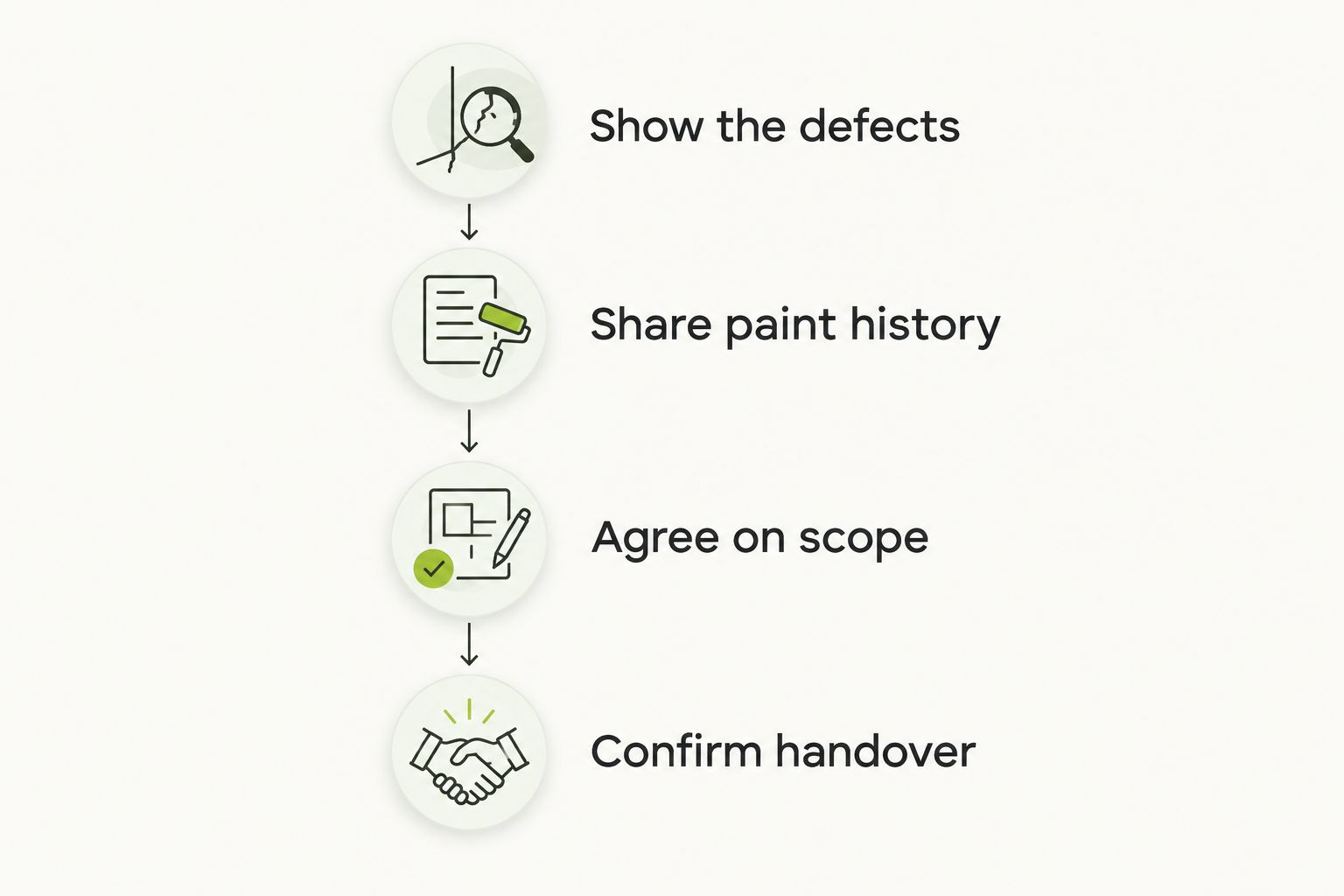
Agree on the work and the handover conditions before arranging your day around the appointment.
For a 2026 appointment, give your real deadline at the start. If you need the vehicle for work, school pickup, or an event, say so before agreeing to the correction scope. A deadline is a planning constraint, not a reason to rush the paint.
Can paint correction be completed in one appointment?
Paint correction can be completed in one appointment when the agreed work and working conditions allow it. The appointment itself still needs a defined scope and handover plan.
Do not translate “one appointment” into a promise that the vehicle will be ready whenever you need it. Ask for the expected completion point and what would change it. A test area that reveals different paint behavior is a valid reason to revisit the plan.
If your schedule cannot move, discuss a smaller scope or a different date before work starts. That is better than cutting inspection or finishing short.
Does ceramic coating add time after paint correction?
Ceramic coating adds preparation and application work when it is included after correction. Product-specific cure and aftercare instructions also affect what you can do with the vehicle afterward.
Correction changes the finish; coating is a separate protection step. Do not assume a coating removes the swirls that polishing was meant to address. Agree on the paint’s condition before anything is applied over it.
Ask for separate instructions covering driving, water exposure, and washing. Those are different questions. Follow the instructions for the actual product used, not a cure schedule borrowed from another vehicle.
Can mobile paint correction take place in a driveway?
Driveway correction depends on whether the location provides suitable working conditions. Access alone is not enough. The detailer needs appropriate lighting, working space, and control over conditions that affect the process.
Frogman Detailing brings mobile car detailing to driveways throughout the Oklahoma City metro, including Edmond and Arcadia. When asking about correction work, describe the location and confirm the proposed scope directly. Mobile detailing does not mean every paint problem suits every driveway.
Before your 2026 appointment, explain whether the vehicle sits outside or under cover. Ask what happens if weather makes the location unsuitable. Set that plan before the equipment comes out.
FAQ
How long does paint correction take on my car?
Paint correction timing depends on your car’s paint condition, surface area, and agreed correction process. Ask for an estimate after inspection and confirm whether it includes preparation, protection, and handover requirements.
Is a finishing polish quicker than cutting and finishing?
A finishing polish involves fewer correction stages than a process that includes separate cutting and finishing. The total appointment still depends on preparation, paint response, vehicle size, and the agreed finish.
Can I drive my car immediately after paint correction?
Driving after paint correction depends on the protection applied and its instructions. Confirm the handover requirements with the detailer, especially when a coating is included.
Will spending longer remove every scratch?
More working time does not make every scratch safe to remove. Defects that extend too deeply, exposed edges, or compromised paint can limit correction regardless of the schedule.
Does a new car need less paint correction?
A new car’s correction needs depend on its actual paint condition, not its age alone. Inspect it for swirls, marks, and other defects before choosing a process.
Should I wash my car before a paint correction appointment?
Ask the detailer whether any washing is needed before arrival. Correction requires suitable preparation anyway, and you should disclose contamination rather than trying aggressive removal yourself.
What should I ask before booking paint correction?
Ask which defects the work targets, what preparation and protection are included, and when the vehicle can be used again. Also confirm how changes to scope or working conditions will be handled.
One last thing
The most useful question is not “Can you polish longer?” It is “Which defects should stay?” Paint correction removes material. A detailer who explains the stopping point gives you something more valuable than an ambitious scratch-removal promise.
Frogman Detailing is best for Oklahoma City metro drivers who want mobile car detailing at home. For correction decisions, start with the paint’s condition and a clear scope. Book the work your vehicle needs, then arrange your schedule around that work.
Related guides
Frogman comes to your driveway across the Oklahoma City metro.