How long does interior pet hair removal take?
October 21, 2026 · 10 min read · Frogman Detailing
Interior pet hair removal takes as long as the hair's coverage, grip, and location require. A useful appointment estimate comes from inspecting the seats, carpet, mats, and cargo area, not just knowing the vehicle model. Confirm whether that estimate covers hair removal alone or the rest of the interior detail, including any drying time.
TL;DR
- Pet hair removal detailing time depends on embedded hair, affected surfaces, access, and the agreed cleaning scope.
- Frogman Detailing brings mobile detailing to driveways throughout the Oklahoma City metro, including Edmond and Arcadia.
- Confirm the vehicle-ready time, not just when the detailer expects to finish cleaning.
- Hair removal and odor treatment are separate jobs. Discuss both before booking.
How long does interior pet hair removal take?
There is no fixed duration that fits every pet-hair job. Loose hair sitting on a seat is different from short hairs worked into carpet fibers. A clean-looking seat can also hide hair along its seams and underneath its front edge.
Start with the affected surfaces, then work through the cleaning scope. The guide to removing pet hair from car seats addresses the seat-specific side of the job. Your appointment estimate also needs to account for the floors and cargo area if your pet uses them.
A sensible assessment follows this sequence:
- Inspect the coverage. Identify every affected seating row, footwell, mat, and cargo surface.
- Check how the hair releases. Test a small, suitable area rather than assuming vacuuming will handle everything.
- Set the scope. Separate hair removal from stain cleaning, odor work, and other interior tasks.
- Confirm the handoff. Ask when you can use the vehicle, not just when active cleaning ends.
That gives you something useful to schedule around. A quick guess based on a photo of one seat does not describe the whole interior.
Why the appointment estimate matters
If you need the car for school pickup, work, or a trip, the finish time matters as much as the cleaning. Tell the detailer your deadline before you agree on the appointment. Do not save that detail for the driveway conversation.
For a 2026 booking, ask for a condition-based estimate and a clear description of the work included. An estimate for vacuuming is not automatically an estimate for removing embedded pet hair throughout the cabin.
Book around the agreed vehicle-ready time, not an assumed quick vacuum. That distinction keeps a small cleaning job from turning into a scheduling problem.
Loose hair and embedded hair are different jobs
The amount you see is only part of the story. How firmly the hair holds onto the surface determines the work needed to release it.
These are conditions to identify, not service packages or promised completion times.
| Interior condition | Best for | Main advantage | Main limitation |
|---|---|---|---|
| Loose surface hair | Targeted removal when hair lifts readily | Less work is needed to release individual hairs | Seams and hidden edges still need inspection |
| Embedded upholstery hair | Focused fabric cleaning | Addresses hair that ordinary vacuum passes leave behind | Requires repeated loosening and collection |
| Hair across the cabin | Whole-interior assessment | Keeps seats, floors, and cargo areas in the scope | More affected surfaces mean more work |
| Hair with stains or odor | Separate assessment of each concern | Avoids treating every problem as a vacuuming task | Hair removal alone does not resolve every interior issue |
Loose surface hair: start with controlled vacuuming
Loose hair resting on top of a surface is the simplest condition to assess. Vacuum the accessible material and inspect what remains. Do not assume an empty vacuum nozzle means the fabric is clear.
For a DIY attempt, this is the sensible starting point. Its limit is straightforward: suction collects loose hair, but embedded strands need help releasing from the fabric.
Embedded hair: release it before collecting it
Short strands can work into fabric and resist ordinary vacuuming. Repeatedly pushing a nozzle over the same patch does not necessarily change that. The hair needs to be loosened with a method suitable for the material, then collected.
That repeated release-and-collect work is why two interiors with similar visible coverage can take different amounts of effort. The useful question is how the hair releases, not just how much you can see.
Widespread hair: include the places below eye level
A back seat can look presentable while the rear footwells and cargo carpet still hold hair. If your dog moves between areas, show all of them during the assessment. Include removable mats and the edges around them.
A whole-interior assessment is best for widespread contamination. Its trade-off is a broader job. Calling it a seat cleanup does not make the floor disappear.
Why pet hair removal detailing time varies
These factors explain the work without pretending every vehicle follows the same clock:
- Hair coverage. One affected cushion is a different scope from seats, floors, and a cargo area covered in hair.
- Fabric texture. Hair sitting on a smooth surface behaves differently from strands caught in carpet or woven upholstery.
- How deeply hair is embedded. Hair that releases readily needs less repeated agitation than strands worked into fibers.
- Access to affected areas. Bags, personal belongings, seat positions, and tight gaps affect access to the surfaces being cleaned.
- Other cleaning tasks. Stains, spills, and odor concerns need their own assessment rather than being folded into a hair-removal promise.
- The agreed finish. Cleaning exposed surfaces and addressing accessible seams and edges are different scopes. Define the finish before work starts.
Vehicle size matters through the area being cleaned. A larger vehicle with one affected mat is not automatically a bigger hair-removal job than a smaller vehicle with embedded hair throughout its carpet.
What happens during the removal process?
The basic sequence is inspection, release, collection, and reinspection. The exact tools depend on the surface. More force is not a substitute for choosing a suitable method.
Inspect the material and access
Check the upholstery and carpet before using a brush or hair-removal tool. Look for damaged fabric, loose stitching, and delicate trim. A tool that works on a durable floor mat is not automatically suitable for every seat panel.
Move ordinary belongings out of the working area. Ask about access under seats, but do not assume the job includes removing seats or taking interior trim apart.
Release trapped hair
Use a material-appropriate tool with light, controlled passes. Follow its instructions and test an inconspicuous area first. Stop if the surface starts to snag, fuzz, or change appearance.
The aim is to bring trapped strands to the surface. Scrubbing harder after the material shows distress is not progress.
Collect the loosened hair
Vacuum the loosened strands rather than pushing them into another section. Work across manageable areas so you can see what has been completed. Check seams and edges as you go.
This stage often reveals why the first vacuum pass was not the whole job. Hair that was hidden among fibers becomes visible once released.
Recheck the cleaned area
Inspect the surface from another angle and look along the seams. Check adjacent carpet before declaring the seat finished. A visible clump beside the seat rail still belongs to the same interior.
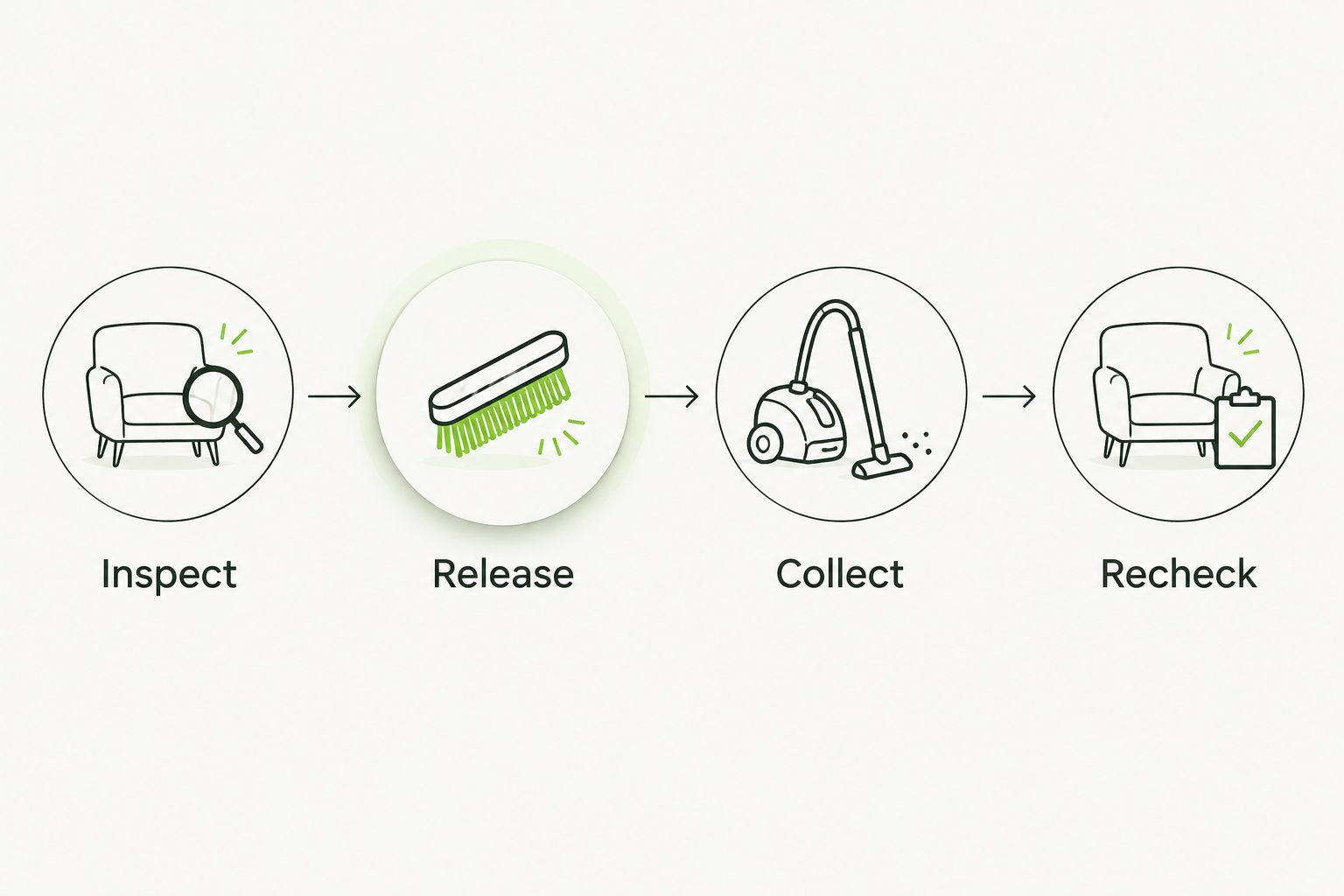
Loosen embedded hair before collecting it, then inspect the surrounding surfaces.
How can you help keep the appointment on track?
Preparation should improve access, not turn into a second detailing job. You do not need to hide the condition of the interior before someone assesses it.
Remove personal belongings, loose rubbish, and items stored in the affected footwells. Take out removable pet bedding and tell the detailer whether it also needs attention. Keep the pet out of the vehicle during cleaning and until handoff.
For the estimate, send clear views of:
- The full affected seat, not just a close-up of one patch.
- Rear footwells and floor mats.
- Seat seams and edges where hair collects.
- The cargo area if your pet rides there.
- Any stains or damage that overlap the hairy areas.
Photos show coverage, but they do not show exactly how firmly each strand is trapped. Treat the photo-based estimate as a starting point and confirm the scope when the interior is inspected.
Do not soak the upholstery to loosen pet hair before the appointment. Adding moisture creates another condition to assess and can introduce drying requirements that dry hair removal did not have.
Does pet hair removal include shampooing or odor treatment?
Pet hair removal does not automatically include shampooing or odor treatment. Removing visible strands, cleaning a spill, and addressing a smell are different tasks. Put each concern into the booking conversation.
Dry vacuuming and suitable agitation do not require wet upholstery cleaning by default. If wet cleaning is part of the agreed job, ask how that changes the vehicle-ready estimate. Cleaning completion and usable, dry seating are not necessarily the same handoff point.
Odor also needs its own discussion. A cabin can look free of hair and still have a smell from soiled fabric or another source. Do not use appearance as proof that every concern has been addressed.
Can you do the pet hair removal yourself?
DIY removal is a reasonable first attempt when the hair releases easily and you can work without damaging the surface. Start with vacuuming. Then test a suitable hair-removal tool on an inconspicuous area and collect the loosened strands.
The benefit is control over a small cleanup. The downside is repeated hands-on work, especially when carpet holds short hairs. Stop if the fabric snags or your tool leaves marks.
Professional assessment makes sense when the hair covers several areas, resists careful removal, or sits alongside stains and odor concerns. It does not justify a universal finish-time promise. The interior still needs inspection.
Booking mobile detailing around your day
Frogman Detailing is best for Oklahoma City metro drivers who want mobile detailing at their driveway. The veteran-owned service comes to customers in Oklahoma City, Edmond, and Arcadia. The practical advantage is the location. You still need to keep the vehicle available for the agreed work.
When discussing mobile detailing with Frogman Detailing, describe the pet hair plainly. Say where the pet rides, which surfaces are affected, and whether you also need other interior cleaning assessed. Ask about the specific hair-removal scope before treating it as included.
A useful booking message is simple: identify your vehicle, describe the affected areas, offer photos, and state your required handoff time. Ask whether that deadline fits the assessed work. That is more useful than asking for the fastest slot and hoping the rest sorts itself out.
FAQ
How long does pet hair removal take during a car detail?
Pet hair removal takes as long as the affected area and embedded hair require. Ask for a condition-based estimate that separates hair removal from other interior cleaning and drying.
Can a detailer give me an estimate from photos?
Photos help show the coverage and affected surfaces. The estimate still needs confirmation because pictures do not show exactly how firmly hair is trapped in the material.
Does a full interior detail automatically include pet hair removal?
Do not assume a full interior detail includes the pet hair work your vehicle needs. Describe the condition and confirm the specific scope before booking.
Will removing dog hair also remove the smell?
Removing dog hair does not guarantee odor removal. Discuss smells separately so the affected materials and possible sources can be assessed.
Do my seats need shampooing to remove pet hair?
Pet hair does not automatically require seat shampooing. The cleaning method depends on the material and any separate soiling, and wet cleaning introduces drying considerations.
Should I vacuum before the detailer arrives?
You do not need to hide the interior's condition before an assessment. Clear personal belongings and rubbish so the affected surfaces are accessible.
Can I use my car immediately after pet hair removal?
Confirm the vehicle-ready time before booking. Dry hair removal and an appointment that also includes wet upholstery cleaning have different handoff considerations.
One last thing
Check the surface beside the clean seat. Hair left on adjacent carpet or a pet blanket can transfer back when the vehicle is used again. Include those areas in your assessment, or deal with the removable items separately.
The clean cushion is not the whole story. Your dog's favorite blanket has been quietly contributing to the project.
Related guides
Frogman comes to your driveway across the Oklahoma City metro.