Can mobile detailing remove smoke smell from a car?
October 20, 2026 · 9 min read · Frogman Detailing
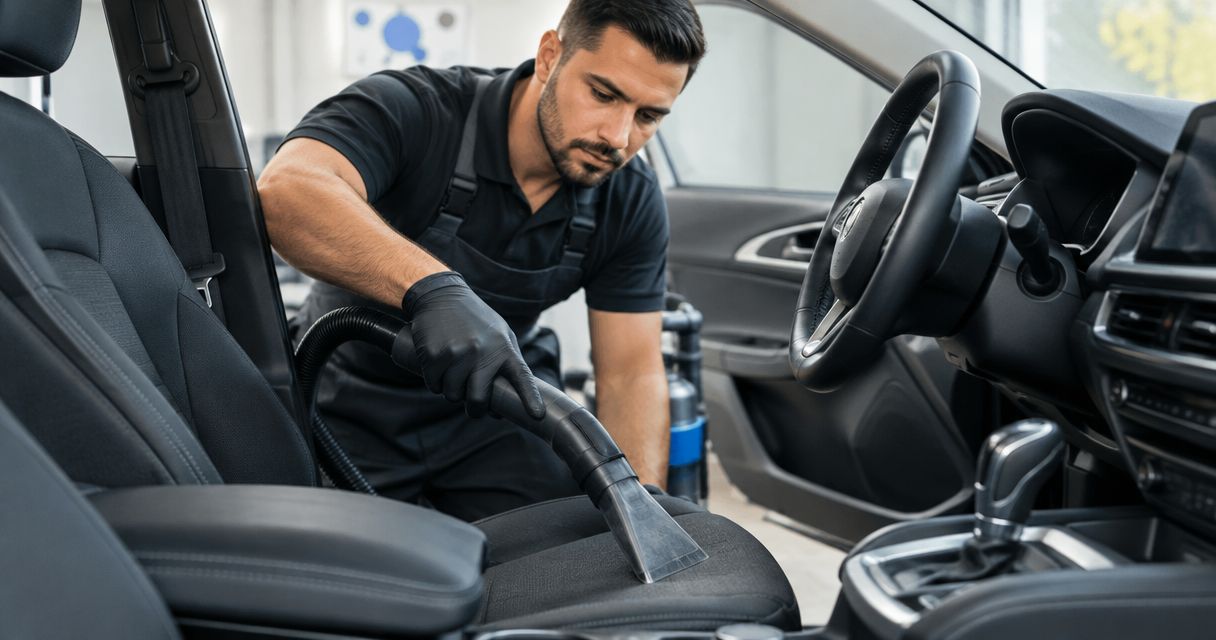
Yes, mobile detailing can remove smoke smell when the cleaning reaches the residue causing it, but complete removal is not guaranteed. Smoke trapped in upholstery, headliners, or the ventilation system can require work beyond an ordinary interior clean. The fact that the detailer works in your driveway is not the deciding factor. The cleaning scope is.
TL;DR
- Can detailing remove smoke smell? Yes, but cleaning smoke residue matters more than adding fragrance.
- Frogman Detailing provides mobile detailing in the Oklahoma City metro; discuss smoke contamination before booking.
- Upholstery cleaning and ventilation checks address different sources. Neither replaces cleaning the rest of the cabin.
- Persistent cigarette odor needs an inspection, not a promise based on a photograph.
Why this matters
A car can look clean and still smell like an ashtray. Smoke residue settles on surfaces and remains in porous materials. Shiny plastic does not prove that the contamination is gone.
Book for the odor problem, not just the appearance of the interior. Before arranging mobile detailing at an apartment complex, confirm permission, working space, and any access requirements. A suitable place to work matters, but it does not replace a smoke-specific cleaning discussion.
For a 2026 appointment, describe the smell before choosing the service. An interior tidy-up and a smoke-removal job are different requests.
Can mobile detailing remove smoke smell from a car?
Yes. Mobile detailing can remove accessible smoke residue through careful interior cleaning, which can reduce or eliminate the associated smell. The limit is contamination that remains out of reach or inside materials that cannot tolerate aggressive cleaning.
The sensible approach is a sequence, not a spray bottle:
- Inspect the source. Explain whether smoking happened inside the vehicle, how persistent the smell is, and whether it changes when the ventilation runs.
- Remove loose contamination. Empty ashtrays, remove cigarette debris, and vacuum accessible carpeting, seat seams, mats, and storage areas.
- Clean compatible surfaces. Address hard trim, glass, upholstery, and other affected areas with methods suited to each material.
- Check overlooked sources. Assess the headliner carefully and investigate the cabin filter or ventilation system when symptoms point there.
- Dry and reassess. Judge the result after cleaning products and temporary fragrances are no longer dominating the cabin.
Not every step belongs in every ordinary detailing appointment. Ask what is included and what requires separate attention before anyone starts.
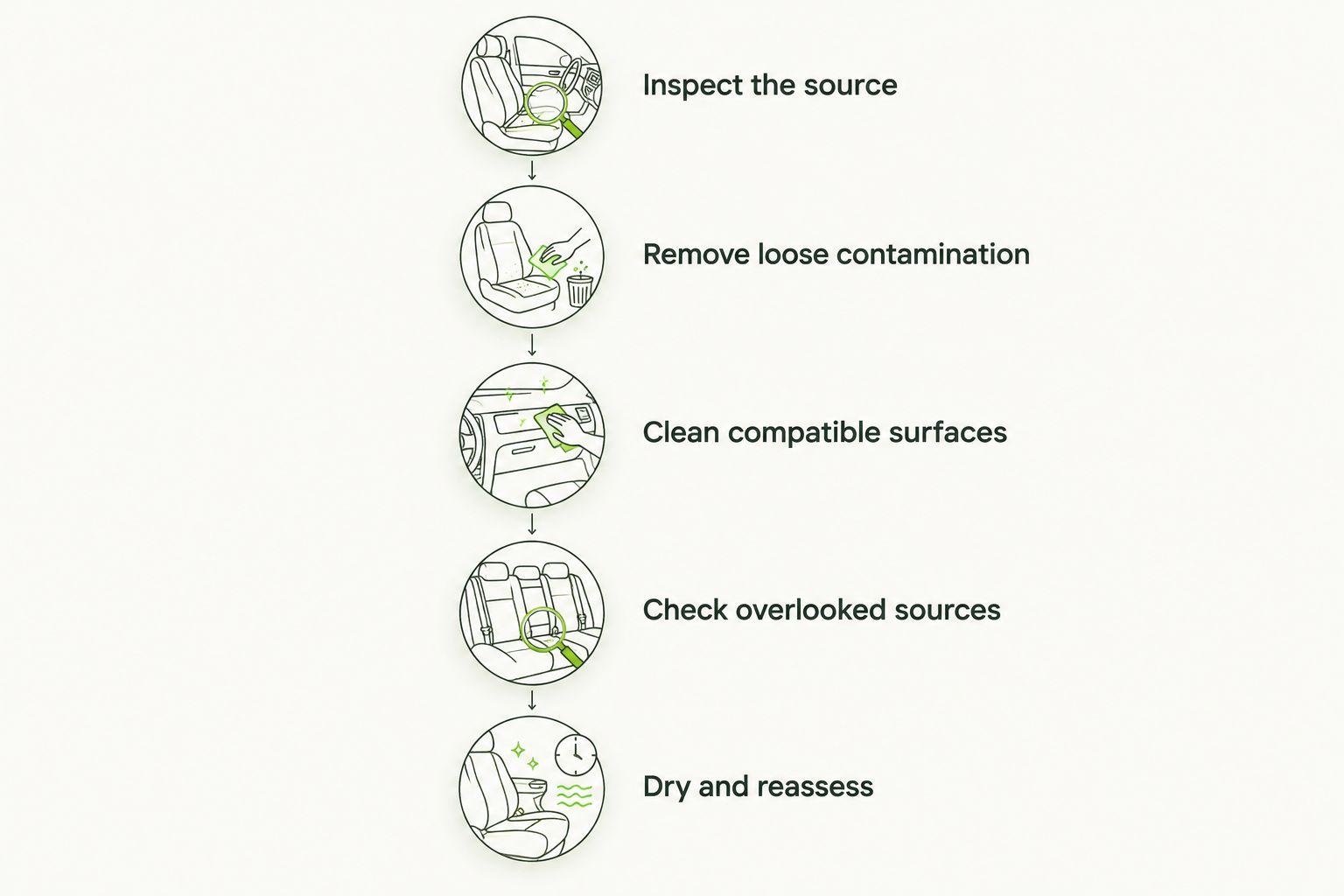
Reassess after cleaning and drying, not while fragrance is still covering the result.
Which approaches help, and what are their limits?
Different methods solve different parts of the problem. None earns a pass just because it leaves a strong scent.
| Approach | Best for | What it helps with | Main limitation |
|---|---|---|---|
| Interior surface cleaning | Residue on accessible surfaces | Removes contamination from compatible trim, glass, and other reachable areas | Does not reach every cavity or deep layer |
| Upholstery extraction | Compatible fabric seats and carpets | Flushes out soil and residue from materials suited to wet cleaning | Unsuitable materials or excess moisture create problems |
| Cabin filter inspection | Odor associated with airflow | Identifies a dirty filter that needs attention | Filter replacement does not clean the cabin or the entire ventilation system |
| Air freshener | Temporary scent preference | Adds fragrance | Does not remove smoke residue |
Choose cleaning for contamination. Treat fragrance as fragrance. Mixing up those jobs is how a car ends up smelling like cigarettes wearing cologne.
Light smoke odor: start with accessible residue
If smoke exposure was limited, start by identifying what actually smells. Remove contaminated belongings before judging the car itself. A jacket, floor mat, or bag can keep an odor in the cabin even after surrounding surfaces are clean.
Clean accessible surfaces with products approved for their materials. Glass deserves attention alongside seats and carpeting. Avoid turning the job into a contest to see how much cleaner the dashboard can hold.
The advantage of this approach is restraint. You address contamination without immediately committing to aggressive treatment. The limitation is reach: a clean surface does not tell you what remains beneath it.
Do not use a mild smell as proof of mild contamination. Fragrance, open windows, and recent cleaning can change what you notice during an inspection.
Persistent smoke odor: assess the materials and ventilation
A vehicle that has been smoked in repeatedly needs a more careful assessment. Seats, carpeting, the headliner, and other interior surfaces can all contribute to the smell. Cleaning only the most obvious stain leaves the rest of the job untouched.
Ask whether compatible fabric cleaning or extraction is appropriate. Ask how the headliner will be handled. Headliner construction often includes fabric, foam, and adhesive, so soaking or aggressive scrubbing is not a sensible default.
If the smell becomes noticeable when the fan starts, report that detail. It gives the technician a useful direction to investigate. It does not prove that replacing the cabin filter will solve everything.
The benefit of a broader assessment is that it looks beyond visible dirt. The limitation is that deeply affected materials or inaccessible contamination can need specialist work or replacement. A detailer should explain that boundary before promising a result.
Why smoke-removal results vary
The same cleaning method does not produce the same outcome in every vehicle. These factors explain the difference:
- Exposure history. Repeated smoking gives residue more opportunities to settle throughout the cabin.
- Affected materials. Glass and hard trim present different cleaning challenges from fabric, foam, and headliner assemblies.
- Access to contamination. Reachable surfaces are easier to address than material beneath upholstery or inside enclosed spaces.
- Material condition. Loose headliner fabric, damaged upholstery, and sensitive finishes limit safe cleaning choices.
- Ventilation-related sources. An odor linked to airflow needs investigation beyond wiping the dashboard.
- Continued smoking. New smoke deposits new contamination. Cleaning cannot prevent that.
When comparing services in 2026, compare the proposed work against these factors. A package name alone tells you very little about smoke treatment.
What should you ask before booking?
Start with a plain description: cigarette smoke, where you notice it, whether smoking is ongoing, and whether someone has already treated the interior. Mention heavy perfume or previous deodorizing treatments too. Those details help separate the odor from whatever is covering it.
Ask these questions before agreeing to the job:
- Does the proposed service address smoke residue, or is it routine interior cleaning?
- Which surfaces and materials will be cleaned?
- Is fabric extraction appropriate for this interior?
- How will the headliner be assessed and cleaned safely?
- Who handles cabin filter or ventilation concerns?
- How will you assess the result after the interior dries?
Frogman Detailing is a mobile detailing option for Oklahoma City metro drivers who want service at home. The veteran-owned business serves cars, trucks, and motorcycles, including customers in Edmond and Arcadia. Discuss the smoke problem before booking rather than assuming an ordinary detail includes specialized odor treatment.
For your 2026 booking, make the requested outcome clear: address the source of the smoke smell. Do not substitute a request for a stronger deodorizer.
What can you do before the detailer arrives?
Remove personal belongings, rubbish, cigarette packs, and anything carrying smoke odor. Empty storage compartments so the cleaner can reach the surfaces inside. Keep valuables and important papers elsewhere.
Explain previous cleaning attempts. A detailer needs to know whether you soaked a seat, sprayed the headliner, or used an odor-treatment product. That is useful information, not a confession.
Do not pre-soak upholstery or saturate the roof lining to get a head start. More liquid is not automatically more cleaning. Leave delicate materials alone until the method is agreed.
Arrange access and ask about drying requirements. Mobile service does not mean every job has identical needs for weather protection, utilities, or workspace. Confirm those details with the provider rather than guessing from the word mobile.
Is ozone treatment enough to remove cigarette smell?
Ozone treatment is not a substitute for removing smoke residue. The U.S. Environmental Protection Agency warns that ozone generators can create harmful indoor ozone concentrations and that ozone at concentrations within public-health standards has little potential to remove many indoor contaminants.
Do not run an ozone generator in an occupied vehicle. Do not treat an internet timer recommendation as a safety plan. If someone proposes ozone, ask about the reason, safety controls, material compatibility, and re-entry procedure.
The same practical test applies to any treatment offered in 2026: what contamination is being removed, and what evidence will show that the job worked? A machine name is not an answer.
Will replacing the cabin air filter remove smoke smell?
Replacing the cabin air filter can address a contaminated filter, but it does not remove smoke residue throughout the vehicle. Seats, carpeting, trim, and ventilation components remain separate concerns.
Check the vehicle's manual for filter location and replacement guidance. Some filters are straightforward to access. Others are not a good place to start pulling panels without instructions.
Tell the detailer if the odor appears mainly with the fan running. That observation helps direct the inspection, but it is not a diagnosis by itself.
How do you know whether the smoke smell is really gone?
Assess the cabin after it is dry and temporary product scents have faded. Open doors and freshly applied fragrance can make an immediate handover check misleading.
Use the ventilation system and notice whether the odor returns. Check the cabin again after normal use rather than relying only on the first sniff. If the smell remains, describe when and where it appears.
A 2026 used-car inspection deserves the same caution. Clean seats and a pleasant scent do not establish that a vehicle has no smoking history. Ask directly, inspect carefully, and do not mistake deodorizer for evidence.
FAQ
Can detailing remove smoke smell completely?
Detailing can remove smoke smell completely in some vehicles, but complete removal is not guaranteed. Residue deep in materials or inaccessible areas can require additional work or replacement.
Can a mobile detailer do smoke cleaning in my driveway?
A driveway can be suitable for mobile interior cleaning when access and working conditions meet the provider's requirements. Confirm the proposed smoke-cleaning scope, utility needs, and drying arrangements before booking.
Will shampooing the seats get rid of cigarette smell?
Cleaning compatible seats can address residue in the upholstery, but seat cleaning alone does not clean the rest of the cabin. Carpets, hard surfaces, the headliner, and ventilation-related sources can still contribute.
Can I spray the headliner to remove smoke odor?
Do not saturate the headliner with cleaner or deodorizer. Headliner materials and adhesives need a careful, material-appropriate method, so discuss the condition and cleaning approach first.
Will an air freshener remove cigarette smoke residue?
An air freshener does not remove cigarette smoke residue. It adds scent, which can cover an odor without addressing its source.
Should I replace the cabin filter before detailing?
Inspect the cabin filter and follow the vehicle manufacturer's guidance rather than replacing it as a guaranteed odor fix. Tell the detailer what you changed because filter condition is only part of the assessment.
Does Frogman Detailing serve Edmond and Arcadia?
Frogman Detailing provides mobile detailing throughout the Oklahoma City metro, including Edmond and Arcadia. Explain the smoke contamination before booking so the requested work is clear.
One last thing
Your sense of smell adapts to familiar odors. If you drive the car every day, your own nose is not the only useful check. Ask someone who has not recently been inside to assess the dry cabin without added fragrance.
Judge the result by the absence of smoke odor, not the presence of a pleasant scent. That is the difference between cleaning a problem and dressing it up.
Related guides
Frogman comes to your driveway across the Oklahoma City metro.