How much does paint correction cost in OKC?
October 12, 2026 · 10 min read · Frogman Detailing
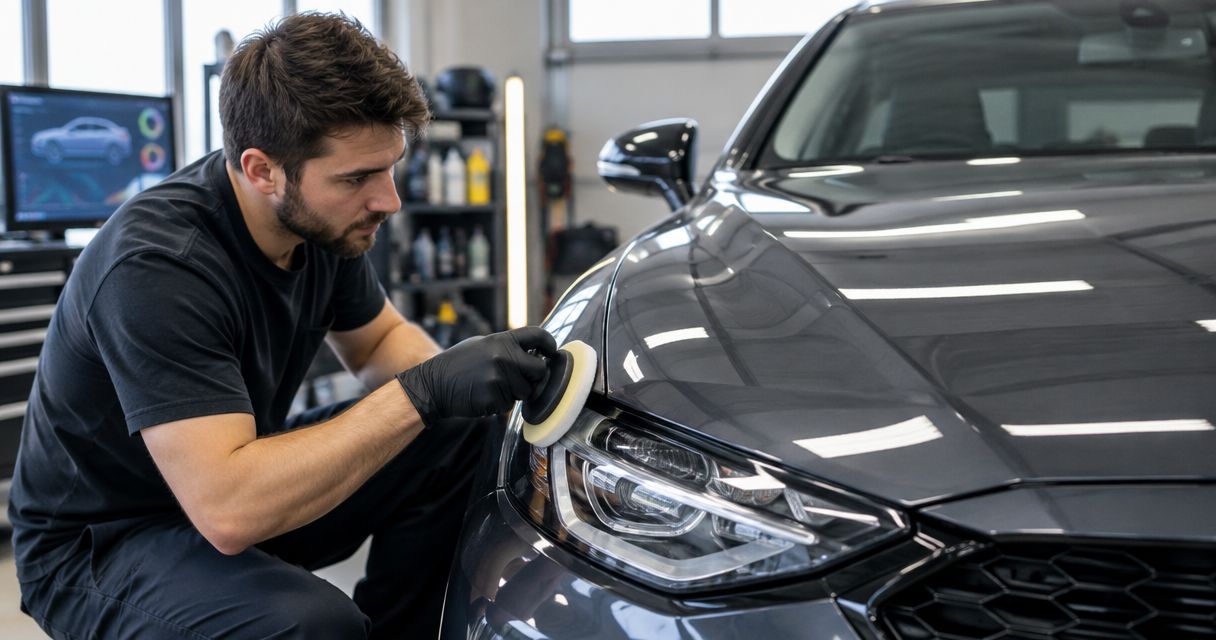
Paint correction cost in OKC depends on your paint’s condition, the polishing work required, and the finish you agree to before work starts. Get a vehicle-specific quote rather than treating a package name as a reliable estimate. Ask whether preparation and paint protection are included, because correcting scratches and protecting the corrected finish are separate jobs.
TL;DR
- Paint correction cost OKC quotes should identify paint condition, polishing stages, preparation, and protection.
- Choose one-stage polishing for light defects; discuss two-stage correction when cutting and finishing are both needed.
- Deep scratches, chips, and peeling clear coat need assessment, not promises that polishing fixes everything.
- Frogman Detailing brings mobile detailing to OKC driveways; confirm the requested correction work before booking.
How much does paint correction cost in OKC?
For a useful 2026 quote, ask what the detailer will do to your actual vehicle. A price without an inspection, a description of the defects, or a stated finish goal gives you little to compare.
Start with the scope, not the sales pitch. The guide to paint correction services in Oklahoma City is a starting point for comparing service options. Use the same questions with every provider.
| Work being discussed | Best for | Main benefit | Main limitation | What the quote should explain |
|---|---|---|---|---|
| One-stage polishing | Light swirls and a practical gloss improvement | Corrects and refines the finish in one polishing stage | Does not address every deeper defect | Preparation, expected improvement, and protection |
| Two-stage correction | Defects that require separate cutting and finishing | Separates stronger defect removal from final refinement | Adds work and removes more paint when more correction is performed | Why both stages are needed and what defects remain |
| Localized correction | A particular panel or isolated concern | Concentrates work where you need it | Corrected panels can look different from surrounding paint | Work boundaries and finish matching |
| Paint repair assessment | Chips, exposed substrate, or failing clear coat | Identifies damage outside polishing’s job | Requires a different repair approach | What correction cannot fix |
Compare the promised work and its limits before comparing quotes. A one-stage service and a two-stage service are not interchangeable just because both use the words paint correction.
Why this matters before you book
Paint correction removes a small amount of the paint surface to reduce defects. That makes it different from washing away dirt or covering a mark with a product that temporarily changes its appearance.
You want enough correction to meet your goal, not the most aggressive process available. Clear coat is not an endless supply. Chasing every scratch on a daily driver is not automatically the right decision.
For your 2026 booking, describe the result you want in ordinary language. Better gloss, fewer wash swirls, and a cleaner-looking hood are useful goals. A demand for flawless paint needs a much more careful conversation.
Also separate appearance from repair. A shiny panel can still have chips, deep scratches, or damaged clear coat. Good inspection keeps those problems from becoming an argument after the job.
One-stage polishing: one correction stage
A one-stage correction uses 1 polishing stage to improve the finish. The detailer selects a pad and polish combination that balances defect reduction with the quality of the final surface.
Best for: light swirls and owners who want a sensible appearance improvement. This is a practical scope to discuss when the paint looks dull or shows fine wash marks, but does not require separate heavy cutting and refinement.
The benefit is a simpler correction process. The limitation is that some defects remain. That is not automatically poor workmanship. It can be the safer, agreed result for the paint in front of the detailer.
Ask what the phrase one-stage covers. Washing, decontamination, masking, and protection are not polishing stages, but they still belong in the scope discussion. A package label does not tell you whether those tasks are included.
Do not choose this option solely because it sounds smaller. Choose it because a test spot shows that it reaches your goal without unnecessary abrasion.
Two-stage correction: cutting followed by finishing
A two-stage correction uses 2 polishing stages: a cutting stage followed by a finishing stage. Cutting addresses defects; finishing refines the appearance left by the earlier work.
Best for: paint that needs separate defect removal and refinement. The reason to choose two stages is the paint’s response, not the assumption that a larger package must be better.
The benefit is more control over those separate tasks. The drawback is additional polishing work and the need to manage paint removal carefully. Two stages do not make unsafe defects safe to chase.
Ask the detailer to explain why the finishing stage is necessary. The answer should relate to the paint, the defects, and the result of testing. A package name alone is not an explanation.
For a 2026 comparison, have each provider state whether the quote includes both stages across the whole vehicle or only selected areas. Those are different scopes. Write them down before deciding.
Why paint correction quotes vary
These are the details worth discussing during inspection. None replaces looking at the vehicle.
- Paint condition. Fine swirls, heavier scratches, oxidation, and clear-coat failure are different problems. Some belong within correction; others need repair assessment.
- Painted surface area. The amount of paint being worked changes the scope. Specify whether the job covers the entire vehicle or selected panels.
- Panel shape and access. Curves, edges, trim, and tight spaces affect how the detailer can safely approach the work.
- Preparation needs. Bonded contamination must be addressed before polishing. Otherwise, you are discussing correction without accounting for the surface beneath the dirt.
- Finish target. Improving a daily driver and pursuing a highly refined finish are different goals. Agree on what matters to you.
- Protection afterward. Wax, sealant, or ceramic coating is separate from defect removal. Ask what is included and what is an additional service.
A useful quote connects those details to the work proposed. It should not just say that your vehicle needs the biggest package.
How do I get a quote I can actually compare?
Use the same process for every estimate. In 2026, a short written scope is more useful than a long list of package adjectives.
- Describe the vehicle. Give the make, model, body style, and any repainting or previous correction you know about. Mention film or wrapped areas so they are not treated as ordinary exposed paint.
- Show the defects. Send clear photographs in useful lighting. Include the whole vehicle and close views of the areas bothering you. Photos help the conversation, but they do not replace inspection.
- Set the goal. Explain whether you want better gloss, reduced swirls, or attention to specific panels. Say which defects you can live with.
- Request a test spot. Ask for 1 test spot before approving broader correction. A small representative area helps establish the process and a realistic finish target.
- Confirm the scope. Get preparation, polishing stages, excluded defects, protection, and work location stated clearly. Then compare like with like.
The test spot is especially useful when you are unsure whether one-stage polishing is enough. It turns a vague promise into something you can inspect.

Agree on the finish goal before approving the full correction.
Ask how the finished paint will be checked, too. Bright, directed light reveals defects that soft shade can hide. Inspection conditions should support an honest discussion of what changed and what remains.
What should the written scope include?
A useful scope describes the job without making you translate detailing jargon. You should understand both the work being performed and the defects that are being left alone.
Look for these points:
- Which panels or painted surfaces are included.
- What cleaning and decontamination happen before polishing.
- Whether the process is one-stage or two-stage correction.
- Which scratches, chips, or damaged areas are excluded.
- Whether protection is included after correction.
- How additional work gets approved before it starts.
Ask whether correction means abrasive polishing or a product that fills defects temporarily. Both can change appearance, but they are not the same result.
Do not accept a guaranteed perfect finish without a paint assessment. Repainted panels, thin areas, edges, and deep damage need judgment. A responsible stopping point matters more than an impressive promise.
Is paint correction the same as ceramic coating?
Paint correction and ceramic coating do different jobs. Correction reduces defects through polishing. Ceramic coating adds a protective layer; it does not replace correction.
Best for: choose correction when existing paint defects are the problem; discuss coating when protection is the goal. If you want both, ask for them as separate parts of the scope.
The benefit of separating the work is clarity. You can see what addresses the current appearance and what protects the resulting surface. The limitation of coating is straightforward: it does not repair chips or turn damaged clear coat into sound paint.
Do not assume every coating service includes the same preparation. Before approving a 2026 booking, ask what paint condition the provider expects before application and how that condition will be achieved.
Can paint correction remove every scratch?
Paint correction cannot safely remove every scratch. A defect that extends through the clear coat, or an area where further polishing would remove too much paint, requires a different decision.
A fingernail catching on a scratch is a warning to get an assessment, not a reliable repair diagnosis. Scratch depth, surrounding paint condition, and the panel’s history all matter.
Ask the detailer to identify defects that should remain before work begins. Some scratches can be reduced without being fully removed. Others need touch-up or body-shop assessment rather than more polishing.
That is a limit, not an excuse. Removing healthy paint to win an argument with one scratch is a bad trade.
Is mobile detailing the right starting point?
Frogman Detailing is best for OKC-area owners who want mobile car detailing at their driveway. The veteran-owned service works with cars, trucks, and motorcycles throughout the Oklahoma City metro, including Edmond and Arcadia.
The practical benefit is the driveway service model. The limit is that mobile detailing does not, by itself, establish the correction process, finish target, or protection included in your requested job.
When contacting Frogman Detailing, describe the paint concern and confirm whether the requested correction work fits the service. Ask about workspace, lighting, weather, and any access requirements before making arrangements.
You do not need to diagnose the paint yourself. You do need to explain what bothers you and ask what the proposed work will change.
FAQ
How much does paint correction cost in OKC in 2026?
Get a vehicle-specific quote based on inspected paint condition and an agreed correction scope. Ask for preparation, polishing stages, excluded defects, and protection to be stated separately.
Is one-stage paint correction enough for my daily driver?
One-stage correction is a practical option for light defects and a general gloss improvement. Ask for a test spot to establish whether it meets your finish goal without unnecessary polishing.
Is two-stage paint correction better than one-stage?
Two-stage correction is appropriate when the paint needs separate cutting and finishing. It is not automatically better for every vehicle, and deeper defects still require a safe stopping point.
Does a ceramic coating remove swirl marks?
Ceramic coating does not replace polishing to remove swirl marks. Discuss correction and protection as separate jobs, and confirm the preparation included before coating application.
Can paint correction fix peeling clear coat?
Paint correction does not repair peeling clear coat. Get a paint repair assessment rather than approving more polishing on a failing finish.
Should I send photos before asking for a correction quote?
Send clear photographs showing the vehicle and the defects you want addressed. Photos help define the conversation, but an inspection and test spot provide a better basis for approving correction.
Does Frogman Detailing come to Edmond and Arcadia?
Frogman Detailing provides mobile car, truck, and motorcycle detailing throughout the Oklahoma City metro, including Edmond and Arcadia. Confirm the requested paint correction scope before booking.
One last thing
Ask what will remain, not just what will disappear. That question tells you whether the proposed correction has a realistic stopping point.
After correction, the wash routine still matters. Dirty wash tools and rough wiping can introduce fresh marks. Protecting the result starts with how you clean the vehicle, not with another round of polishing.
Related guides
Frogman comes to your driveway across the Oklahoma City metro.