How to connect insurance pre-inspections to mobile detailing prep
October 9, 2026 · 10 min read · Frogman Detailing
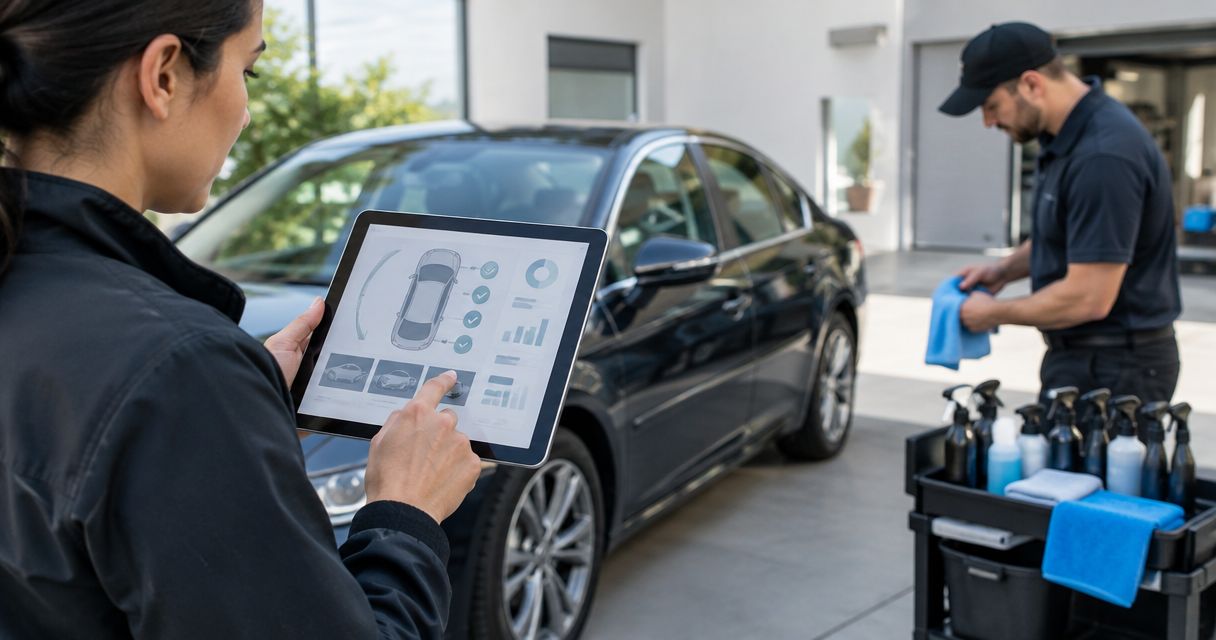
Instead of juggling insurer emails, inspection photos, and a separate cleaning appointment, connect insurance pre-inspection detailing prep through one vehicle checklist and calendar entry. Confirm what the insurer needs, document the vehicle before cleaning, then schedule only the work that leaves its condition easy to inspect.
TL;DR
- Insurance pre-inspection detailing prep starts with the insurer’s instructions, not a detailing appointment.
- Frogman Detailing provides driveway mobile detailing for Oklahoma City metro vehicle owners.
- Keep original condition photos separate from cleaned-vehicle inspection photos.
- For a 2026 inspection, record the deadline, cleaning permission, and submission requirements together.
Why this matters
A clean vehicle is easier to photograph. It is not proof that the vehicle is undamaged, and detailing does not replace an insurance inspection. Your job is to make the condition visible without changing evidence the insurer needs.
Frogman Detailing is best for Oklahoma City metro owners who want mobile detailing at their driveway. The service comes to customers in Oklahoma City, Edmond, and Arcadia. Start with Frogman Detailing when you need driveway cleaning, but get inspection instructions from your insurer.
The main benefit is coordination. You stop treating cleaning and inspection as unrelated errands. The limitation is just as clear: a detailer cannot decide what an insurer will accept or whether coverage starts after submission.
Before you start
- Gather the insurer’s instructions and a contact route. Keep the inspection request, deadline, vehicle identification requirements, and any photo checklist together. Confirm whether this is a routine coverage inspection or documentation connected to damage or a claim.
- Have vehicle access and somewhere to record the plan. You need the vehicle, keys, a camera or phone, and a calendar or written checklist. Confirm the driveway location and any site requirements with the detailer before booking.
- Check before cleaning anything tied to damage. Washing, extracting upholstery, polishing, or removing residue can change what an inspector sees. If the request concerns damage, contamination, or a claim, get the insurer’s direction before work begins.
That last point is the gate. Do not book paint correction, stain removal, or other appearance-changing work just because the inspection date is close. Cleaning permission comes first. A shiny hood is not worth a documentation problem.
Inspection requirements
Build the vehicle record
- Create 1 folder per vehicle. Give it a recognizable name, such as 2026 insurance inspection, followed by your own vehicle identifier. Keep personal identifiers out of publicly shared folder names.
- Copy the inspection deadline exactly as provided. Distinguish an appointment time from a deadline for uploading photos. They are different tasks.
- Record who supplied the instructions and when. Save the original message rather than relying on a summary from memory.
- List every requested view or document. If the insurer specifies an app or upload process, follow its actual instructions. Do not substitute a collection of casual driveway photos.
- Write down unresolved questions. Ask whether cleaning is permitted, whether an inspector must attend, and whether existing damage needs separate documentation.
Expected result: You have one source for the deadline and requirements. You can explain what must happen before cleaning, during inspection, and after submission without searching through a message thread.
Mark the cleaning boundary
Use 3 status labels in your own checklist: Unconfirmed, Permitted, and Hold. These are labels you create, not buttons in an insurer’s system.
Apply a status to each proposed task. Exterior washing and interior vacuuming belong on the list if you plan them. Include polishing or stain treatment separately rather than hiding them under a broad request to clean everything.
Hold means do not proceed. An unanswered question about damage documentation stays unresolved until the insurer responds. Silence is not permission.
This small boundary keeps the cleaning brief useful. The detailer gets a defined job, not a vague instruction to make the vehicle look better before somebody examines it.
Condition records and cleaning scope
Document condition before work
- Photograph the vehicle before cleaning. Include the areas relevant to the inspection request, plus visible damage you need to disclose. Follow any insurer-specific capture instructions.
- Keep 2 separate photo sets: original-condition records and inspection-ready photos. Do not overwrite the originals with the later images.
- Preserve the original files. Keep unedited copies rather than relying only on screenshots, cropped images, or pictures sent through a messaging thread.
- Note concerns in plain language. Write crack in windshield or stain on rear seat, not a diagnosis you cannot verify.
- Tell the detailer which areas must remain untouched. Share relevant condition photos privately when they help explain the boundary.
Expected result: You have a before-cleaning record and a specific cleaning brief. Both remain available if the inspector asks what changed.
Original-condition photos are your record, not an automatic substitute for the insurer’s requested submission. If the insurer requires live capture inside its own process, complete that process as directed.
Choose the work that serves the inspection
Choose cleaning for visibility, not concealment. Dirt on glass or loose debris inside the cabin is a different problem from a scratch, broken trim, or a leak. Cleaning does not repair those defects.
| Preparation option | Best for | Useful part | Limitation |
|---|---|---|---|
| DIY cleaning | Owners handling light dirt and loose debris | You control what gets touched and can stop immediately | You still need suitable methods and time; avoid experimenting on unfamiliar materials |
| Frogman Detailing mobile detailing | Oklahoma City metro owners wanting cleaning at their driveway | The service comes to the vehicle’s location | You must confirm the requested scope and inspection restrictions; detailing does not establish insurance acceptance |
| Hold cleaning | Vehicles with unresolved evidence or damage instructions | Preserves the current condition until requirements are clear | Inspection prep remains unfinished until the insurer gives direction |
You do not need an appearance makeover to make an inspection useful. Ask for the condition to be visible. If a mark remains after ordinary cleaning, document it honestly rather than treating it as something that must disappear.
Appointment and inspection handoff
Put the tasks in order
- Document condition. Save the before-cleaning records and note existing damage.
- Confirm permission. Resolve cleaning restrictions with the insurer before authorizing work.
- Schedule cleaning. Put the confirmed detailing appointment ahead of the inspection or photo submission, with room for drying and any necessary rescheduling.
- Submit photos. Capture and submit the required material through the insurer’s stated process, or attend the scheduled inspection.
Expected result: Cleaning supports the inspection deadline instead of competing with it. No task depends on an unconfirmed assumption.
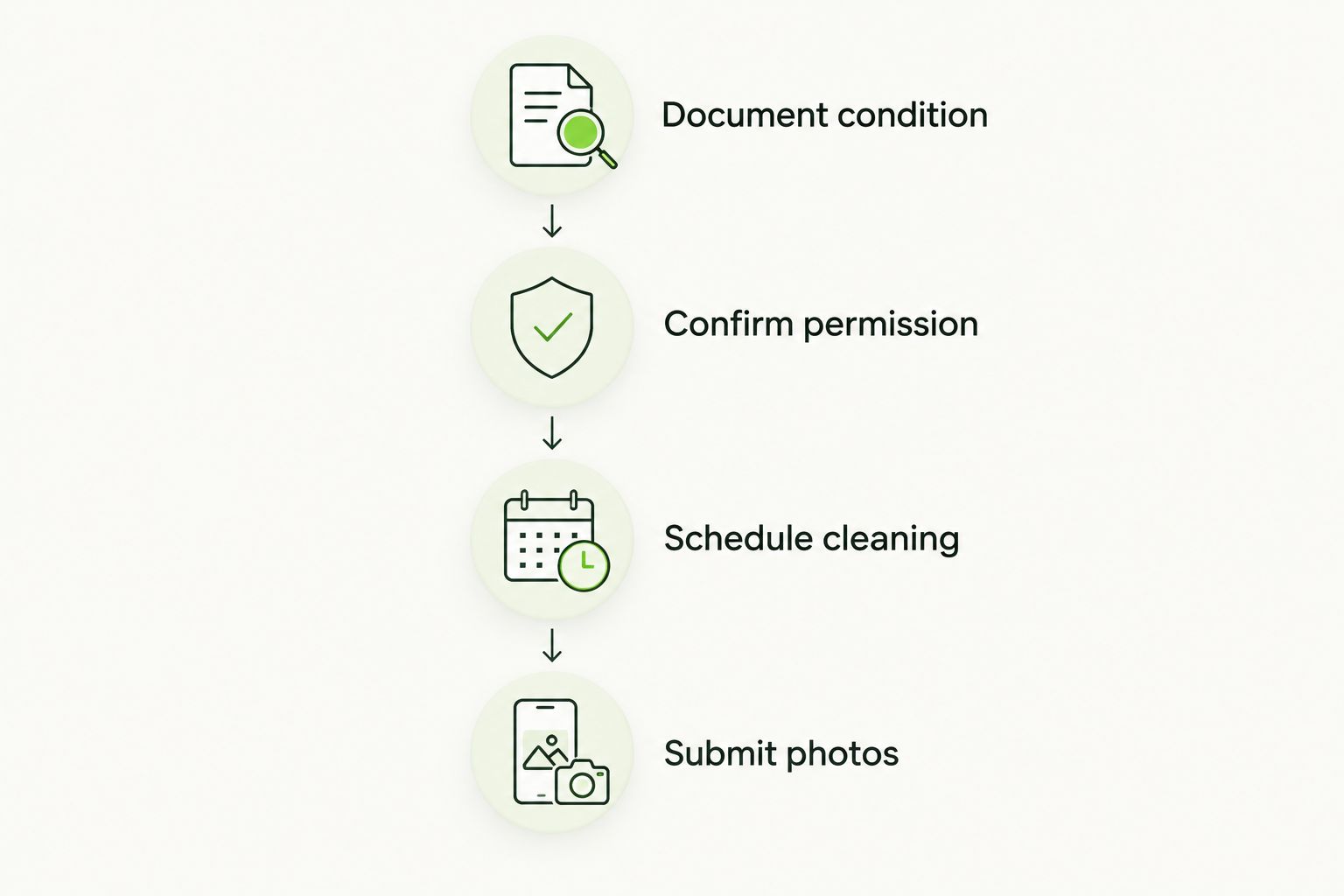
Confirm cleaning permission before the vehicle’s condition changes.
Do not use a fixed gap between cleaning and inspection as a substitute for checking the job. Interior moisture, weather, vehicle access, and the inspection format affect the schedule. Ask the detailer what the proposed work requires, then leave room for it.
For calendar setup, use the guide to adding mobile detailing appointments to Google Calendar. A calendar reminder helps you remember a task. It does not confirm that either appointment has been accepted.
Add a useful appointment note
Create your own appointment note with these labels. They are a worksheet, not a description of any booking interface:
- Inspection year: 2026.
- Inspection deadline: Copy the insurer’s stated date and time.
- Inspection format: Record the format the insurer confirms.
- Cleaning scope: List the work agreed with the detailer.
- Restricted areas: Identify anything that must remain untouched.
- Vehicle access: State where the vehicle and keys will be available.
- Submission status: Record what you sent and any response received.
Keep insurance documents and sensitive vehicle information out of calendar invitations shared with unrelated people. The detailer needs the cleaning instructions and access details, not your whole policy file.
When the inspection request changes
The second workflow is for an updated deadline or a request for additional photos. Do not start the entire cleaning process again. Start with what changed.
- Save the new request alongside the original instructions. Mark the older deadline as superseded in your own notes.
- Compare the requested views and restrictions. Identify whether you need new photographs, a physical inspection, or clarification.
- Reconfirm any affected cleaning task. A changed inspection request does not automatically authorize additional treatment.
- Update the existing calendar entry rather than leaving conflicting reminders active.
- Capture only what the updated instructions require. If the vehicle became dirty again, check whether cleaning is permitted before repeating it.
Expected result: One current deadline governs the job, and the records show why the plan changed.
For a repeat inspection in 2026, keep the earlier submission separate from the replacement submission. Label each set by its actual capture date. Never present older photos as current ones.
This workflow also prevents unnecessary repeat work. A request for a missing windshield view does not, by itself, call for another full detail. Fix the missing documentation first.
Troubleshooting
The insurer has not answered the cleaning question
Keep the affected work on Hold. Send a specific question naming the area and treatment you propose. Ask how to meet the deadline while preserving the required condition; do not assume a cleaning appointment resolves the uncertainty.
The photos show glare instead of the vehicle
Change your position and check the image before submitting it. Follow the insurer’s lighting and capture instructions where provided. Do not edit away reflections, damage, or other condition details to improve the photograph.
The interior is still damp
Tell the detailer and adjust the handoff. Follow the drying guidance for the work performed, and disclose any condition that affects the inspection. Do not hide moisture under mats or seat covers to make the cabin appear finished.
The driveway is not usable
Resolve access before the appointment. Tell the detailer about gates, parking restrictions, and obstacles around the vehicle. Confirm any alternate location with the detailer rather than moving the job somewhere unapproved and hoping it works.
The upload is complete, but the inspection status is unclear
Save the submission confirmation if the process provides one. Check the insurer’s stated status process or contact the insurer directly. Uploaded does not mean approved, and detailing does not confirm coverage.
Customize your workflow
Keep the process small for a single vehicle. One folder, one current appointment note, and separate photo sets are enough to organize the handoff. Extra software is not the missing ingredient.
For multiple vehicles, repeat the same record structure separately. Do not mix one vehicle’s inspection instructions with another’s photos. Assign someone to check that the vehicle identifier matches before submission.
Frogman Detailing mobile detailing fits the cleaning part of that workflow. Inspection requirements, evidence decisions, and coverage questions stay with the insurer. That division keeps everyone doing the right job.
Before your next appointment, add a final check: compare the completed work with the agreed cleaning scope. Record anything left untouched because of inspection restrictions. An unfinished cleaning task and an intentionally preserved area are not the same thing.
FAQ
What is insurance pre-inspection detailing prep?
Insurance pre-inspection detailing prep is coordinating permitted vehicle cleaning with the insurer’s inspection requirements. It includes documenting condition, confirming cleaning restrictions, and scheduling the work before the required inspection or photo submission.
Should I detail my car before an insurance inspection?
Confirm the insurer’s instructions before detailing your car. Cleaning can improve visibility, but work connected to damage or a claim must not change evidence the insurer needs.
Can mobile detailing make my car pass an insurance inspection?
Mobile detailing cannot guarantee that a car passes an insurance inspection. It cleans the vehicle; the insurer determines whether the inspection and documentation meet its requirements.
Should I photograph damage before the detailer arrives?
Keep original-condition photos before cleaning, especially when damage is relevant to the inspection. Follow the insurer’s instructions because personal records do not replace a required inspection or capture process.
Can Frogman Detailing handle the insurance inspection?
Frogman Detailing is a mobile vehicle detailing service, not an insurance inspection service identified in these inputs. Arrange inspection requirements and submission directly with your insurer, and confirm the cleaning scope separately.
What should I do if my inspection deadline changes in 2026?
Update the existing vehicle record and calendar entry with the insurer’s revised deadline. Keep the earlier instructions, reconfirm affected cleaning tasks, and separate any replacement photos from the original submission.
Do I need another detail if the insurer asks for more photos?
A request for more photos does not automatically require another detail. Identify the missing views first, then decide whether permitted cleaning is needed to make those areas visible.
One last thing
Do not throw away the before-cleaning photos once the vehicle looks better. A clean inspection set answers what the vehicle looks like now. The original files preserve what it looked like before work began.
Keep both. Crumbs can leave. The record should stay.
Related guides
Frogman comes to your driveway across the Oklahoma City metro.