Can steam cleaning remove pet odors from a car interior?
October 20, 2026 · 10 min read · Frogman Detailing
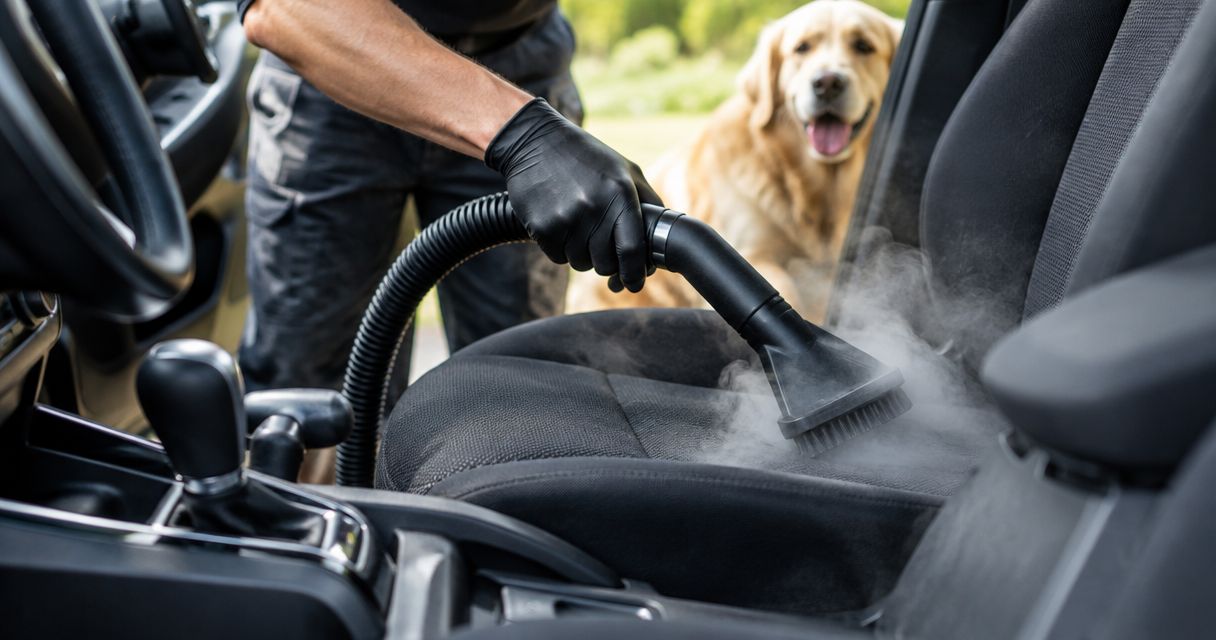
Yes, steam cleaning can help remove pet odors from a car interior when it is part of a cleaning process that removes the source. Steam alone is not a reliable fix for urine soaked into seat foam, trapped pet hair, or contaminated carpet backing. Clean out the contamination, use a material-safe treatment, and dry the interior fully. More steam is not the answer to every smell.
TL;DR
- Steam cleaning can help with car pet odors, but it does not replace removing hair, urine, or contaminated residue.
- Use an upholstery-safe enzyme cleaner according to its label for pet accidents. Check instructions before applying heat.
- Steam and extraction do different jobs. Extraction removes cleaning liquid and loosened contamination from suitable fabric.
- Frogman Detailing provides mobile detailing for Oklahoma City metro drivers who want driveway service.
Why the smell matters more than the stain
A clean-looking seat can still contain the source of a pet odor. Hair collects in seams, saliva dries on upholstery, and an accident can travel below the fabric you can see. Cleaning only the visible patch leaves the rest of the job unfinished.
For your 2026 car-care plan, choose the cleaning method after identifying the problem. Do not choose it because a cloud of steam looks convincing.
Frogman Detailing is best for Oklahoma City metro drivers who want mobile detailing at their driveway. Convenience helps with getting the job scheduled, but the odor still needs a source-based cleaning plan.
Can steam cleaning remove pet odors from a car interior?
Steam can help clean accessible residue, but it does not automatically remove contamination beneath upholstery. A steamer applies heat and moisture. Unless the equipment also provides suction, it does not extract dirty liquid from a seat.
That distinction matters when you are comparing cleaning methods. A vacuum, steamer, enzyme cleaner, and extractor have different jobs. None makes the others unnecessary in every situation.
| Method | Best for | What it contributes | Main limitation |
|---|---|---|---|
| Dry vacuuming and hair removal | Loose hair, dander, and dry debris | Removes material before wet cleaning | Does not remove an absorbed urine deposit |
| Controlled steam cleaning | Compatible surfaces with accessible grime | Helps loosen residue for removal | Heat and moisture can damage unsuitable materials |
| Upholstery-safe enzyme treatment | Pet accidents on compatible materials | Targets organic contamination as directed by the label | Needs the correct application and contact conditions |
| Fabric extraction | Suitable fabric containing loosened soil | Recovers cleaning liquid and suspended contamination | Does not guarantee access to contamination deep inside foam |
Start with the least aggressive method that addresses the source. A seat covered in dog hair needs thorough hair removal before anyone reaches for a steamer. A urine-soaked cushion needs more than a warm surface wipe.
Surface pet smell: steam can help
A dog that rides home wet can leave hair, body oils, and residue on a seat cover or upholstery. Removing those deposits is the useful part of cleaning. Fragrance only changes what you smell on top of them.
On a compatible surface, controlled steam followed by wiping can help lift grime. The limitation is access: cleaning the top of the fabric does not prove the padding underneath is clean.
Urine in seat foam: steam alone is not enough
When urine reaches the padding, the visible stain no longer shows the full contaminated area. Surface treatment can leave deeper material untouched. The smell returning after cleaning is a reason to reassess the source, not automatically repeat the same treatment.
Use a pet-urine product approved for the material and follow its directions. Check the label before combining it with heat or another cleaner. If the contamination is inaccessible, a qualified professional needs to assess whether deeper treatment or component replacement is necessary.
Smell from the vents: inspect beyond the seats
An odor that appears mainly when the blower runs needs a different inspection from a smell concentrated in a cushion. Check for debris around accessible air intakes and review the cabin-filter instructions in your owner's manual. Do not spray cleaners into vents just to see what happens.
A cabin filter does not remove urine from upholstery. Likewise, steaming upholstery does not establish that the ventilation system is clean. Follow the smell instead of treating every surface indiscriminately.
Why steam-cleaning results vary
The right treatment depends on what is dirty, where the contamination went, and what the interior can safely tolerate. These are the factors that change the job:
- Odor source. Loose hair, oily residue, urine, and damp material require different responses.
- Contamination depth. Surface fabric is easier to reach than foam, backing, or material beneath the carpet.
- Interior material. Cloth, leather finishes, glued headliners, and electronic controls do not tolerate the same treatment.
- Previous treatments. Cleaner residue and fragrance can complicate inspection and product selection.
- Drying conditions. Wet upholstery needs airflow and enough drying time before the cabin is closed up.
- Repeat exposure. A dirty pet blanket or harness can transfer odor back into a cleaned vehicle.
Be specific when describing the problem to a detailer. Say where the pet rides, whether there was an accident, and what you have already applied. “It smells like dog” is a starting point, not a diagnosis.
A practical cleaning sequence for 2026
Follow the vehicle's care instructions and each product label. If they conflict with a general cleaning tip, the material-specific instructions take priority. Stop if you see color transfer, surface changes, or damage.
Remove loose contamination
Take out pet blankets, removable covers, toys, and floor mats. Clean those items separately according to their care labels. Otherwise, you can clean the cabin and put the smell straight back in with the dog's favorite blanket.
Vacuum the accessible upholstery, carpet, seams, and crevices. Use a material-safe hair-removal tool where vacuuming leaves embedded hair. Keep tools away from wiring and seat mechanisms, and do not disconnect seats to reach a stubborn patch.
Find the source
Inspect the seat surface, seams, carpet edges, and removable mats. Look for staining, dampness, and concentrated odor. A smell near the rear seat does not necessarily mean the entire rear seat needs soaking.
Note whether the smell follows a removable item or remains in the vehicle. Also note when it appears: after a pet ride, when the cabin warms up, or when the blower starts. Those observations help narrow the inspection without guessing at a treatment.
Treat compatible material
For an accident, select a product labeled for the contaminant and the upholstery material. Test it in an inconspicuous area and follow its instructions for application, contact time, removal, and drying. Do not mix cleaning chemicals.
Avoid improvising a stronger solution or adding heat to speed things up. More product creates more residue to remove, and incompatible treatment can damage the interior. The label is part of the process, not packing material.
Recover loosened soil
Use wiping or extraction as appropriate for the surface and cleaning product. The goal is to remove contamination, not merely spread it into a larger damp area. Steam is useful only where the vehicle's materials and care instructions permit it.
Do not saturate seats in an attempt to reach an unknown depth. Perforations, seams, electrical components, and hidden padding make that a poor guessing game. Deep contamination deserves an inspection before more liquid goes in.
Dry and reassess
Allow treated areas to dry fully with suitable airflow. Keep pets away from wet treatments and follow product directions before returning the vehicle to use. Do not close a damp interior and assume the job is finished.
Recheck the odor after drying and without a fresh fragrance covering it. If the same localized smell returns, revisit that source. Repeating the whole cabin treatment adds work without necessarily addressing the missed spot.
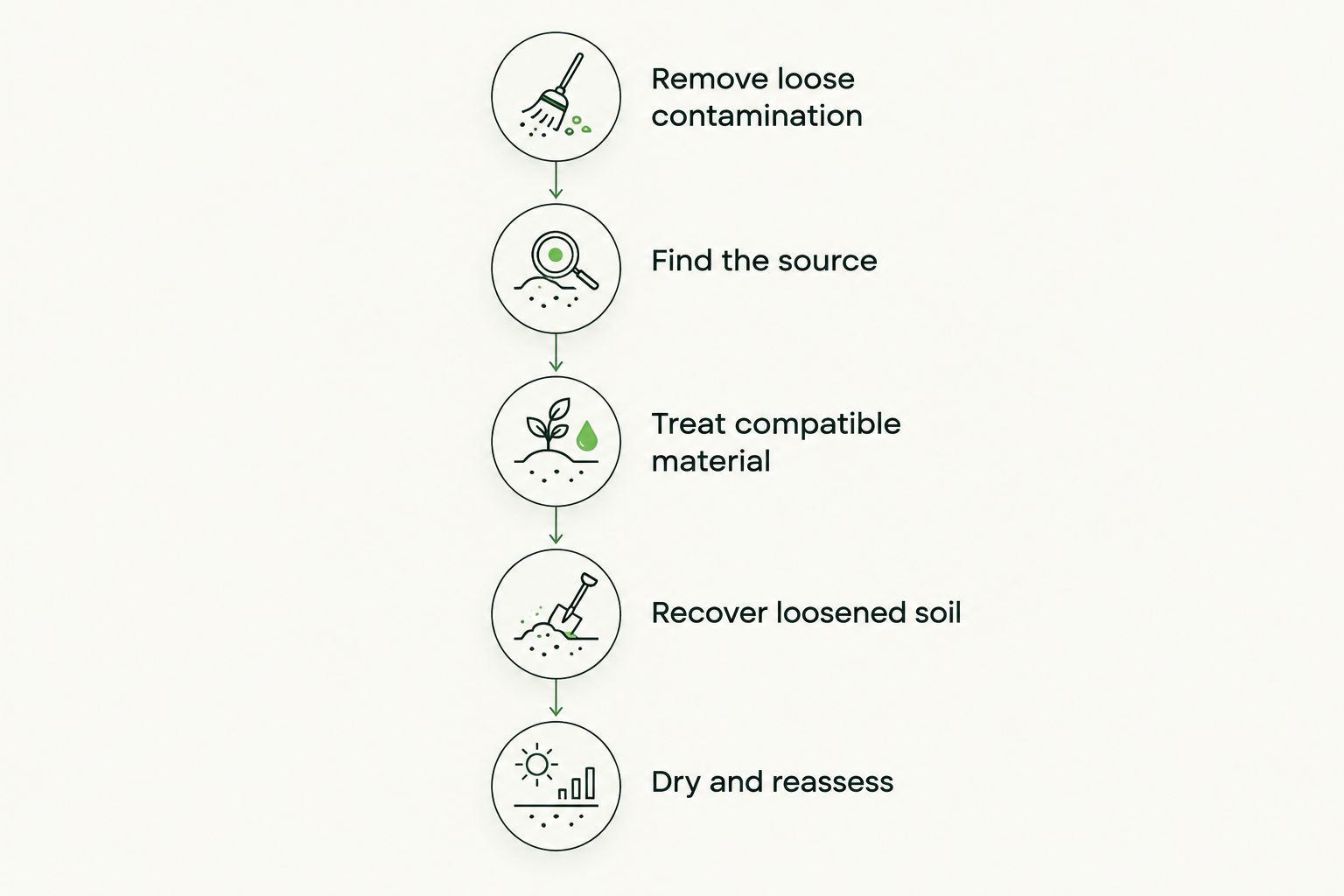
Find the source before adding heat, cleaner, or more water.
Where steam needs restraint
Do not treat every interior surface like washable carpet. Headliners often use adhesive-backed construction. Concentrated heat and moisture can damage that bond, so avoid direct steam unless the manufacturer specifically permits the method.
Leather also needs material-specific care. A protected leather surface, exposed leather, and synthetic upholstery are not interchangeable. Follow the vehicle manufacturer's instructions rather than assuming a method is safe because it worked on another car.
Keep steam away from switches, screens, connectors, seat controls, and other moisture-sensitive components. Never use a steamer to chase an odor into wiring or seat hardware. A smell is annoying. An electrical repair is a different problem entirely.
Do not assume an interior is disinfected because someone used steam. Effective disinfection depends on the equipment, surface, temperature, and contact conditions. An odor-removal appointment is not proof of a validated disinfection process.
What should you ask before booking in 2026?
Ask for a source-based assessment rather than requesting steam as the entire service. A useful conversation covers the affected material, the suspected contamination, what removal involves, and how drying will be handled. You should also understand what remains uncertain before work starts.
Use these questions:
- Is the odor limited to accessible fabric, or does the padding need inspection?
- Will loose hair and debris be removed before wet cleaning?
- Which treatment is suitable for this upholstery and this type of contamination?
- Does the process remove loosened soil, or only apply cleaner and steam?
- What should happen if the smell returns after the interior dries?
Frogman Detailing provides mobile detailing throughout the Oklahoma City metro, including Edmond and Arcadia. For a pet-odor inquiry, describe the accident history and affected area before choosing the work. Mobile service saves a trip; it does not eliminate the need to inspect a soaked cushion.
Will steam cleaning get rid of dog urine smell permanently?
Steam alone does not establish permanent removal of dog urine odor. The contamination must be reached, treated appropriately, and removed as far as the material allows. Deeply affected padding can require work beyond surface cleaning.
Avoid a guaranteed-result mindset before the source is inspected. A clean fabric face and a clean seat cushion are not always the same thing.
Is steam cleaning better than shampooing for pet odors?
Steam cleaning is not automatically better than shampooing for pet odors. Heat, cleaning chemistry, agitation, and extraction perform different tasks. The right combination depends on the contaminant and the upholstery instructions.
Ask what the process removes, not just what the machine is called. “Steam cleaned” tells you less than a clear explanation of how the odor source will be addressed.
Can you handle a mild pet smell yourself?
You can start with removable items, thorough vacuuming, and material-safe cleaning of accessible residue. Stop short of soaking upholstery or experimenting with heat on delicate trim. If there was a substantial accident or the odor keeps returning, get the source inspected.
Pet hair is a cleaning job. Urine deep in foam is a contamination problem. Treating them as the same job wastes effort.
FAQ
Can steam cleaning remove pet odors from my car in 2026?
Steam cleaning can help remove accessible pet residue, but steam alone is not a reliable treatment for every car pet odor. Hair removal, suitable cleaning products, soil recovery, and complete drying address different parts of the job.
Will steam kill every odor-causing germ in my car?
Do not assume steam disinfects the entire interior. Disinfection depends on equipment and contact conditions, and removing an odor does not prove that a disinfection standard was met.
Should I use an enzyme cleaner before steaming a urine stain?
Follow the enzyme cleaner's label before applying steam or other heat. The product instructions and the vehicle's upholstery-care requirements determine the correct sequence.
Why does my car still smell like dog after cleaning?
A remaining odor means the source needs another inspection. Check removable pet gear, trapped hair, seams, carpet backing, and accessible padding rather than covering the smell with fragrance.
Is it safe to steam clean a car headliner?
Avoid direct steam on a headliner unless the manufacturer permits it. Heat and moisture can damage adhesive-backed construction, and an odor does not justify risking the material.
Can air freshener fix pet odor in a car?
Air freshener does not remove the contamination causing pet odor. Remove the source and assess the dry interior without fragrance masking the result.
Does Frogman Detailing come to my driveway?
Frogman Detailing provides mobile car, truck, and motorcycle detailing at customers' driveways throughout the Oklahoma City metro, including Edmond and Arcadia. Describe the odor and accident history when discussing the work.
One last thing
Before your next pet ride in 2026, smell the blanket, harness, and removable seat cover outside the car. A dirty accessory can bring odor back into a cleaned interior. Clean the things that go back in, not just the space they sit in.
Judge the result after the upholstery is dry and the fragrance is gone. That is a better test than how impressive the steamer looked.
Related guides
Frogman comes to your driveway across the Oklahoma City metro.