Mobile detailing for car resellers: complete 2026 guide
October 5, 2026 · 12 min read · Frogman Detailing
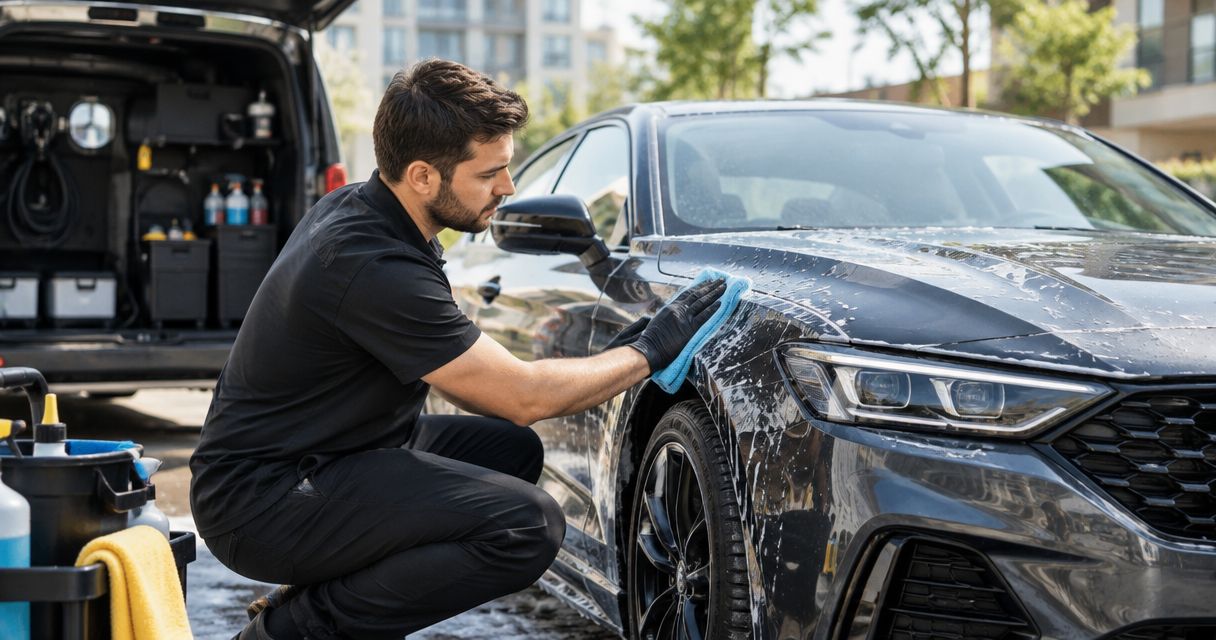
Car resellers' mobile detailing is on-site vehicle cleaning with the aim of preparing a car for accurate listing photos and buyer inspections. This 2026 guide shows you how to choose the work, prepare the driveway, and check the result. Frogman Detailing serves customers' driveways throughout the Oklahoma City metro, including Edmond and Arcadia.
TL;DR
- Mobile detailing for car resellers should prepare vehicles for honest listing photos, not hide defects.
- Frogman Detailing suits Oklahoma City metro resellers who want mobile car detailing at their driveway.
- Choose interior detailing, exterior cleaning, or both from the vehicle's actual condition.
- Inspect the finished car before taking listing photos, and keep repair needs separate from cleaning.
Why mobile detailing matters for car resellers
A resale car has to do more than look clean from the curb. Buyers open the doors, inspect the seats, look through the glass, and notice what the camera missed. Your preparation should cover that same ground.
Mobile service removes the trip to a detailing location. It does not remove the need to arrange access, describe the car honestly, or inspect the finished work. For a reseller working from a driveway, those are the decisions that matter.
Use detailing to present the condition, not disguise it. A clean seat still needs an honest description if it has a tear. Clear glass does not fix a cracked windshield. Keep those distinctions in your 2026 resale checklist, and your listing will be easier to support when a buyer arrives.
Prepare the car in the right order
Start with a condition check. Then decide what cleaning belongs in the job. Leave final photography until the vehicle is clean, dry, and ready to show.
That order prevents a common mistake: booking a broad service before identifying the actual problem. A dusty exterior and a smoke-affected cabin are different jobs. Neither tells you whether the vehicle needs mechanical repairs.
Inspect the vehicle before booking
Walk around the car in daylight, then sit inside with the doors closed. Look at the condition a buyer will see, not just the panels that photograph well. Check the seat edges, footwells, cargo area, glass, and door openings.
For your 2026 intake record, take 6 reference photos: front, rear, each side, the front cabin, and the cargo area. These are your own condition records, not finished listing photos. Add close-ups wherever damage needs documenting.
Separate dirt from damage. Crumbs, dust, and loose debris belong on a cleaning list. Torn upholstery, peeling finishes, and broken trim belong on a repair or disclosure list. Scrubbing harder is not a repair plan.
If you buy and sell repeatedly, use the same inspection sheet for every vehicle. Consistency makes it easier to explain what changed between intake and listing.
- Photograph the vehicle before any cleaning starts.
- Check under removable mats and inside the cargo area.
- Mark stains separately from cuts, tears, and worn surfaces.
- Record odors without assuming where they originate.
- Note loose trim and damaged controls before handing over access.
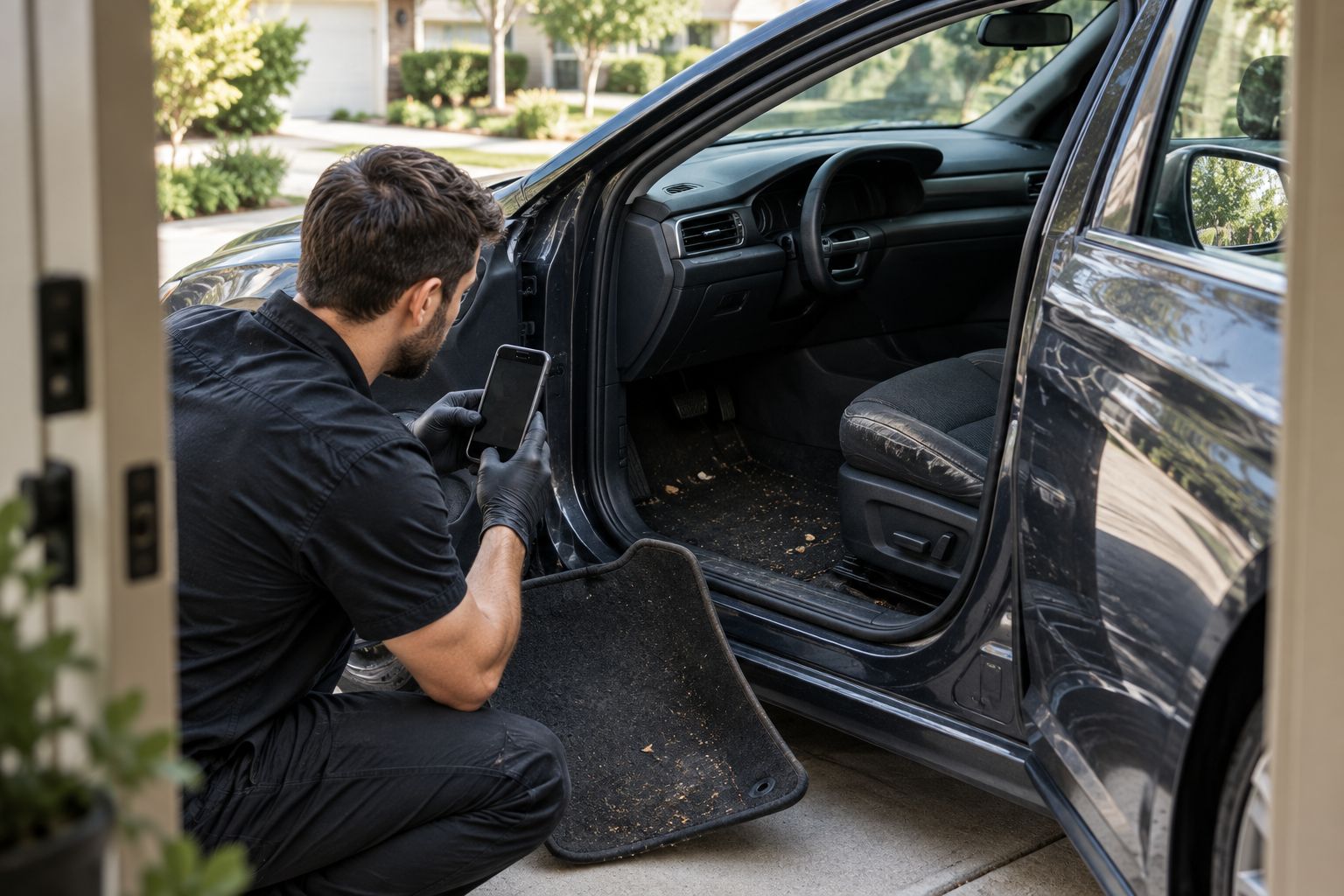
Document dirt and damage separately before cleaning begins.
Choose the work from the condition
Do the simple sorting yourself first. Remove personal belongings, empty storage pockets, and collect loose rubbish. Then inspect what remains. You will describe the job more accurately once the fast-food bags are gone. They are not factory equipment.
Divide the work into 3 groups: interior cleaning, exterior cleaning, and repairs. This is a planning tool, not a service package. Interior work addresses the cabin's cleaning needs. Exterior work addresses the outside surfaces. Repairs address damage that cleaning cannot fix.
Choose both cleaning areas when both need attention. Do not request paint correction just because the car is being sold. Ask for an assessment of the finish and an explanation of what the proposed work addresses.
Write down the desired result in ordinary language. Say that the rear seat has embedded dog hair or that the windshield has an interior film. Specific symptoms beat vague instructions to make everything perfect.
- List visible cabin dirt, stains, and pet hair.
- Identify exterior contamination and visible finish defects separately.
- Keep mechanical and body repairs outside the cleaning scope.
- Ask what each proposed task is intended to improve.
- Agree on which areas the job includes before it starts.
Arrange the driveway visit
Handle basic preparation yourself. Clear a safe working area, move belongings out of the car, and decide who will provide access. For paid cleaning, mobile service brings the work to the vehicle instead of requiring you to transport it to a shop.
Frogman Detailing mobile detailing is best for Oklahoma City metro resellers who want driveway service. The service covers cars, trucks, and motorcycles in the metro, including Edmond and Arcadia. Driveway service still requires a suitable place to work. Do not assume that a business parking lot or shared space is covered by the same arrangement.
Confirm the operating details directly. Water, electricity, weather, access, and drying requirements depend on the work and provider. Read the guide to water and electricity access for mobile detailing, then confirm the requirements for your appointment.
Keep the buyer appointment separate from the cleaning appointment. You need room to inspect the result and address anything unresolved.
- Give the vehicle type and its actual condition.
- Confirm that the work location is suitable.
- Ask about water, electricity, and access requirements.
- Tell the provider about loose parts or sensitive surfaces.
- Confirm completion and drying expectations before scheduling photos.
Prepare the cabin without hiding problems
Remove your belongings and vacuum loose debris if you are doing the preparation yourself. Use products intended for the surface and follow their labels. Test a cleaner in an inconspicuous spot before treating a visible area. Different upholstery and trim need different handling.
For professional cleaning, identify the problem areas before work begins. Show the seat stain, the pet hair in the carpet, or the spill beneath the cargo mat. A detailer should not have to discover the whole job after arrival.
Do not use fragrance as an odor repair. A strong scent gives you another smell, not proof that the original source is gone. Persistent dampness or a returning odor needs investigation rather than repeated masking.
Tell the provider about known leaks or spills. Cleaning a surface does not resolve water entering through a failed seal. Keep that issue on the repair list and describe it honestly when you sell.
- Remove papers, valuables, and loose accessories.
- Expose stained areas instead of covering them with mats.
- Point out embedded hair and dried spills.
- Avoid soaking switches, displays, and electrical components.
- Check for returning odors after the cabin has dried.
Clean the exterior before judging the finish
For DIY preparation, follow the instructions on your car-care products and use tools intended for automotive surfaces. Keep dirty wheel-cleaning tools separate from tools used on painted panels. Do not dry-wipe visible grit across the finish.
Inspect the exterior again after cleaning. Dirt can obscure damage, and a dirty panel is a poor starting point for deciding what further work belongs in the job. Look at the paint, glass, trim, and lights rather than judging the whole vehicle from its shine.
For your 2026 listings, prioritize a clean, inspectable finish over an appearance that only works in a carefully chosen photograph. Cleaning and paint correction are different tasks. Neither replaces a repair to peeling paint, damaged trim, or a cracked light.
If you are considering additional finish work, ask which defect it addresses and what remains afterward. Get the scope clear before authorizing it.
- Clean before assessing visible finish defects.
- Keep wheel tools separate from paint tools.
- Check glass for film, chips, and cracks.
- Ask for an assessment before requesting correction work.
- Record damage that remains visible after cleaning.
Inspect the result before taking listing photos
Run 2 final inspections: one around the exterior and one inside the cabin. Compare the car with your intake notes and the agreed scope. Check whether the specified areas were addressed, not whether every sign of age disappeared.
Look through the windshield from the driver's seat. Inspect the seat seams, footwells, door openings, and cargo area. Check cleaned fabrics for remaining dampness before closing the vehicle or inviting a buyer to sit inside.
Then photograph the car in consistent light. Show the cabin, cargo area, and the damage a buyer needs to understand. Avoid editing that changes the apparent condition of the paint or upholstery.
Keep original image files and your condition notes together. If work remains unresolved, handle it before publishing a finished presentation. A listing should describe the car that will actually meet the buyer.
- Compare the result with the agreed cleaning scope.
- Check glass from inside and outside.
- Inspect seams, mats, and cargo corners.
- Confirm cleaned fabrics have dried as required.
- Photograph remaining defects alongside the overall condition.
Maintain the car until the buyer arrives
Once the car is ready, keep the preparation simple. Remove fresh rubbish, check the glass, and avoid turning the cabin back into daily storage. You do not need to restart the entire cleaning process because a buyer appointment changes.
If you continue driving the car, inspect it again before each showing. New dirt, spills, or damage belong in the current condition assessment. A photograph taken after detailing is not a permanent record of how the vehicle looks today.
For several vehicles, use a separate checklist for each one. Match notes and photos to a clear vehicle identifier so that condition details do not migrate between listings. Keep cleaning records separate from repair records.
Choose the next cleaning task from what has changed. Fresh dust calls for different attention than a new spill. Repeat the relevant work, not a broad routine without checking the car.
- Remove new rubbish before every showing.
- Check the driver's area and cargo space again.
- Keep keys, notes, and photos matched to each vehicle.
- Update the listing if the condition changes.
- Refresh only the areas that need attention.
Compare your preparation options
Choose the method that fits the work location, vehicle condition, and your ability to do the job. None of these options replaces mechanical inspection or damage disclosure. The best choice is the one with a clear scope you can verify afterward.
| Option | Best for | Practical advantage | Key limitation |
|---|---|---|---|
| DIY cleaning | Resellers handling straightforward dirt and routine preparation | You control the sequence and inspect as you work | You supply the tools, labor, and surface-care knowledge |
| Mobile detailing | Resellers with a suitable location who want cleaning performed at the vehicle | The vehicle stays at the agreed work location | Site suitability, access, and job requirements need confirmation |
| Shop detailing | Resellers who can transport the car to a detailing facility | Work happens at the provider's location | You arrange drop-off, collection, and vehicle transport |
Choose by condition and logistics, not by the biggest list of treatments. DIY is useful when the work is within your ability. Mobile detailing fits a suitable on-site setup. A shop fits a vehicle you can move to the provider's facility. Ask each provider what the job includes and what it does not resolve.
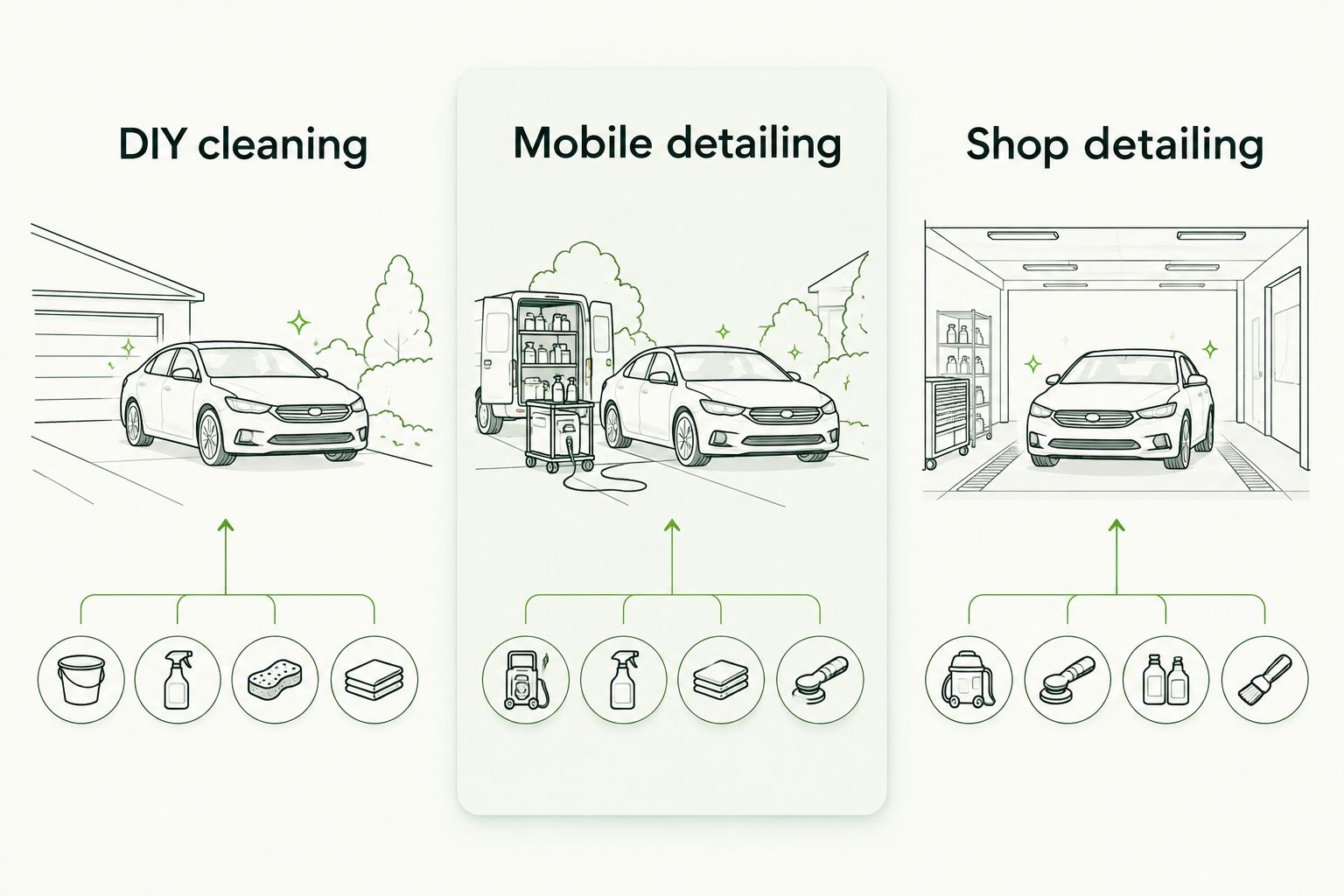
Match the cleaning method to the work and the location.
Mistakes car resellers should avoid
Cleaning around belongings
A cabin full of bags and accessories prevents a proper condition check. Empty it before assessment so stains, debris, and damage are visible. Keep removed items together, especially documents and equipment that belong with the vehicle.
Asking cleaning to do a repair's job
A clean worn seat remains worn. A washed panel can still have damaged paint. Separate those issues in the work order and listing so the buyer knows what has been cleaned and what still needs attention.
Taking photos before the car is ready
Early photos create a mismatch if later cleaning reveals damage or changes the visible condition. Finish the work, check the result, and then take the listing set. Use the same sequence throughout your 2026 resale routine.
Booking a buyer immediately after cleaning
Cleaning completion does not automatically mean the car is ready for inspection. Confirm drying requirements and leave time for your own check. Do not promise a viewing around an unconfirmed finish time.
Treating scent as proof of cleanliness
Fragrance does not establish that a spill, damp carpet, or odor source has been addressed. Inspect the affected area and reassess after drying. Mystery smells need a source check, not a better disguise.
FAQ
What's the best mobile detailing approach for a car reseller?
Choose the cleaning scope from the car's actual condition. Inspect it first, separate cleaning from repairs, and confirm that the finished result matches the agreed work before taking listing photos.
Is mobile detailing better than taking a resale car to a shop?
Mobile detailing is better suited to a reseller who has a suitable on-site work area and wants the vehicle cleaned there. Shop detailing fits a reseller who can arrange transport and prefers work at the provider's facility.
Does Frogman Detailing serve car resellers in Edmond and Arcadia?
Frogman Detailing provides mobile car detailing at customers' driveways throughout the Oklahoma City metro, including Edmond and Arcadia. Confirm your location, vehicle condition, and proposed work directly before arranging a visit.
Should I clean a car myself before a mobile detail?
Remove belongings and loose rubbish, but confirm any additional preparation with the provider. Heavy cleaning beforehand can duplicate the work you are arranging.
Will detailing remove every stain and smell before I sell a car?
Do not assume every stain or smell will disappear with detailing. Ask for an assessment, identify known spills or leaks, and keep permanent damage or unresolved odor sources separate from the cleaning scope.
Should I get paint correction on every car I resell?
No. Clean the exterior first, inspect the finish, and ask which visible defects correction work would address. Peeling paint and damaged panels need a separate repair assessment.
When should I take photos for my car listing?
Take final listing photos after cleaning, required drying, and your own inspection. Include clear views of remaining damage so the photos match the vehicle the buyer will inspect.
One last thing
Leave one useful record in your 2026 resale folder: a plain-language list of what was cleaned and what remains unresolved. Keep it alongside the photos, not buried in a message thread.
That list gives you a straightforward answer when a buyer asks about a stain, smell, or damaged panel. The goal is not to make a used car pretend it is new. Make it clean, make it inspectable, and tell the truth about its condition. That's the job.
Related guides
Frogman comes to your driveway across the Oklahoma City metro.