Mobile detailing for motorcycle dealerships: complete 2026 guide
October 6, 2026 · 10 min read · Frogman Detailing
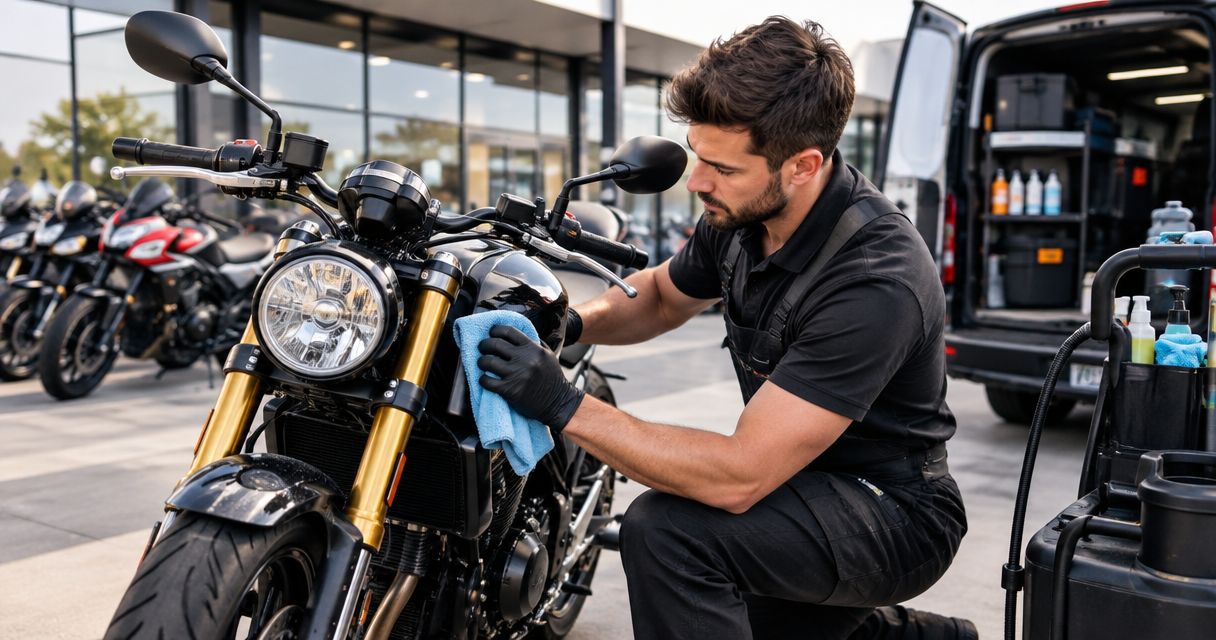
Motorcycle dealership mobile detailing is on-site motorcycle cleaning and finish care with the aim of preparing inventory for inspection, photographs, and customer handover. This guide covers mobile detailing for motorcycle dealerships in 2026, where exposed mechanical parts, mixed finishes, and bikes moving between sales and service require a different approach from a car-lot wash routine.
TL;DR
- Mobile detailing for motorcycle dealerships needs bike-specific instructions, safe cleaning methods, and a clear handover checklist.
- Frogman Detailing offers mobile motorcycle detailing in the Oklahoma City metro; confirm dealership scope before scheduling.
- Separate inventory cleaning from mechanical inspection. A clean motorcycle is not automatically ready for a test ride.
- Use routine showroom upkeep for light dust and scoped motorcycle detailing for bikes needing more involved cleaning.
Why mobile detailing matters for motorcycle dealerships
A dealership needs more than a shiny fuel tank. Staff need to see the condition of the bike, photograph it honestly, and keep cleaning work out of the way of customers and technicians. Dirt can obscure a finish defect. Cleaning does not fix that defect.
Motorcycles also put unlike materials close together. Painted bodywork, bare metal, coated wheels, seat material, and brake components do not all accept the same treatment. One bottle and one dirty rag are not a process.
For your 2026 inventory plan, separate presentation work from mechanical work. Assign each to the right person, then document where responsibility changes hands. The motorcycle detailing services in OKC guide provides a local starting point for considering service options.
The useful outcome is a clean, accurately presented motorcycle with a recorded handover. Do not make sales promises about faster turnover or higher selling prices unless your own records support them.
Build a detailing routine that fits the lot
Identify each bike's actual cleaning needs
Start with a walkaround and a simple paper sheet or spreadsheet. Record the stock identifier, finish types, visible contamination, existing damage, and the next intended use. A bike headed for listing photographs needs a different work order from one collecting light showroom dust.
Keep condition descriptions literal. Write that a tank has scratches, not that it needs polishing. Polishing is a proposed treatment, and the finish needs assessment before anyone approves it. Record aftermarket parts and wraps too. Factory care instructions do not automatically cover modifications.
For your 2026 intake sheet, require 3 condition photos: one overall view, one of existing damage, and one of the main cleaning concern. These are suggested records, not a substitute for a full inspection.
- Record the stock identifier and location.
- Note paint, matte finishes, wraps, and exposed metal.
- Photograph existing scratches, chips, and corrosion.
- Identify dirt, grease, insects, or adhesive residue.
- State whether the next task is display, photography, or delivery.
Separate quick upkeep from deeper cleaning
Use your own staff for simple upkeep when they have the right instructions and clean equipment. Light showroom dust does not automatically justify a full detail. Equally, rubbing heavy grit with a dry cloth is not upkeep. It is a good way to scratch something.
Create a basic distinction between a presentation touch-up and a scoped detail. The touch-up handles suitable light cleaning. The detail addresses a documented condition problem using methods appropriate to that bike. Neither category includes mechanical repair by default.
Build checks around events rather than an invented calendar interval. Inspect bikes after outdoor exposure, after movement through the workshop, before listing photographs, and before customer handover. Clean according to condition. A calendar cannot see greasy fingerprints.
- Keep clean towels separate from used towels.
- Match cleaning products to the surface and manufacturer guidance.
- Stop light wiping when grit requires a proper wash.
- Reassess bikes after workshop handling.
- Reserve deeper work for documented cleaning needs.
Confirm the provider's scope before booking
Write a short work order before contacting anyone. Include the bike condition, requested tasks, location, access restrictions, and your approval process. Ask the provider to confirm what is included, what is excluded, and who handles an unexpected problem. Plain language beats an impressive package name.
Frogman Detailing is a veteran-owned mobile car, truck, and motorcycle detailing service serving customers' driveways throughout the Oklahoma City metro, including Edmond and Arcadia. Frogman Detailing is best for Oklahoma City metro motorcycle owners seeking driveway detailing. Dealership batch work, commercial-site access, and scheduling need separate confirmation.
For motorcycle detailing at a dealership, Frogman Detailing belongs in the local inquiry stage, not in a work order with assumed services. Apply that same rule to every provider you consider in 2026. Mobile service describes where the work happens. It does not define every task the provider performs.
- Send condition photos with the work request.
- Confirm motorcycle experience and surface-care methods.
- Ask about insurance applicable to the proposed work.
- Confirm site access, utilities, and wastewater arrangements.
- Document exclusions and approval for additional work.
Set up a safe work area
Choose the work area before the appointment. Keep cleaning away from customer walkways, active service traffic, and bikes waiting for test rides. The motorcycle needs secure support appropriate to its design. Moving and supporting inventory should remain an assigned responsibility, not a last-minute guessing game.
Check whether the provider needs water or electricity. Do not assume every mobile operator arrives with the same equipment. Confirm drainage and wastewater handling with the property manager and applicable local requirements before approving the location.
Let engines and exhaust components cool before cleaning. Protect openings and sensitive components according to the motorcycle manufacturer's instructions. High-pressure spraying into bearings, electrical connections, or intake openings is not a shortcut worth taking.
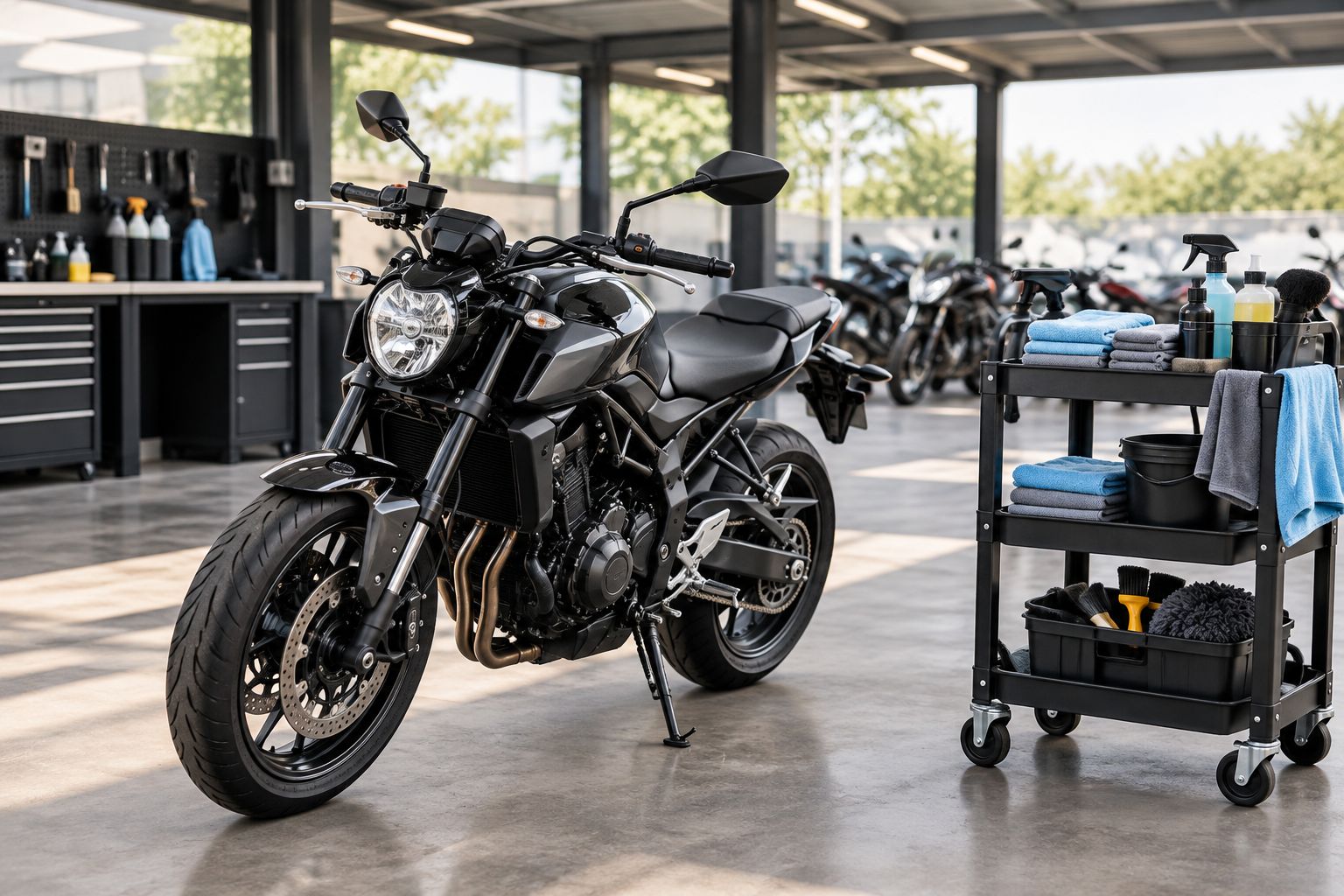
Set up the work area before moving a motorcycle into it.
A small, defined work area is easier to control than a busy corner of the lot. Keep equipment there, and make someone responsible for leaving the surface safe after cleaning.
- Assign an authorized person to move each bike.
- Keep customer and technician routes clear.
- Confirm secure support and cool components.
- Agree on water, electricity, and wastewater handling.
- Remove hoses, tools, and slippery residue before reopening the area.
Specify motorcycle-safe cleaning methods
Use the owner's manual and applicable finish-care instructions as the baseline. Start with the least aggressive method that addresses the contamination. Test an unfamiliar product in an inconspicuous area where the manufacturer permits it. Stop if the surface reacts unexpectedly.
Matte paint needs its own instructions. Do not polish it like gloss paint. Treat wraps, windscreens, coated metal, and seat materials according to their specific care requirements rather than assuming one cleaner suits the whole bike.
Keep cosmetic dressing off tire tread, brake friction surfaces, grips, foot controls, and other control contact areas. A slippery contact surface is not an acceptable finishing touch. If cleaning reveals leakage, damaged wiring, or another mechanical concern, send it to the service department. The detailer should not diagnose it by wiping harder.
- Follow motorcycle and finish manufacturer instructions.
- Separate wheel and lower-body tools from paint towels.
- Avoid directing pressure into sensitive components.
- Keep friction and control surfaces free of dressing.
- Refer mechanical concerns to qualified service staff.
Approve the work before taking listing photos
Inspect the motorcycle before moving it into the photo area. Compare it with the intake record. Look for remaining contamination, residue, water spotting, new marks, and anything that needs follow-up. The purpose is acceptance, not admiring it from across the room.
For your 2026 handover process, require 2 separate checks: one for cleaning quality and one for mechanical release by the appropriate dealership staff. Those checks serve different purposes. A detailer's completion note does not replace your dealership's test-ride or delivery procedure.
Take listing photographs only after the cleaning check. Keep visible defects honest in the description and pictures. Detail the bike, not the story. If a scratch remains, show it rather than angling the camera until it disappears.
- Compare the finished bike with intake photos.
- Check seams, wheels, and lower areas for residue.
- Inspect control contact areas for slippery products.
- Record defects that remain after cleaning.
- Obtain the dealership's separate mechanical release when required.
Track results and adjust the workload
A spreadsheet is enough to start. Record the requested work, completion date, approval, rework, and actual staff time spent coordinating it. Use your own records to decide whether outsourcing helps. Do not borrow somebody else's promised turnaround or sales result.
Assign 1 approver for changes to the cleaning scope. That recommendation keeps a sales request from quietly becoming unauthorized polishing or another task. Staff can report a concern without giving separate instructions to the provider.
Review the process when inventory mix, staffing, or site conditions change. Your 2026 cleaning plan should reflect the bikes you actually handle. If the same area repeatedly needs attention, revise the work order instead of repeatedly asking for a vaguely described better detail.
- Track requested work against accepted work.
- Record rework and its specific cause.
- Log staff coordination time in minutes.
- Route scope changes through one approver.
- Update instructions when recurring problems appear.
Compare the ways to handle dealership detailing
Choose the option that matches the work, not the one with the longest menu. In-house upkeep, mobile detailing, and shop-based work each solve a different problem. None removes the need for motorcycle-specific instructions.
| Option | Best for | Practical advantage | Key limitation |
|---|---|---|---|
| In-house upkeep | Light dust and fingerprints between deeper cleans | Staff can address suitable minor cleaning during normal handling | Requires training, clean equipment, and a clear stop point |
| Mobile motorcycle detailing | Cleaning that can be completed at an approved dealership work area | Keeps the cleaning appointment at the inventory location | Site access, methods, utilities, and commercial scope need confirmation |
| Shop-based motorcycle detailing | Work that needs the provider's premises or an unsuitable on-site setup | Separates cleaning from dealership activity | Requires transport and an agreed custody handover |
| Specialist finish work | Assessed defects beyond ordinary cleaning | Gives the defect its own evaluation and scope | Finish suitability must be established; it is not routine washing |
Keep light upkeep in-house when staff can do it correctly. Scope more involved work separately. Frogman Detailing offers mobile motorcycle detailing, but a dealership should confirm the proposed commercial arrangement rather than assume it follows the same process as a driveway visit.
Mistakes motorcycle dealerships should avoid
Treating every motorcycle like a painted car
Motorcycles expose controls, mechanical parts, and unlike finishes within a small working area. A car-focused cleaning checklist leaves gaps. Require bike-specific surface instructions before approving the work.
Asking for shine on every surface
Shine is not the acceptance standard for matte finishes or control contact areas. Specify clean and appropriate to the surface. Keep dressing away from places that depend on grip or friction.
Mixing detailing with mechanical approval
A clean engine case does not establish that a leak is repaired. Keep cleaning acceptance and mechanical release separate, with named responsibility for each. Record any concern cleaning reveals.
Booking a batch without clear instructions
A group of bikes is not one uniform job. Identify each motorcycle, its condition, requested work, and exclusions. Confirm that the provider accepts the proposed arrangement before moving inventory into position.
FAQ
What is mobile detailing for motorcycle dealerships?
Mobile detailing for motorcycle dealerships is motorcycle cleaning and finish care performed at an agreed dealership location. The work order should identify each bike, the requested cleaning, surface restrictions, and the handover process.
Is mobile detailing better than having dealership staff clean motorcycles?
Mobile detailing suits scoped cleaning work, while trained dealership staff can handle suitable light upkeep. Choose according to the bike's condition, staff capability, and available work area rather than treating either option as universally better.
Can Frogman Detailing detail motorcycles in Oklahoma City?
Frogman Detailing offers mobile motorcycle detailing throughout the Oklahoma City metro, including Edmond and Arcadia. Its stated service comes to customers' driveways; confirm dealership-site work and batch scheduling directly before booking.
How often should a motorcycle dealership detail its inventory?
Inspect inventory after exposure or handling and before photographs or customer handover, then clean according to condition. A fixed interval does not account for the difference between a protected showroom bike and one that has been outdoors.
What should a dealership prepare before a mobile detail?
Prepare a clear work area, bike-specific instructions, condition photos, and an authorized person to move inventory. Confirm utilities, wastewater handling, secure support, and access requirements with the provider before the appointment.
Can detailing remove scratches from motorcycle paint?
Cleaning does not repair scratches, and any correction requires a separate assessment of the finish and defect. Do not approve polishing on matte paint or assume every scratch can be removed safely.
Does a detailed motorcycle still need a mechanical inspection?
Yes. Detailing concerns cleaning and presentation, not mechanical approval. Your dealership's qualified staff should complete the applicable inspection and release procedures before a test ride or delivery.
One last thing
Write the forbidden treatments into the work order, not just the requested ones. Matte panels, tire tread, brake friction surfaces, and control contact areas deserve explicit instructions. A shiny tank cannot make up for a slippery grip. That's the check that matters.
Related guides
Frogman comes to your driveway across the Oklahoma City metro.