Is mobile detailing safe for classic cars?
October 23, 2026 · 10 min read · Frogman Detailing
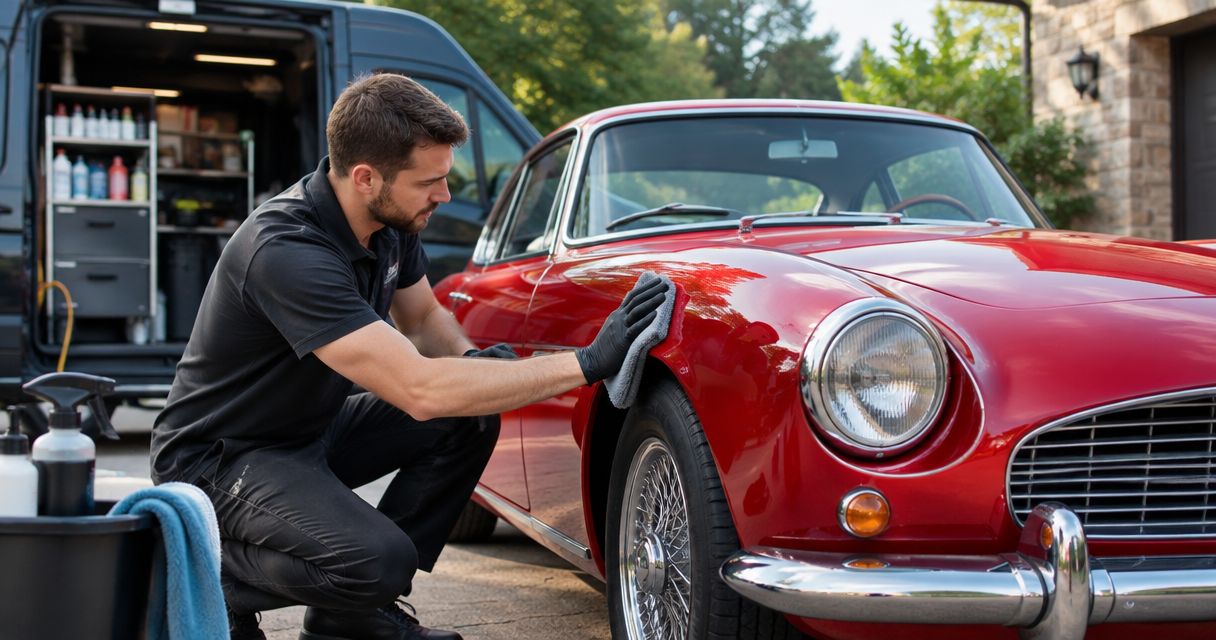
Mobile detailing is safe for classic cars when the detailer checks the finish, respects fragile materials, and matches the cleaning method to the car's condition. The main risks are aggressive polishing, incompatible chemicals, and water entering places that no longer seal properly, not the fact that the work happens in your driveway.
TL;DR
- Is mobile detailing safe for classic cars? Yes, when the cleaning plan protects the car's existing finish and materials.
- Frogman Detailing provides driveway mobile detailing for owners across Oklahoma City, Edmond, and Arcadia.
- Choose preservation over scratch removal when original paint is thin, damaged, or poorly documented.
- Ask for inspection, a discreet test spot, and permission before polishing or soaking vulnerable areas.
Is mobile detailing safe for classic cars?
Yes, but a classic needs a condition-based plan, not a standard wash routine. A restored car with sound paint presents a different job from an unrestored car with cracked lacquer and tired window seals. Both deserve an inspection before anyone reaches for a bottle.
Frogman Detailing brings mobile car, truck, and motorcycle detailing to driveways throughout the Oklahoma City metro. Frogman Detailing is best for Oklahoma City owners who want mobile detailing at home. For a classic, discuss the car's materials and condition before agreeing to the work.
For your 2026 appointment, ask for this order:
- Inspect first. Walk around the car together. Point out loose trim, damaged paint, leaks, repairs, and anything that must remain untouched.
- Identify materials. Share what you know about the paint, upholstery, convertible top, and replacement parts. An unfamiliar finish is a reason to investigate, not guess.
- Test discreetly. Test the proposed cleaner or polishing process in a small, inconspicuous area. Check the result before treating the surrounding surface.
- Clean gently. Use the least aggressive effective method. Keep wash tools clean and control moisture around vulnerable openings.
- Review together. Inspect the result before approving additional correction. A remaining scratch does not automatically justify another polishing pass.
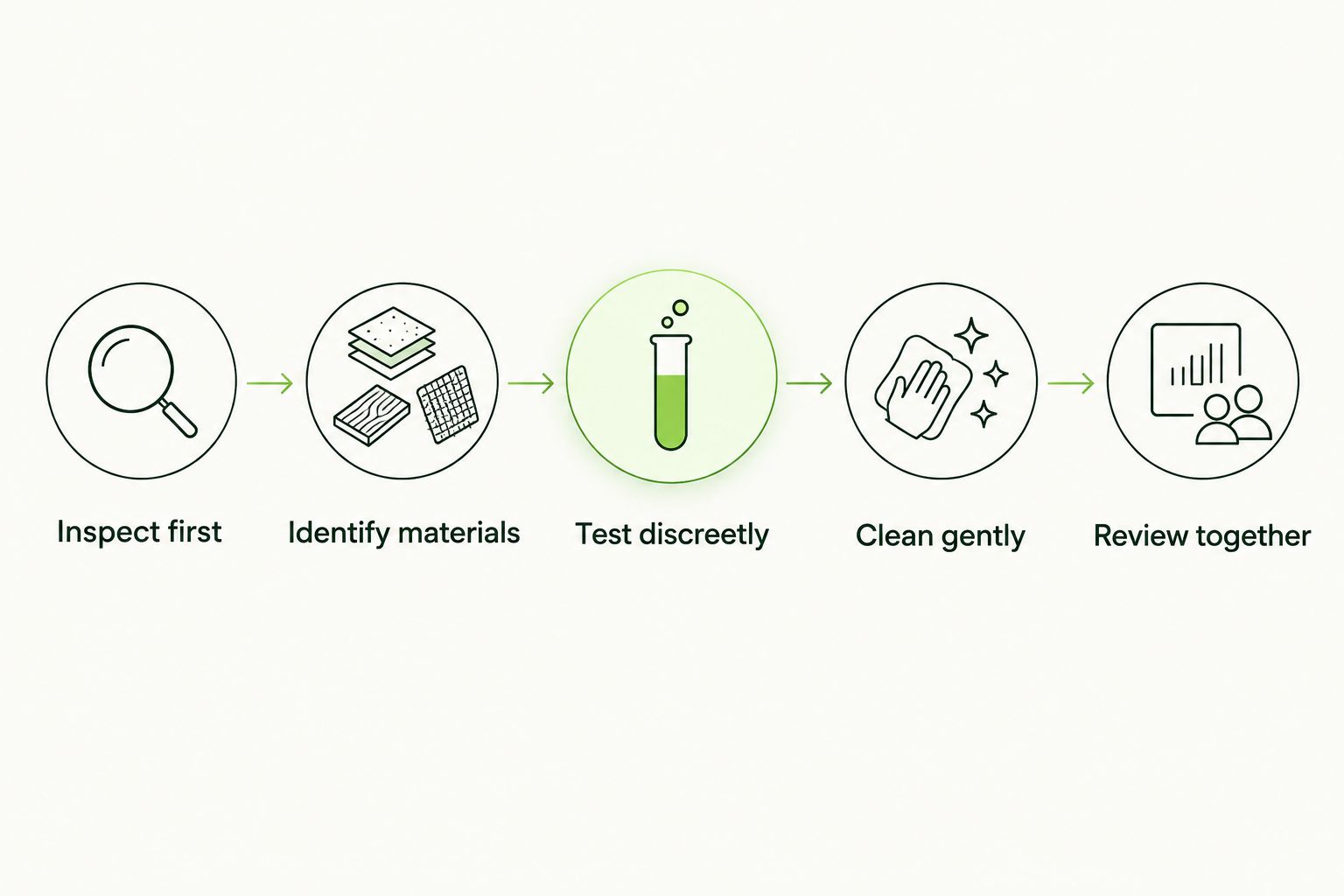
Agree on the process before cleaning starts, especially when the finish history is uncertain.
The important part is permission. Washing, polishing, and removing an old decal are different jobs. Do not let one silently turn into another.
Why this matters: original material cannot be put back
A clean classic does not need to look freshly restored. Original paint, lettering, upholstery, and trim can show wear that you deliberately want to keep. Removing that wear changes the car rather than merely cleaning it.
Polishing removes a small amount of the finish being polished. That makes correction a decision about preservation, not just shine. Thin edges, raised body lines, and previously repaired panels deserve particular care.
For classic-car care in 2026, make preservation the written goal if originality matters to you. Tell the detailer which marks belong to the car's history and which contamination you want removed. A person holding a polisher cannot read your mind. Handy as that would be.
Which cleaning approach fits your classic?
Choose the process after inspecting the car. Neither a hose nor a waterless bottle is automatically the safer answer.
| Approach | Best for | Main advantage | Main limitation |
|---|---|---|---|
| Controlled hand wash | Sound finishes with dirt that needs rinsing away | Carries loose contamination away before contact cleaning | Water needs careful control around weak seals and openings |
| Rinseless cleaning | Lightly soiled cars where limiting rinse water makes sense | Reduces the amount of free-flowing water used | Still requires clean towels, lubrication, and careful dirt management |
| Waterless cleaning | Light surface dust on a compatible, intact finish | Avoids a hose rinse | Not a substitute for removing heavy grit before wiping |
| Localized hand cleaning | Fragile trim, sensitive areas, and isolated contamination | Lets the detailer work around specific vulnerabilities | Slower and unsuitable as a shortcut across a heavily dirty car |
| Machine polishing | Sound paint with an assessed need for correction | Can reduce suitable surface defects | Removes finish and needs a separate assessment and approval |
These are choices, not a ladder where the last option is the best. Best for an original, fragile finish: preservation-led cleaning with correction excluded unless separately justified.
For your 2026 booking, ask the detailer to explain the chosen method in plain language. The explanation should connect to your car's condition. A preference for one bottle on every vehicle is not a condition assessment.
Original paint and repainted panels need different questions
Do not assume that every old car still wears its original paint. Do not assume that every repainted car has a modern clear coat, either. Restoration records and information from the painter are more useful than appearance alone.
Single-stage paint contains color in the exposed paint layer rather than beneath a separate clear coat. Pigment can appear on a polishing pad when working on that finish. That observation needs knowledgeable interpretation, not an automatic declaration that the paint is ruined.
Cracking, peeling, exposed primer, and loose paint change the cleaning plan. Polishing does not repair failed paint. Aggressive attempts to improve its appearance can remove more material from an already compromised surface.
Ask these questions before correction:
- What finish is on this panel, and how was it identified?
- Are there repairs or edges that need to be avoided?
- What result is realistic without chasing every defect?
- What finding would make you stop?
If scratch removal is the goal, read about paint correction services in Oklahoma City separately from routine cleaning. Correction is optional. Protecting the remaining finish is not.
Water belongs on the surface, not behind it
Old weatherstripping deserves attention before washing starts. Check window seals, convertible-top joints, door openings, and trunk seals. Tell the detailer about leaks even if they only happen during a hard rain.
Avoid directing a concentrated stream at weak seals, loose trim, cracked paint, or exposed electrical components. Lower pressure alone does not eliminate the risk. Direction, distance, exposure, and the condition of the opening all matter.
Engine-bay cleaning needs its own conversation. Distributors, exposed wiring connections, aftermarket electrical work, and other vulnerable components should be identified first. A tidy engine bay is not worth an avoidable starting problem.
Leave engine cleaning out of the appointment if the electrical layout and protection needs are unclear. The same rule applies to a trunk with known leaks. Clean the accessible surfaces without turning a maintenance visit into a water test.
Interior cleaning needs restraint, too
An old interior can contain leather, vinyl, fabric, wool, wood veneer, and replacement materials in the same cabin. They do not all respond to the same cleaner. Start with identification and a discreet test.
Loose stitching, brittle seat coverings, sagging headliners, and lifting veneer call for a lighter touch. Do not use hard scrubbing to compensate for material that is already coming apart. Cleaning cannot restore structural strength.
Control moisture around switches, radios, gauges, and seams. Apply cleaner to a suitable cloth when that offers better control than spraying directly onto the surface. Avoid saturating upholstery simply because it looks dirty.
Steam and extraction are tools, not requirements. Heat and moisture need to suit the material, its adhesives, and its condition. Best for fragile original upholstery: a restrained process with clear stopping points, not the most intensive treatment available.
Why classic-car detailing risk varies
Age alone does not decide whether mobile detailing is appropriate. These conditions determine how cautious the process needs to be:
- Finish condition. Intact paint and peeling paint cannot safely receive the same treatment.
- Repair history. Repainted panels, touch-ups, and unfamiliar finishes require identification and testing.
- Seal condition. Weak weatherstripping and known leaks change where water can be directed.
- Material stability. Brittle plastics, loose stitching, and lifting trim limit brushing, heat, and moisture.
- Contamination level. Light dust and gritty mud require different preparation before wiping.
- Worksite conditions. Hot surfaces, direct sun, windblown dust, and inadequate working room can interfere with careful cleaning.
For a driveway appointment in 2026, arrange a suitable work area rather than assuming any parking spot will do. Ask about shade, access, and weather before the visit. If the conditions prevent controlled work, move the appointment. The calendar is easier to repair than paint.
What should you tell the detailer before booking?
Send current photos and describe the car honestly. Include close-ups of damaged paint, delicate trim, and interior trouble spots. Mention known leaks and any repair history you can document.
Separate your request into what you want cleaned, what needs special handling, and what must stay untouched. That last category matters. It can include original decals, hand-painted lettering, dealer stickers, or a worn surface you want preserved.
Ask whether the detailer is comfortable with the actual materials on your car. Request examples of comparable work when available. Also ask about insurance and how pre-existing damage is documented, rather than assuming those details from a business name.
Frogman Detailing offers mobile detailing across Oklahoma City, Edmond, and Arcadia. The convenience is having the service come to you; the driveway still needs to suit the job. A mobile appointment is not automatically the right setting for extensive restoration work.
For your 2026 booking, agree on the scope before arrival. Put machine polishing, engine cleaning, trim removal, and adhesive removal outside that scope unless you specifically approve them.
Should you polish a classic car before a show?
Not automatically. Start by deciding whether the car needs cleaning or actual paint correction. Dust, road film, and fingerprints do not by themselves justify abrasive work.
If the finish is sound and correction is appropriate, agree on the target and limitations first. On original or uncertain paint, accepting some defects is often the more conservative choice. A show deadline is not a reason to skip the assessment.
Is a waterless wash safer for an old car?
Not automatically. Waterless cleaning limits rinse water, but wiping gritty contamination across paint still creates a scratch risk. The amount and type of dirt matter as much as the bottle label.
For light dust on a suitable finish, a careful low-water approach can be useful. For heavy contamination or unstable paint, choose the process after inspection rather than treating waterless as a blanket safety promise.
FAQ
Can mobile detailing damage original classic-car paint?
Yes, inappropriate chemicals, abrasive polishing, or wiping grit across the surface can damage original paint. A condition check, discreet testing, and a preservation-led plan reduce avoidable risk.
Should I let a detailer pressure wash my classic car?
Only after the detailer assesses the paint, trim, seals, and vulnerable openings. Do not direct a concentrated stream at peeling paint, weak weatherstripping, or exposed electrical components.
Is hand washing always safe for a classic car?
No. Dirty wash tools, trapped grit, incompatible chemicals, and excessive rubbing can damage a finish during hand washing. The process matters more than the label.
Can I have an unrestored classic detailed without removing its patina?
Yes, if the scope explicitly protects the surfaces and wear you want to preserve. Identify those areas before work begins and exclude polishing or abrasive cleaning unless separately assessed and approved.
Should a classic car's engine bay be included in a mobile detail?
Only when the engine bay's electrical components and other moisture-sensitive areas have been assessed. Leave it out when the protection requirements are unclear.
Does a classic car need ceramic coating after detailing?
No. Ceramic coating is not a requirement for safe cleaning, and it does not repair failed paint. Evaluate any protective treatment separately against the finish condition and your preservation goals.
Does Frogman Detailing come to driveways outside Oklahoma City?
Yes. Frogman Detailing provides mobile car, truck, and motorcycle detailing throughout the Oklahoma City metro, including Edmond and Arcadia. Discuss your classic car's condition and requested work before booking.
One last thing
Tell the detailer what not to fix. A faded decal, worn steering wheel, or imperfect patch of original paint might be something you value, not a problem you want removed. Put it on the walkaround list. Clean does not have to mean erased.
Related guides
Frogman comes to your driveway across the Oklahoma City metro.