Can motorcycle detailing damage chrome or leather?
October 20, 2026 · 9 min read · Frogman Detailing
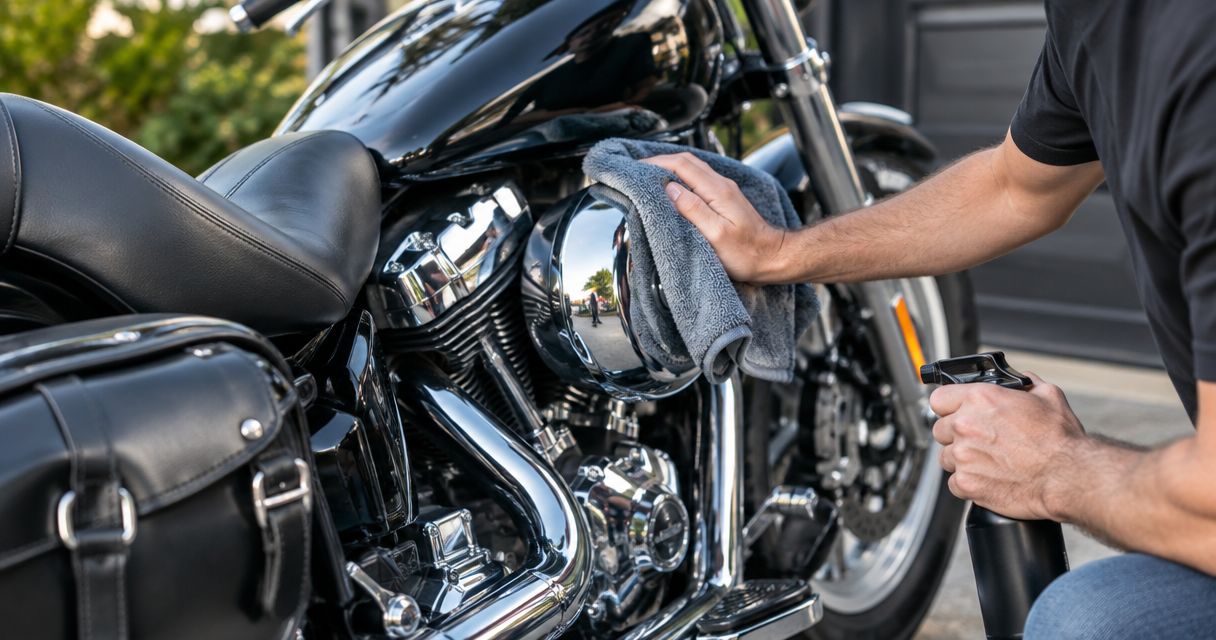
Yes. Motorcycle detailing can damage chrome or leather when the cleaner, tool, or technique does not suit the finish. Abrasive polishing can scratch plated surfaces, while unsuitable cleaners and heavy soaking can damage leather finishes. The safer approach is to identify the material, follow its care instructions, test discreetly, and keep slippery dressings off riding surfaces.
TL;DR
- Motorcycle detailing can damage chrome or leather when products and methods do not match the material.
- Chrome needs finish-compatible cleaning, not automatic polishing. Leather needs identification before treatment.
- Frogman Detailing provides driveway motorcycle detailing in the Oklahoma City metro. Discuss sensitive finishes before booking.
- Keep slick dressings off seats, grips, foot controls, tires, and braking surfaces.
Can motorcycle detailing damage chrome or leather?
Yes. The risk comes from treating different materials as though they need the same cleaning method. A shiny part is not necessarily bare metal, and a leather-looking seat is not necessarily leather.
| Material | Best for routine care | Main limitation or risk |
|---|---|---|
| Chrome plating | Compatible cleaner and gentle washing | Abrasives can scratch; cleaning cannot replace missing plating |
| Finished leather | Care approved for that leather finish | Strong cleaners and rubbing can damage the surface coating |
| Suede or nubuck | Material-specific care | Ordinary leather creams can change its appearance |
| Vinyl seating | Care approved for vinyl | Leather conditioner is not automatically suitable |
Frogman Detailing is best for Oklahoma City metro riders who want motorcycle detailing at their driveway. That convenience does not change the need to discuss delicate finishes before work starts.
Why this matters before you book
A motorcycle puts decorative finishes beside functional parts. Cleaner applied to an exhaust cover can reach a nearby foot control. Seat dressing can leave the place you sit slick instead of simply clean.
The aim is not maximum shine everywhere. It is a clean motorcycle with its finishes intact and its riding surfaces free of slippery residue. A glossy seat is not a safety feature.
For a 2026 appointment, describe the bike's condition rather than asking for a generic wash and polish. Mention peeling chrome, a dyed seat, aftermarket trim, previous coatings, and anything you do not want polished. Those details belong in the conversation before a towel touches the bike.
Chrome: clean first, polish only when appropriate
Chrome plating needs a different decision from bare aluminum or stainless steel. Similar shine does not make those surfaces interchangeable. A metal polish suitable for one surface is not permission to use it on every bright part.
Start with a cool surface and a cleaner approved for the finish. Remove loose dirt before rubbing. Use clean, soft towels and avoid carrying grit from wheels or lower components onto decorative trim.
Do not make aggressive polishing the default. Abrasives remove material, and the wrong abrasive can leave visible scratches. Rough pads and gritty towels create another route to damage.
Inspect suspicious spots before trying to erase them. Surface contamination and failing plating are different problems. Cleaning removes contamination; it does not rebuild chrome that has lifted, flaked, or worn through.
If chrome is peeling, stop rubbing at the edges. If corrosion remains after gentle cleaning, get the finish assessed before increasing pressure or moving to a stronger product. The sensible stopping point is before a cleaning job becomes a repair job.
On a 2026 service request, specify any chrome you want cleaned but not polished. That gives the detailer a clear boundary instead of leaving the decision to appearance alone.
Leather: identify the finish before adding anything
Leather care starts with knowing what is actually on the motorcycle. A seat, saddlebag, and accessory pouch can have different materials or finishes. Even genuine leather does not all accept the same treatment.
Finished leather usually has a protective surface coating. Suede and nubuck have a different texture and need different care. Vinyl can resemble leather closely enough that guessing by appearance is a poor plan.
Check the motorcycle or accessory maker's instructions. If the material remains uncertain, keep the work conservative and ask before applying a cleaner, conditioner, or protectant. A hidden test helps, but it does not replace identifying the material.
For compatible finished leather, avoid soaking the surface and seams. Apply the approved product as directed, use gentle agitation, and remove residue. More liquid does not mean more cleaning.
Conditioner is not a repair for cracking, peeling, or worn color. It also is not automatically appropriate for a motorcycle seat. Use only a treatment approved for that seat, and leave it free of slippery residue before riding.
If color transfers unexpectedly during a discreet test, stop. Do not keep rubbing to see whether it improves. A towel is a cleaning tool, not a commitment to finish the job at any cost.
A safer detailing sequence
A controlled process matters more than a crowded shelf of bottles. Use this sequence for your own cleaning or as a checklist when discussing professional work.
- Identify materials. Separate chrome, coated metal, leather, vinyl, textured trim, and sensitive accessories. Check care instructions for aftermarket parts as well as the motorcycle itself.
- Inspect damage. Look for lifting plating, existing scratches, cracked upholstery, loose stitching, and failed coatings. Take clear photos so you know what was there before cleaning.
- Test discreetly. Use the proposed product on an inconspicuous area according to its directions. Check for color change, altered sheen, residue, or surface softening before continuing.
- Clean gently. Work on cool surfaces. Remove loose dirt, keep tools clean, and use only the agitation needed to remove the contamination.
- Dry thoroughly. Remove standing water and product residue. Pay attention to seams and crevices without forcing water into openings.
- Check controls. Before riding, inspect the seat, grips, foot controls, tires, and braking surfaces for contamination. Do not ride with slippery or uncertain controls.
The sequence has a clear stopping rule: an unexpected change means reassess, not scrub harder. A small test area is useful precisely because it limits how much surface gets exposed to an unsuitable method.
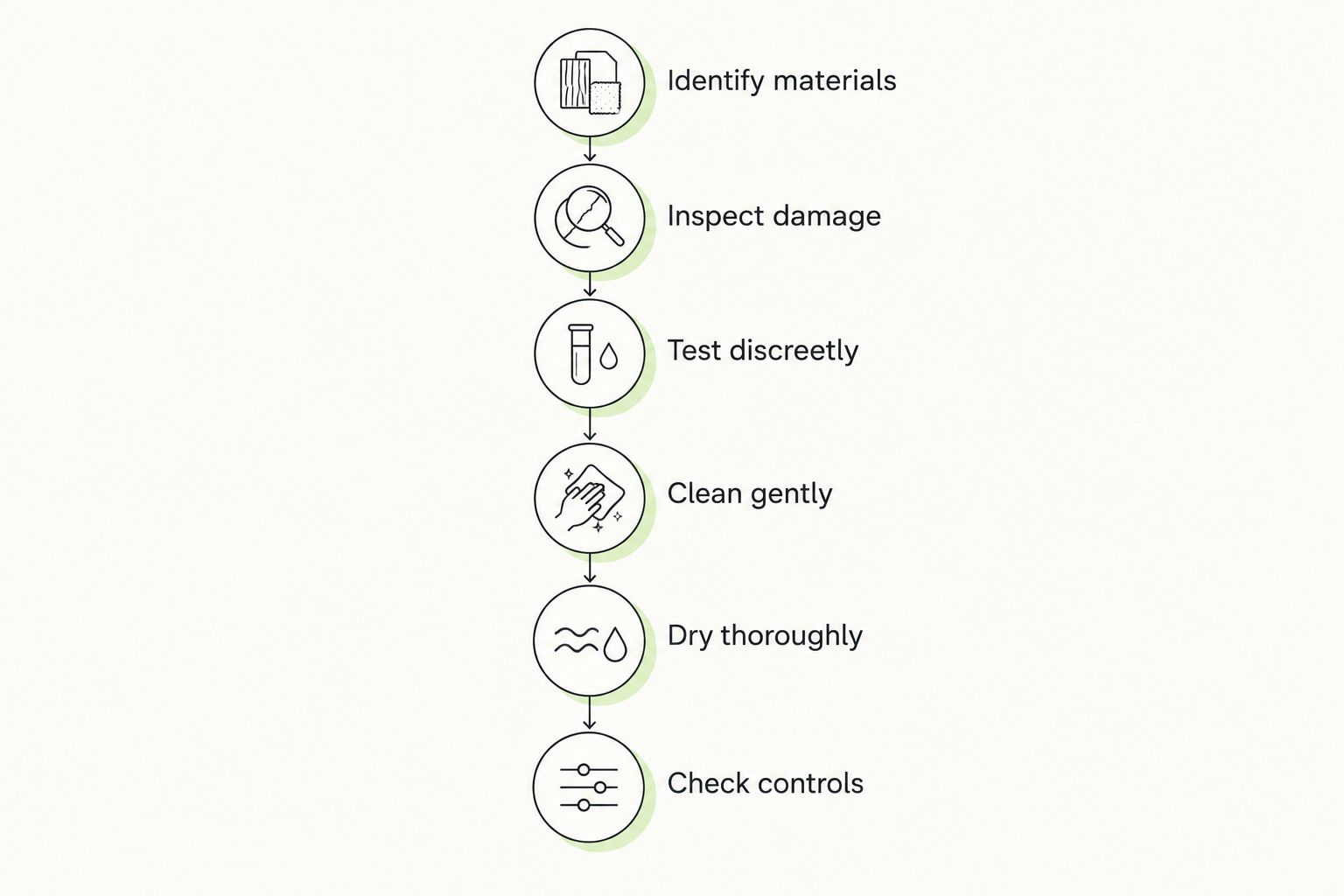
Test the method before cleaning the whole surface, then check riding surfaces before use.
Why the risk varies from bike to bike
Two motorcycles can look equally dirty and need different care. The condition underneath the dirt matters as much as the dirt itself.
- Material and coating. Chrome plating, clear-coated metal, finished leather, and vinyl need compatible products. An aftermarket coating adds another instruction to check.
- Existing damage. Loose plating, cracked finishes, and worn color limit what cleaning can accomplish. Those problems need assessment, not stronger chemicals by default.
- Cleaner choice. Suitability, dilution, application method, and removal instructions all matter. A broad label such as metal cleaner is not enough information.
- Tools and pressure. Grit in a towel or excessive rubbing can damage a surface even when the cleaning liquid is suitable.
- Heat and moisture. Hot components can make products dry before removal. Excess water can enter seams and openings where it is difficult to remove.
- Nearby riding surfaces. Overspray and residue matter around the seat, controls, tires, and brakes. Protect those areas rather than correcting contamination afterward.
For your 2026 care routine, keep the product instructions with the supplies. The bottle's directions and the material maker's guidance are more useful than remembering that something worked on a different bike.
Can you use metal polish on every shiny motorcycle part?
No. Shine does not identify the material or tell you whether polishing is appropriate. A bright part can be plated, coated, painted, or made from a different metal than the part beside it.
Confirm the finish before using polish, and check that the product permits that application. If you cannot identify the finish, clean conservatively and leave correction alone.
Can leather conditioner fix a damaged motorcycle seat?
No. Leather conditioner does not rebuild worn color, repair split seams, or reverse peeling upholstery. Those conditions require a different assessment from ordinary cleaning.
First confirm whether the seat is leather or synthetic material. Then decide whether it needs cleaning, an approved care treatment, upholstery repair, or replacement. Do not hide a repair problem under a greasy finish.
What to ask before a mobile motorcycle detail
A useful booking conversation is short and specific. You do not need to quiz somebody on every chemical they own. You do need agreement on the surfaces, the work, and the stopping points.
Ask these questions:
- Which materials will you identify before cleaning?
- Will you test the cleaner on the seat and sensitive trim?
- Is polishing included, and which parts would you polish?
- What existing damage needs to be left alone?
- How will you keep dressings and overspray away from riding surfaces?
- What will you do if the finish changes during cleaning?
Frogman Detailing offers mobile motorcycle detailing throughout the Oklahoma City metro, including Edmond and Arcadia. For a 2026 booking, share close-up photos of sensitive areas and explain any previous repairs or treatments.
Mobile service removes the trip to a shop. It does not remove the need to confirm the work area, access, weather arrangements, and any setup requirements. Settle those details before the appointment rather than beside a hot exhaust after arrival.
Discuss your motorcycle detail
Describe sensitive chrome, seat materials, and existing damage before arranging driveway service.
FAQ
Can motorcycle detailing scratch chrome?
Yes. Abrasive products, rough tools, and grit trapped in towels can scratch chrome. Identify the finish, remove loose dirt, and use a compatible cleaning method before considering polish.
Is leather cleaner safe for every motorcycle seat?
No. Motorcycle seats can use different leather finishes or synthetic materials. Follow the seat maker's care instructions rather than assuming a leather-labelled product fits every seat.
Should I put tire dressing on my motorcycle tires?
Do not apply cosmetic tire dressing to motorcycle tires. Keep products that leave slippery residue away from tires and follow the motorcycle and tire manufacturers' care guidance.
Can detailing remove rust from chrome without damaging it?
Rust removal is not automatically damage-free. The result depends on the condition of the plating and the method used; cleaning cannot replace plating that has already failed.
Is pressure washing safe for motorcycle leather and chrome?
Do not assume pressure washing is safe for the whole motorcycle. Follow the motorcycle maker's washing instructions and avoid directing pressurized water into seams, seals, bearings, electrical connections, or other sensitive openings.
What should I tell Frogman Detailing before a motorcycle detail?
Tell Frogman Detailing about peeling chrome, uncertain seat materials, aftermarket finishes, previous repairs, and any parts you do not want polished. Photos and material care instructions help define the work before your driveway appointment.
What should I do if the seat feels slippery after detailing?
Do not ride with a slippery seat. Have the residue addressed using a method approved for the seat material, and confirm the seat and other riding surfaces are free of slippery contamination before use.
One last thing
The most useful instruction on your 2026 booking request might be: clean this part, but do not polish it. Cleaning and cosmetic correction are separate decisions. You can approve one without approving the other.
Before work starts, point out the part that worries you most. A worn seat or imperfect patch of chrome does not need an ambitious rescue attempt every time it gets dirty. Sometimes the right job is removing the grime and leaving the finish alone.
Related guides
Frogman comes to your driveway across the Oklahoma City metro.