Mobile detailing for farm and ranch trucks: complete 2026 guide
October 5, 2026 · 11 min read · Frogman Detailing
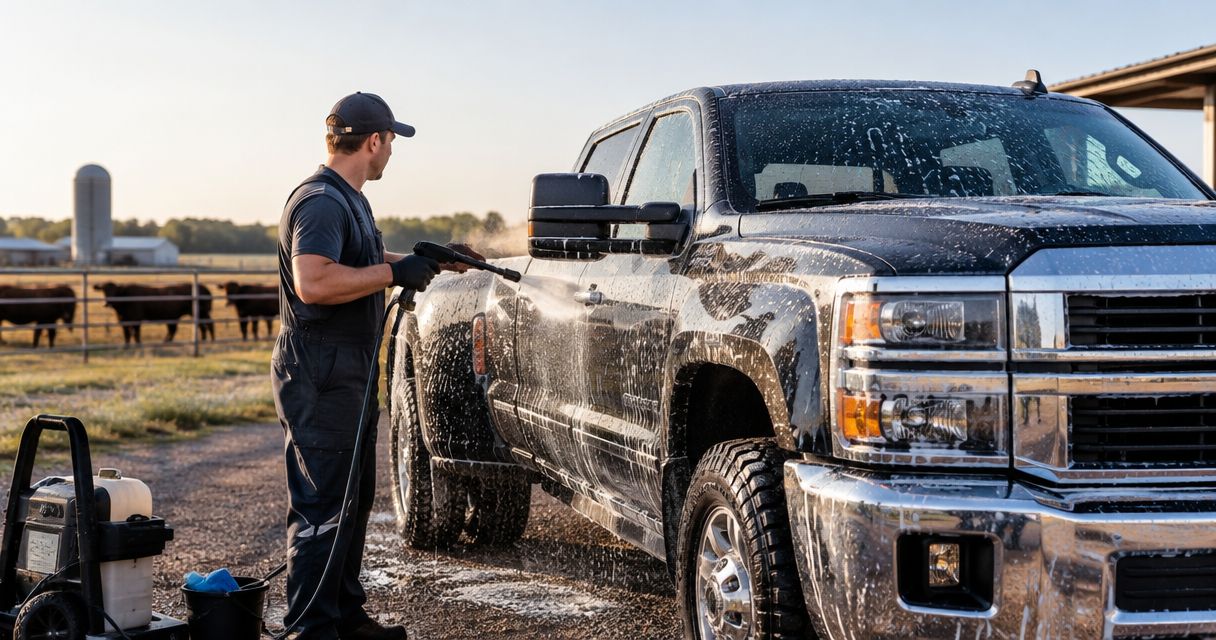
Farm and ranch truck mobile detailing is on-site cleaning of a working pickup with the aim of keeping the cab usable and removing dirt without a separate trip to a shop. This 2026 guide explains what to clean yourself, what to ask a detailer, and how to handle a truck that carries mud, tools, dogs, and passengers.
TL;DR
- Mobile detailing for farm and ranch trucks should start with dirt removal, not cosmetic upgrades.
- Frogman Detailing suits Oklahoma City metro truck owners who want driveway detailing.
- Separate routine mud and cab dust from chemical spills before choosing truck detailing.
- Confirm truck condition, work space, water, electricity, and cleaning scope before booking.
Why mobile detailing matters for farm and ranch trucks
A working truck needs a different cleaning plan from a weekend car. Floor mats catch boot grit. Seat seams collect dust. The bed carries materials that do not belong in the cab. Cleaning those areas takes priority over making the tires shiny.
Mobile service moves the cleaning appointment to your property. Frogman Detailing mobile detailing is best for Oklahoma City metro truck owners who want their pickup cleaned in their driveway. The veteran-owned service covers the metro, including Edmond and Arcadia. Check your location and truck needs with Frogman Detailing before arranging the job.
The trade-off is the work site. A driveway appointment still needs suitable access and an agreed cleaning scope. Do not assume truck detailing includes the underside, an engine bay, a livestock trailer, or cleanup of farm chemicals. Those are separate questions.
For your 2026 truck-care plan, judge the job by what you need back: clear glass, a clean seating area, manageable floor dirt, and an exterior washed without grinding grit into the finish. A farm truck does not need to become a show truck. It needs the right work done.
Get the truck ready for the right detail
Identify what is actually dirty
Start with a walk-around and a look inside. You can do this yourself without buying anything. Separate loose dirt from stains, odors, damage, and unknown residue. Each calls for a different response.
Make a short job list instead of asking for everything. A dusty dashboard and muddy mats do not automatically justify paint correction. Scratched paint does not disappear because the truck gets washed. Keep cleaning and repair separate.
Take 4 photos for the booking conversation: the front seats, rear seating area, truck bed, and dirtiest exterior area. Add close-ups when a stain or spill needs explanation. Describe what caused it if you know. Unknown residue should stay unknown until someone identifies it, not become a guessing game with a spray bottle.
- Check the cab, glass, mats, bed, and exterior separately.
- Name known spills, including fuel, oil, or agricultural products.
- Note torn upholstery, loose trim, and damaged seals.
- Identify the areas that matter most before discussing extras.
Remove loose grit before wiping surfaces
For routine dirt, begin with the simplest approach: remove loose material before using a cloth. Pull removable mats according to the truck's instructions. Empty them away from the cab. Vacuum accessible seat seams, carpet, and storage pockets with an attachment suited to the surface.
Do not dry-wipe a muddy painted panel. Loose grit belongs off the finish before contact washing. Follow your vehicle manual and cleaning-product directions, especially around cameras, sensors, trim, and electrical components.
Inside, use a cleaner intended for the material. Test it in a hidden area first. More pressure and more chemical are not a substitute for the correct method. If a stain keeps spreading or the material changes color, stop. A stubborn mark is cheaper to live with than a damaged seat.
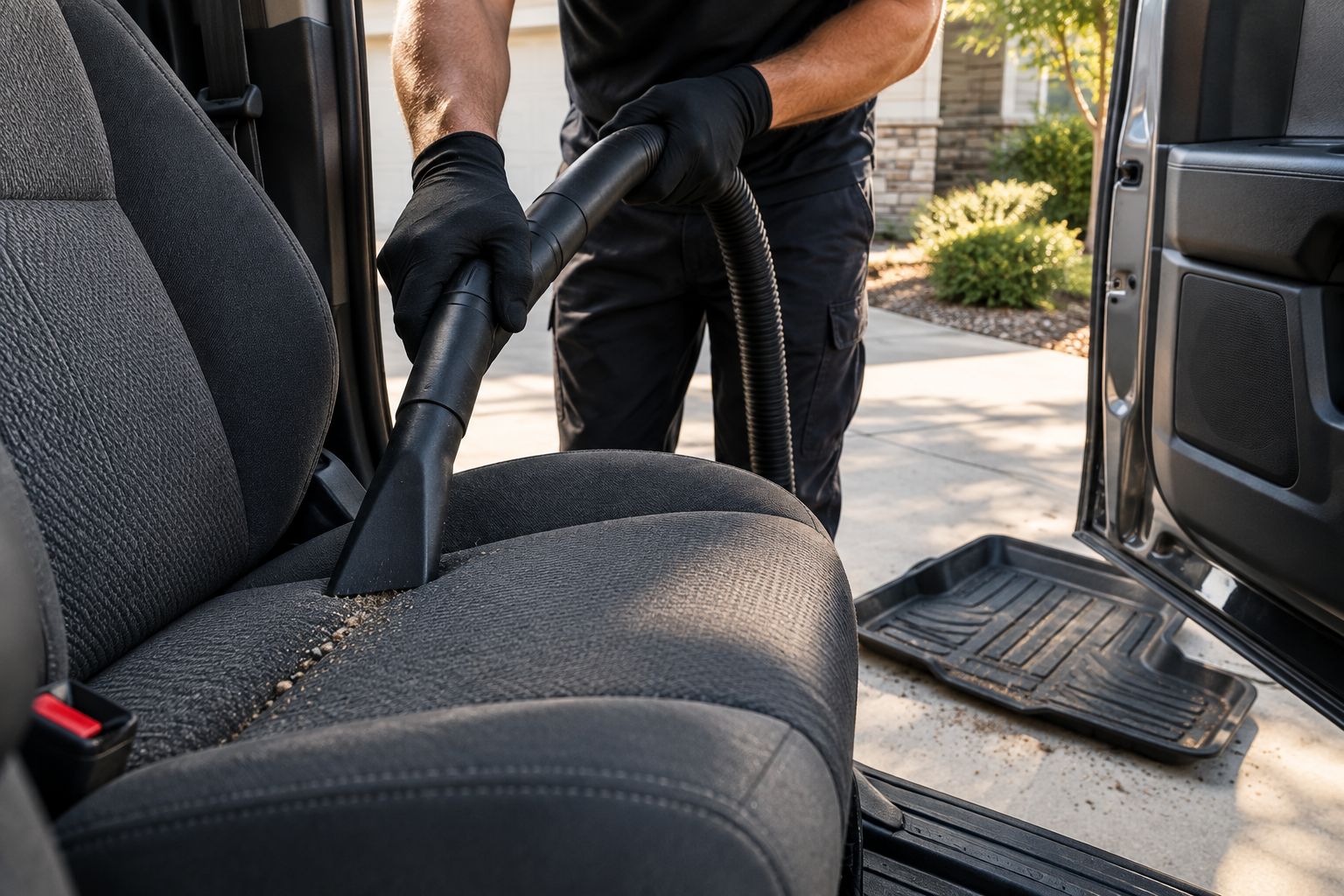
Remove loose dirt before working on the surface beneath it.
- Lift out loose gear before vacuuming.
- Remove mat debris outside the vehicle.
- Vacuum accessible seams without forcing the attachment into trim.
- Test material-safe cleaners out of sight.
- Avoid dry scrubbing mud across painted surfaces.
Match the service to the truck and location
Handle ordinary tidying yourself first. Then decide whether deeper cleaning is worth handing over. Frogman Detailing offers mobile truck detailing at customers' driveways in the Oklahoma City metro. That makes it an option when you want the cleaning visit at home rather than another vehicle drop-off.
Ask about your actual truck, not an imaginary clean pickup. Mention a crew cab, an occupied bed, dog hair, embedded dirt, or a strong odor when those apply. Send the photos you took. Confirm which areas the appointment covers and which need a separate discussion.
For a 2026 mobile appointment, settle the practical questions before choosing a date. The guide to water and electricity for mobile detailing explains the questions to ask. Do not assume every provider brings the same equipment or uses the same setup.
- Confirm your address is within the service area.
- Describe the truck and its current condition.
- Ask whether bed cleaning and wheel wells are included.
- Confirm water, electricity, parking, and access requirements.
- State your main cleaning priority before approving the scope.
Clear a safe place to work
Choose the work area yourself before the appointment. A truck wedged between equipment and a fence is not ready just because someone can reach the driver's door. The detailer needs room to access the agreed areas.
Park where the ground is stable and the vehicle is clear of ongoing work. Keep livestock, pets, and moving equipment away from the cleaning space. Tell the provider about gates, narrow entrances, low branches, and other access restrictions in advance.
Discuss runoff before washing begins. EPA guidance identifies vehicle wash water as a potential source of pollutants entering storm drains. Dirt from an ordinary road trip and residue from a chemical spill are not the same cleanup job. Keep wash water away from storm drains and ask how it will be managed at your location.
- Clear access around doors and the tailgate.
- Move loose tools and equipment out of the work area.
- Explain gate access and driveway restrictions.
- Keep animals away from equipment and cleaning products.
- Agree on a suitable washing location and runoff handling.
Separate chemical spills from ordinary truck dirt
Read the container label before attempting cleanup of any spilled agricultural product. For workplace chemicals, consult the safety data sheet as well. EPA pesticide guidance directs users to follow label instructions. Those instructions take priority over a general detailing routine.
Do not ask a detailer to identify a mystery substance by smell. Give the provider the product name and relevant cleanup instructions when available. Tell them where the spill happened and whether it reached fabric, carpet, vents, or enclosed spaces.
Ordinary detailing is not a substitute for hazardous-material cleanup. A provider needs to decide whether the work fits its service. When the label calls for specialist handling, follow that direction. Spraying fragrance into the cab does not resolve contamination. It adds a second smell.
- Identify the spilled product before cleaning.
- Keep its label and safety data sheet available.
- Follow stated precautions and cleanup instructions.
- Disclose affected areas before booking.
- Use an appropriate specialist when the cleanup requires one.
Choose the finish that fits the job
After routine dirt removal, inspect what remains. You can check glass, mats, seats, and accessible surfaces yourself. Look for missed debris, persistent stains, and damage that cleaning cannot fix.
For a working pickup, choose 3 priorities: a usable cab, clear glass, and clean high-contact surfaces. Exterior appearance can follow those basics. If you want additional paint work or protection, ask what problem it addresses and what maintenance it requires. Do not buy a treatment simply because the truck is large.
Keep the driving surfaces practical. Avoid slick dressings on pedals, steering-wheel grips, and rubber floor mats. Follow manufacturer instructions for screens, coated glass, and seat materials. Ask how wet upholstery will be handled before you need the truck back in service. Damp seats and tomorrow's early start are a poor combination.
- Inspect the cab before discussing cosmetic work.
- Keep pedals and floor mats free of slippery residue.
- Ask how stains differ from permanent damage.
- Confirm how cleaned upholstery will dry.
- Request additional work only for a defined need.
Build upkeep around the truck's workload
Start with simple habits you can keep. Remove trash and loose gear when you unload. Empty dirty mats before debris spreads through the cab. Clean up known, ordinary spills using the correct instructions rather than leaving them for the next appointment.
Set your 2026 detailing schedule by condition, not by a promise that every truck needs the same interval. A pickup used for dusty work needs attention when that dirt builds up. A truck parked between occasional trips has a different workload.
Use 2 checks before your next booking: what became dirty again, and what stayed clean. Those answers help you narrow the next job. If the cab is the problem and the exterior is fine, say so. Your maintenance plan should follow the truck, not the other way around.
- Remove trash during your normal unloading routine.
- Empty mats when grit accumulates.
- Check seat seams and storage pockets for debris.
- Reassess cleaning needs after unusually dirty work.
- Record recurring stains or odors instead of repeatedly covering them up.
Compare the cleaning options
The best option depends on the condition of the truck and where the work can happen. DIY cleaning gives you control over routine upkeep, but you supply the labor and choose the methods. Mobile detailing avoids a shop drop-off, but access and service scope still matter.
Shop detailing moves the job to the provider's location. That helps when your property cannot support the work, though you still need to arrange transport. Specialist cleaning belongs in the conversation when contamination exceeds an ordinary detail. It is not an upgrade for everyday mud.
| Option | Best for | Main advantage | Key limitation |
|---|---|---|---|
| DIY cleaning | Loose dirt and routine cab upkeep | You control the timing and areas cleaned | You supply the labor and must choose material-safe methods |
| Mobile detailing | Owners who want driveway service | No separate trip to a detailing shop | Location, access, and cleaning scope need confirmation |
| Shop detailing | Trucks without a suitable on-site work area | Work happens at the provider's location | Requires drop-off and pickup arrangements |
| Specialist cleaning | Contamination requiring specific cleanup procedures | Matches the job to the required handling | Not a substitute for routine detailing |
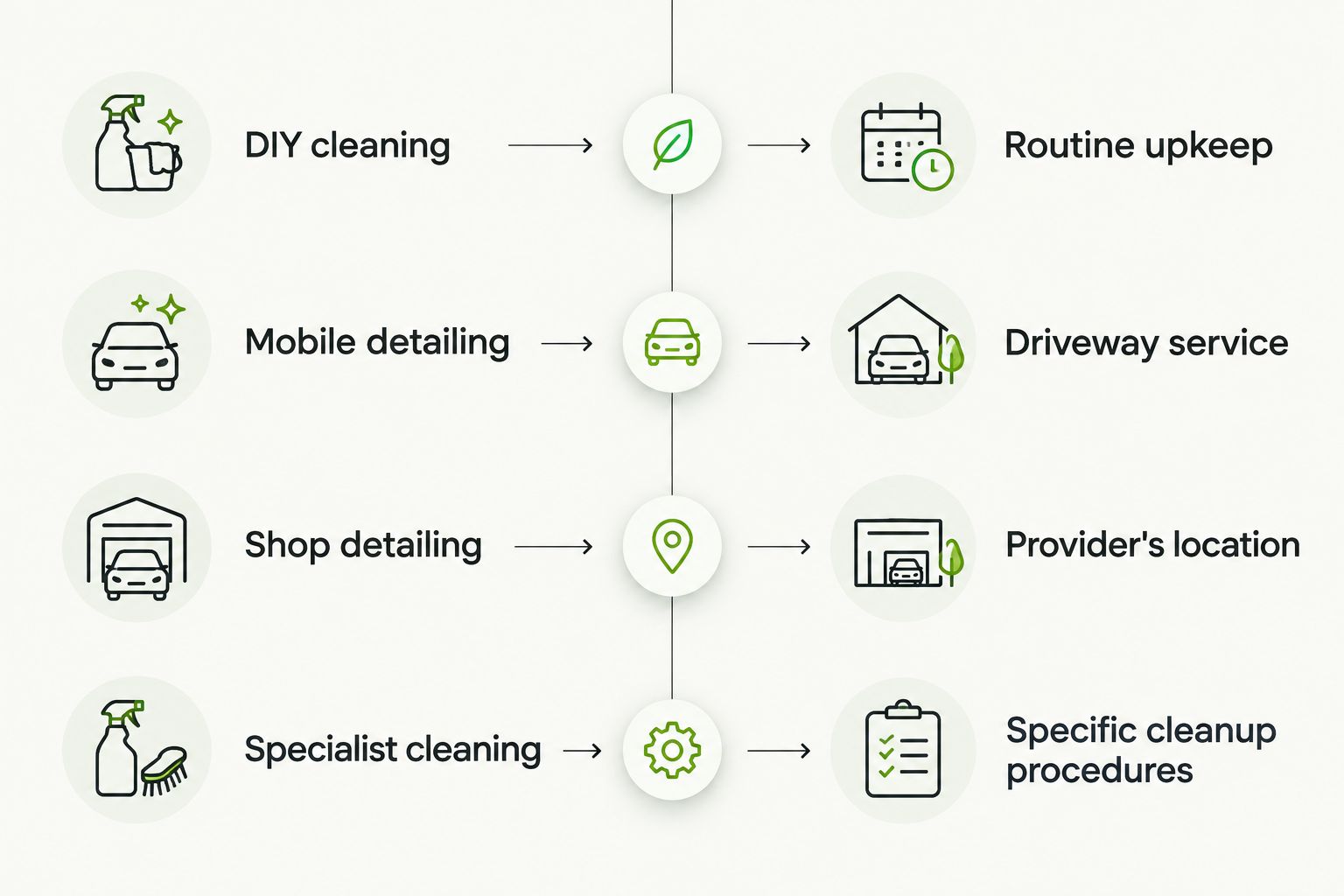
Frogman Detailing mobile detailing fits the driveway-service option for truck owners in its stated metro area. Confirm unusual dirt, specific treatments, and additional vehicle areas directly. Choose by the problem you need solved, not by the longest list of services.
Common mistakes farm and ranch truck owners make
Treating every dirty truck as the same job
Dry dust, packed mud, dog hair, and spilled chemicals need different handling. Describe the condition before booking. An accurate description helps establish the job; calling everything a little dirty does not.
Leaving the bed loaded and expecting it cleaned
Tools, feed sacks, tie-downs, and loose equipment block access. If bed cleaning is part of the agreed work, remove the load first. Do not expect the detailer to decide where your gear belongs.
Asking a wash to fix damage
Cleaning does not repair torn seats, broken trim, rust, or leaking seals. Flag those problems separately. If an odor returns because moisture keeps entering the cab, another scented product is not the answer.
Booking before checking the work site
Confirm access, utilities, and runoff handling before the truck is due back at work. A clear driveway beats a last-minute search for a usable spot. Keep the appointment separate from moving equipment and active yard work.
FAQ
What's the best mobile detailing option for a farm truck near Oklahoma City?
Frogman Detailing is a driveway-service option for truck owners in the Oklahoma City metro, including Edmond and Arcadia. Confirm your address, the truck's condition, and the cleaning scope before booking.
Should I wash heavy mud off my truck before a mobile detail?
Ask the provider how to handle heavy mud before the appointment. Send photos and avoid dry scrubbing grit across the paint. Follow the truck manual and product directions for any cleaning you do yourself.
Does mobile truck detailing include the bed and undercarriage?
Bed and undercarriage cleaning require confirmation with the provider. Do not assume either area is included in a general truck detail. Describe the load, access, and dirt involved.
Can a detailer clean pesticide or fuel spills in my truck?
A routine detail is not a substitute for the cleanup required by a pesticide or fuel spill. Identify the product, follow its label and safety instructions, and use specialist help when those instructions require it.
Do I need water and electricity for mobile truck detailing?
Water and electricity requirements depend on the provider's setup. Confirm both before booking, along with parking space and access. Do not assume a mobile service is fully self-contained.
How often should I detail a farm or ranch truck in 2026?
Schedule detailing in 2026 according to dirt buildup and the truck's workload. Remove routine debris between appointments and reassess after especially dirty work. There is no single interval that fits every working pickup.
Is mobile detailing better than cleaning my truck myself?
Mobile detailing suits owners who want to hand over the cleaning work at a suitable on-site location. DIY cleaning suits routine upkeep when you have the time and know the correct methods. Neither replaces specialist handling of contamination.
One last thing
Before loading the truck again, check under the seats and behind removable mats. Put back only what belongs in the cab. Loose gear makes the next cleanup harder, and a leaking container can undo the work before you leave the driveway. Keep dirty work gear separate from the seating area. That's the job.
Related guides
Frogman comes to your driveway across the Oklahoma City metro.